
Our Articles


Blog

Published on January 7, 2026
Dealing with a dishwasher not cleaning properly is easily one of the most annoying kitchen headaches. You load up a full stack of dirty plates, wait for the cycle to finish, and end up pulling out dishes that are still covered in food or glasses that look foggy. It happens to thousands of families every day, but here is the good news: you usually don't need a pro to fix it.
Whether you are seeing stuck-on leftovers, soap grit, or that stubborn white film, this guide walks you through real solutions that work. From clogged spray arms to hard water issues, we’ll help you figure out exactly what is stopping your dishwasher from doing its job and how to get it running like new again.
Asking why is my dishwasher not cleaning becomes a daily frustration when you are stuck hand-washing plates after every cycle. Usually, the problem isn't that the machine is "broken," but that one of these five common culprits is interrupting the wash:
• Blocked Spray Arms: If water can't spray out, it can't reach your dishes, leaving whole racks grimy.
• Dirty Filter: A dirty filter deep clean is often the missing step. If it's clogged, the machine just recirculates dirty water back onto your plates.
• Hard Water Deposits: Minerals build up and create a white chalky film, killing your detergent's power.
• Detergent Issues: Detergent issues (pod vs liquid) are common—sometimes pods don't dissolve, leaving dishes soapy or unwashed.
• Water Temperature: If the water isn't hot enough, grease won't melt and bacteria won't die.
Most people panic and think they need a new appliance, but the reality is simpler. A few maintenance tweaks that take 10-15 minutes can restore performance. Understanding why is my dishwasher not cleaning my dishes starts with the basics of how the machine works. The sections below break it down so you can find your fix today.
Dishwasher not cleaning top rack is the #1 complaint we hear, regardless of the brand. The top spray arm gets its water through a narrow tube that is very easy to clog with food bits or mineral buildup. If you notice your top rack not cleaning in dishwasher but the bottom rack looks fine, the spray arm is almost certainly the issue.
How to Diagnose and Fix It:
• Check Rotation: Open the door and give the upper spray arm a spin. It should move freely without hitting anything.
• Inspect for Blockages: If it’s stuck or wobbles, take it off. Look closely at the holes for any spray arm blockage.
• Clean the Holes: Use a simple toothpick or a piece of wire to poke debris out of the spray holes.
• Check the Bearing: Wipe off any grease or gunk where the arm connects to the water feed.
For stubborn dishwasher top rack not cleaning problems, check your water pressure. If your home has low pressure, it struggles to push water all the way to the top rack against gravity. Also, double-check your loading—if a tall baking sheet is blocking the arm from spinning, nothing up top will get clean.
When you find your dishwasher not cleaning dishes well, the problem often traces back to a nasty filter. This part catches the gross stuff so it doesn't clog your drain, but if you ignore it, it gets packed with grease.
Step-by-Step Deep Clean:
• Locate the Filter: It's at the very bottom of the tub. Most of them twist and lift right out.
• Scrub It Down: For dishwasher not cleaning well scenarios, hot water, dish soap, and a toothbrush are your best friends.
• Soak Stubborn Grime: If it’s really bad, soak the mesh in hot water and white vinegar for 20 minutes to break down the minerals. • Check the Housing: Before you put it back, wipe out the hole where the filter sits—slime loves to hide there.
How often should you do this? If you use the machine daily, aim for every two weeks. If you start seeing dishes not coming clean in dishwasher, check the filter immediately. This 10-minute job saves you from expensive repairs later.
Hard water deposits (white film) are a silent killer for dishwashers. You might not realize you have hard water until that tell-tale residue shows up. The calcium prevents your soap from sudsing up properly, which explains why dishes not getting clean in dishwasher happens even when the machine seems fine otherwise. If the white film just won't go away, you might need Fars Appliance Repair to descale the internal parts effectively.
How to Spot and Fix Hard Water:
• The Signs: Your clear glasses look cloudy, or plates feel gritty to the touch.
• The Vinegar Test: Put two cups of white vinegar in a bowl on the top rack and run a hot cycle (empty).
• The Baking Soda Rinse: Run a second short cycle with baking soda sprinkled on the bottom to freshen it up.
• Use Rinse Aid: This is non-negotiable for hard water—it helps water slide off dishes so spots don't dry on.
Long-term, you might need a water softener or specific hard-water detergents. If the white film just won't go away, you might need professional Dishwasher Repair Service to descale the internal parts.
While hot water is universal, every brand has unique quirks that cause cleaning failures. Identifying your machine's specific "personality" helps you fix the root cause faster.
Whirlpool & KitchenAid: These rely on sensitive optical sensors that hate suds. Use high-quality pods instead of cheap liquid to prevent the "cloudy water" error that ends cycles early.
Samsung: The "StormWash" zone (red nozzle) and "WaterWall" reflector are easily blocked. Avoid placing large platters in the back left corner or they will shield the rest of the rack from water.
Bosch: Since they lack a grinder, the filter mesh catches absolutely everything and clogs quickly. You must manually clean this filter weekly and use Rinse Aid, or the drying technology won't work.
GE: Most models use a "Piranha" hard food disposer that can jam on seeds or glass. If it hums but doesn't wash, a stuck grinder blade is likely cutting off your water pressure.
LG: These use a Direct Drive motor that balances water flow delicately. If the filter is even slightly loose or the spray arm is unbalanced by heavy loading, the wash pressure drops instantly.
Regardless of the logo on the door, check your detergent's expiration date. Old powder absorbs moisture and clumps, becoming useless inside any machine.
Also, check the date on your soap. Old detergent absorbs moisture and won't dissolve, leaving you with a mess.
How to fix a dishwasher not cleaning often comes down to one thing nobody checks: water temperature check. Your machine needs water to be at least 120°F (49°C). If it’s colder than that, the grease on your plates won't melt—it just spreads around.
Ensuring Proper Temperature:
●Test It: Run the kitchen tap on hot and stick a thermometer in the stream. If it’s under 120°F, you found the culprit.
● The "Priming" Trick: Run the sink until it’s hot before you press start on the dishwasher. This means hot water hits the dishes immediately.
● Adjust Heater: You may need to slightly turn up your home’s water heater (just be careful not to go over 140°F).
If the water is lukewarm, dishwasher not washing well is inevitable because the soap can't activate chemically.
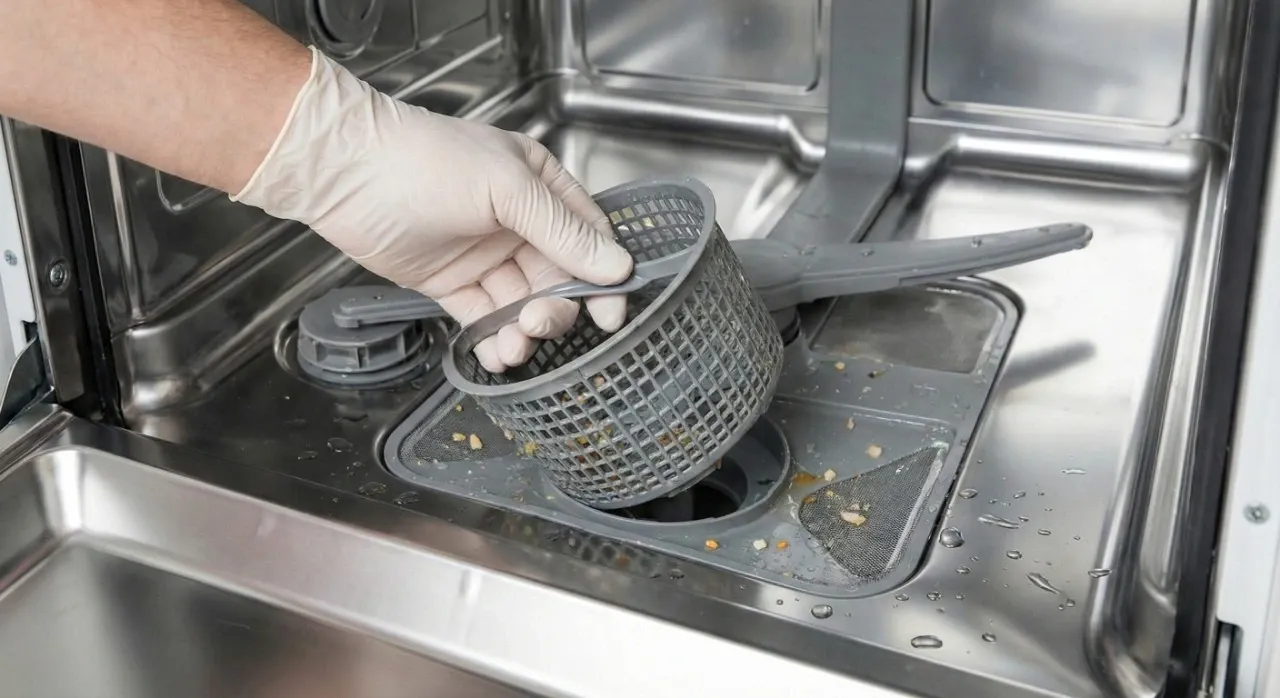
Dishwasher not cleaning bottom rack issues are different from top rack ones. The bottom arm sits right over the filter, so it’s the first to get clogged if debris falls through.
Troubleshooting the Bottom Rack:
● Clear the Arm: Pop the bottom arm off (usually just lifts up). Clean out the center hub where the water enters.
● Check Pump Housing: Wipe the area under the arm—stray food bits here can block the flow.
● Loading Tips: Don't overload. Keep big pots on the sides. If you block the center, the water can't shoot up to the rest of the machine.
A properly loaded bottom rack lets water blast upward, which actually helps clean the top rack too.
What to do if your dishwasher is not cleaning isn't about guessing; it's about checking the likely suspects. Use this list to find the problem fast.
Immediate Checks:
● Clean the filter thoroughly and check for blockages.
● Verify both spray arms spin freely and have clear holes.
● Ensure water temperature reaches at least 120°F.
● Check that detergent dispenser opens during the cycle.
● Remove any items blocking spray arm rotation.
Secondary Diagnostics:
● Run an empty cycle with vinegar to remove hard water buildup.
● Test water pressure by running your kitchen faucet.
● Inspect the heating element for visible damage.
For dishwasher running but not cleaning situations where you've tried all this and nothing worked, you might have a bad pump or valve. Instead of wasting hours guessing, call in the pros. Professional dishwasher repair saves you time and ensures the fix actually lasts.
‣ Start with the filter at the bottom—it's the most common cause. Pull it out, scrub it with hot soapy water, and put it back. Then, check the spray arms for clogged holes. Make sure your water is hot (120°F) and your detergent is fresh.
‣ It's usually one of three things: blocked spray arms aren't hitting the dishes, a clogged filter is recirculating dirty water, or the water isn't hot enough to melt the grease. Hard water can also leave a film that looks like dirt.
‣ If it's not cleaning properly, a component has likely failed or gotten dirty. The "Big Three" to check are the filter, the spray arm holes, and the water temperature. Also, make sure you aren't blocking the spray arms with tall plates.
‣ Follow this order for the best results:
• Deep clean the filter.
• Spin the spray arms and poke out any clogged holes.
• Check your water temp (run the sink first!).
• Run a hot cycle with vinegar to strip out mineral buildup.
‣ Professional technicians can diagnose complex issues and restore your appliance to optimal performance. Contact expert dishwasher repair services for reliable solutions and guaranteed results.
‣ If your dishwasher is brand new, it likely isn't broken. The most common reasons are installation errors (like a kinked drain hose) or user error. New "high-efficiency" models use less water, so they require hot water (120°F) right from the start. Make sure you run the kitchen sink before starting the cycle, and double-check that you didn't accidentally block the spray arms when loading.
‣ If your pod or tablet is still stuck in the dispenser after the cycle, it usually means the dispenser door was blocked. A tall plate or cutting board placed in front of the dispenser can stop it from popping open. It can also happen if the water isn't hot enough to melt the outer wrapper. Ensure the dispenser has a clear path and your water temperature is up to par.
‣ Cloudy glasses are the hallmark of hard water deposits. If the film wipes off with vinegar, it’s mineral buildup (calcium) from hard water. To fix this, you must use a Rinse Aid (like Jet-Dry) to help water sheet off the glass. If the film doesn't wipe off, it might be permanent etching from using too much soft detergent, but hard water is the usual suspect.


