
Our Articles


Blog

Published on December 8, 2024
There is nothing worse than walking into your kitchen in socks and stepping into a cold puddle. A leaking dishwasher isn't just a nuisance; it is a ticking time bomb for your hardwood floors, cabinetry, and subflooring.
I have visited hundreds of homes—from historic bungalows to modern new developments—where a simple $20 part failure caused thousands of dollars in water damage because it was ignored for too long.
If you are frantically Googling "why is my dishwasher leaking" or noticing water pooling underneath, this guide is for you. We will break down what causes a dishwasher to leak, how to check them yourself, and when it’s time to call in a pro before the floorboards warp.
Before you start taking things apart, look at the water itself. As a technician, I always ask: "Why does my dishwasher leak only at certain times?" The answer cuts troubleshooting time in half.
✅ Clean, Clear Water: If the water on your floor is clean, the leak is likely happening early in the cycle or when not in use.
✅ Suspects: Water inlet valve, dishwasher seal leaking, or loose water supply line.
Dirty, Soapy, or Brown Water: If the water is gray or soapy, the leak is happening during the wash or drain cycle.
Suspects: Dishwasher drain hose leaking, pump seal, or a clogged filter causing overflow.
Most dishwasher leaks happen for predictable reasons. Once you identify the location, the fix becomes much simpler.
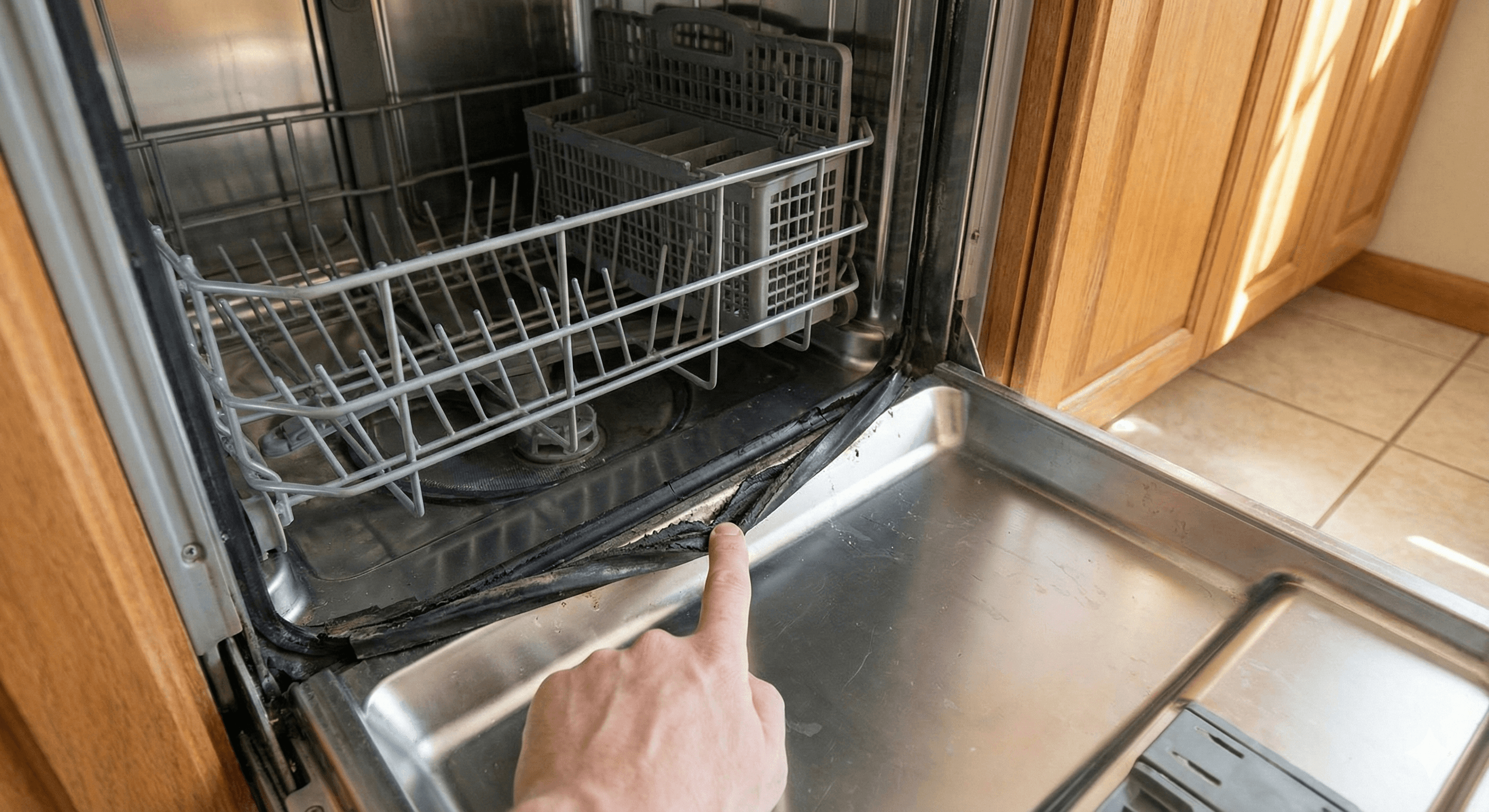
This is the single most common issue I see. When water seeps out from the front edge, do not replace the door immediately.
✔️The Cause: The door gasket (the black rubber seal) often gets brittle, cracks, or simply gets coated in food gunk.
✔️The Latch Factor: If the door clicks but wiggles, the latch isn't pulling the door tight enough against the seal.
✔️Technician’s Secret: Don't replace the gasket yet! First, take a warm, wet cloth and wipe the gasket clean. Sometimes, a simple build-up of old soap and food prevents the door from sealing. If it feels hard or torn, ONLY then should you replace it.
This is the dangerous one because you often don't see it until the floor is ruined. A dishwasher leaking into basement/floor areas often starts here. If water is pooling directly under the center of the machine, it is usually a hose connection or a failing pump seal.
🟢The Cause: The clamps holding the drain hose or water inlet hose can loosen from vibration over time.
🟢The Fix: You’ll need to remove the "kick plate" (the bottom panel). Use a flashlight while the machine is running. If you see active dripping from the motor area, you have a dishwasher leaking from bottom pump issue, which usually requires a professional replacement.
Corner leaks usually mean something specific is failing in that exact area.
🟠Bottom Left Corner: This often traces back to the Water Inlet Valve or a clogged air vent. Many units have a drying fan on the top left door. If the duct gets clogged with lint, condensation builds up inside the door and drips down the left corner.
🟠Bottom Right Corner: This typically involves the Drain Pump or hose connections, which are often located on the right side of the pump assembly.
If you wake up to a puddle but didn't run the dishwasher last night, you have a Water Inlet Valve failure.
🟡The Explanation: This valve holds back the water pressure from your house. If sediment (common in hard water areas) gets stuck in it, it won't close fully. Water trickles in all night until it overflows.
🟡Urgent Action: Turn off the water supply valve under your sink immediately.
If water spews out of the small chrome cylinder next to your faucet, you have an air gap clog.
🟣The Cause: A blockage in the hose running to the garbage disposal.
🟣The Fix: Clear the food debris. This is often why dishwasher leaks occur during the drain cycle.
Different manufacturers use different designs. Asking "Why would a dishwasher leak?" depends heavily on the logo on the front.
☑️Whirlpool Dishwasher Leaking From Bottom: On Whirlpool and KitchenAid models, the diverter motor seal is the weak point. It is a small rubber grommet underneath the sump that wears out after 5-7 years, letting water drip directly onto the floor.
☑️GE Dishwasher Leaking From Door: We frequently see GE spray arms split at the plastic seam. Instead of spraying up at the dishes, they spray sideways—directly at the door seal. The seal gets overwhelmed by the high pressure and leaks.
☑️Samsung Dishwasher Leaking (LC Code): Samsung units are sensitive. If you see an "LC" or "LE" error code, the leak sensor in the bottom pan is wet. This is often caused by a loose drain hose connection or even high humidity, not always a broken part.
☑️Bosch Dishwasher Leaking: Bosch units are generally reliable, but leaks often happen at the sump area or check valve. These parts can accumulate food debris and fail to seal properly. Regular filter cleaning is the best prevention here.
☑️Frigidaire Dishwasher Leaking: Often caused by a misaligned splash shield at the bottom of the door.
☑️LG Dishwasher Leaking: Look for issues with the steam vent assembly on the door. If the gasket around the vent fails, condensation drips down the front panel.
Some leaks you can handle yourself with basic tools and a little patience. Here is a step-by-step guide for the brave DIYer asking "Can a leaking dishwasher be repaired?"
What you need: New gasket (check your model number), dish soap, clean cloth.
Open the dishwasher door and locate the gasket around the door opening.
Start at one corner and carefully pull the old gasket out of its groove.
Clean the entire groove with warm soapy water—get all the gunk out.
Starting at the top center, press the new gasket into the groove.
Work your way around the door, making sure the gasket seats properly in the corners.
What you need: Adjustable wrench, screwdriver, towels.
Turn off power to the dishwasher at the breaker and shut off the water supply under your sink.
Pull the dishwasher out from under the counter.
Locate the ribbed plastic drain hose. Check the clamps at both ends. If they are wet, tighten them carefully.
Inspect the hose for cracks. If the plastic is split, do not use tape—replace the entire hose.
Why is dishwasher leaking foam? Did you use the wrong soap? Using regular dish soap (like Dawn) instead of dishwasher detergent creates massive foam that pushes water out of the door vents.
The Fix: Pour a cup of cooking oil into the bottom to kill the suds, then run a drain cycle.
If your dishwasher isn't level, water will pool against the door seal.
The Fix: Put a carpenter's level on the open door. Adjust the front feet until the bubble is perfectly centered.
I often get asked, "Is it worth fixing a leaking dishwasher?" In most cases, a repair is almost always cheaper than replacing water-damaged floors.
🟣Simple Fixes ($100 - $200): Hoses, valves, door gaskets, and seals. These are definitely worth doing.
🟣Major Fixes ($250+): Motors, tubs, and main control boards.
✔️ Rule of Thumb: If the unit is under 7 years old, fix it. If it is over 10 years old and needs a major motor repair, replacement might make more sense.
The real question is: What is the cost of NOT fixing it? Water damage to your kitchen floor and cabinets can easily run $2,000–$5,000. A repair looks pretty good compared to that. Learn more about specific Dishwasher Repair Guide to extend your Dishwasher’s lifespan.
DIY fixes work great for simple problems, but some situations call for expert help. Pulling out a built-in dishwasher to replace a motor is risky—one slip can crack your countertop or pinch a copper water line.
You should call a professional service if:
🟢Water is leaking underneath the floorboards or into the basement.
🟢Electrical components are getting wet.
🟢You have a Whirlpool, Bosch, or Samsung unit with specific error codes.
🟢The leak persists after you have replaced the gasket.
Water damage doesn't wait for a convenient time. Whether you need a quick
diagnostic, a part replacement, or a full repair, getting it done right the first
time saves you thousands in the long run.
Need Expert Help? We offer reliable diagnostics and fast service to get your kitchen back to normal Dishwasher Repair Service .
Here are the most common questions we receive from homeowners dealing with dishwasher leaks.
Leaks underneath the unit are usually caused by a loose hose clamp, a cracked drain hose, or a failing pump seal. If the water appears directly in the center, the pump or motor assembly is the likely culprit.
Generally, yes. If the repair cost is less than 50% of the price of a new machine and your unit is under 7 years old, fixing it is the smart financial move. Simple leaks like gaskets and valves are almost always worth repairing.
Remove the bottom "kick plate" panel and use a flashlight while the cycle runs. If water drips from the front, it's a door issue. If it drips from the center or back, it's a pump or hose issue. Also, check if the water is clean (supply leak) or dirty (drain leak).
Front leaks are caused by three main issues: a damaged door gasket, a misaligned door latch, or a split spray arm that shoots water horizontally against the door seal instead of vertically at the dishes.
First, clean the gasket with warm soapy water to remove food debris. If it is torn or brittle, peel it out of the track and press a new OEM gasket into place, ensuring it seats fully in the corners.
Aside from visible puddles, look for warped floorboards in front of the unit, a musty smell, or "LC/LE" error codes on the display. You may also notice the water level inside the tub is lower than usual during a cycle.
Check the clamp connection at the sink or garbage disposal and tighten it with a screwdriver. If the hose itself has a crack or split, do not try to patch it with tape—replace the entire drain hose to prevent future flooding.
This happens when you use regular hand soap (like Dawn) instead of automatic dishwasher detergent. The excess suds expand and push water out of the door vents. Pour vegetable oil into the tub to break the foam and run a drain cycle.
Check the lower door gasket and the leveling legs. If the dishwasher is tilted forward, water will pool against the door. Use a spirit level and adjust the front legs to slightly elevate the front of the machine.
You should never use silicone or caulk to "seal" a dishwasher from the outside. The only way to properly seal a leak is to replace the failing component (gasket, hose, or valve) that is causing the water to escape.
Yes, 90% of dishwasher leaks are repairable. Whether it's a simple seal replacement or a new pump, a professional can restore your unit to working order quickly Fair Appliance Repair Service.


