
Our Articles


Blog

Published on June 12, 2025
A range hood is a key appliance in any kitchen. It helps control smoke, grease, and cooking smells, keeping your kitchen fresh. When the control panel stops working, though, your kitchen can quickly become smoky and frustrating. If you’re facing unresponsive buttons, a dead display, or fan speed problems, this guide is here to help. We’ll cover common range hood control panel issues, share quick DIY fixes, and let you know when it’s time to call a professional for reliable service to fix range hood control panel issues.
Range hoods play a vital role in any kitchen by removing smoke, steam, grease, and odors from the air, making your cooking space more comfortable and safe. However, when the control panel malfunctions, it can quickly turn your kitchen into a frustrating environment.
The control panel is the heart of the range hood, regulating fan speeds, lighting, and other settings. If it stops working, it can disrupt your cooking routine and leave you with an unpleasant atmosphere. Here are some of the most common reasons why range hood control panels fail:
Cooking oils and grease can build up in your range hood over time. This buildup can block the touch sensors or switches on the control panel, making the buttons stop working or causing the fan speed to act up.
Power surges, particularly in older Citrus Heights homes, can fry the control board of your range hood, causing it to fail unexpectedly.
Like most appliances, range hoods experience wear and tear over time. The buttons on the control panel typically last between 5 and 10 years, after which they may start malfunctioning.
Steam from boiling pots and pans can seep into the control panel, especially if the fan isn’t on. Over time, moisture buildup can damage the control board, leading to a dim or unresponsive display.
High heat from the stovetop can cause the solder joints on the control board to crack over time (known as "cold solder joints").
Here are some signs that your range hood control panel may be malfunctioning:
•Unresponsive Buttons: The fan or lights won’t switch on/off.
•Erratic Fan Speeds: The fan speed is stuck or changes randomly.
•Dim or Dead Display: The touch panel stops responding or shows a dim display.
•Strange Noises: You may hear clicking, buzzing, or static noises from the control board.
Local Factor: Citrus Heights kitchens often experience heavy grease and high moisture levels, which can shorten the lifespan of range hood control panels.
If your range hood control panel isn’t working, you can try these DIY fixing steps before calling a professional:
Turn off the breaker for 5–30 minutes to reboot the digital panel and clear glitches. For smart LG/Samsung models, check the manual for the factory reset button or app-based firmware updates.
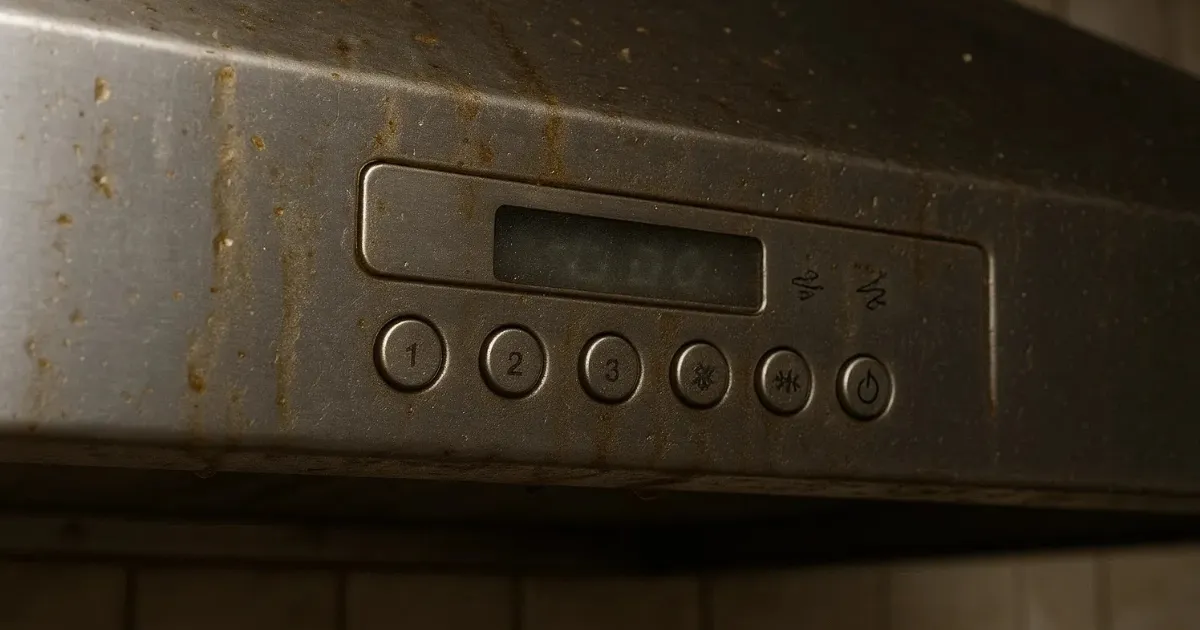
Wipe the buttons with a damp microfiber cloth. Avoid harsh cleaners that could damage circuits. Use an electronic contact cleaner for residue.
Power off, unplug the hood, and remove the cover. Scan for loose/burnt wires, corrosion, moisture, cracks, discolouration (overheating), or loose ribbon cables, reseat them. Look for burnt capacitors/resistors from surges.
Clogged filters push grease onto panels, wash the metal mesh every 3 months (weekly washing is ideal). Inspect ducts for blockages (clean rigid ducts yearly); spin fan blades manually (unplugged) for motor issues; replace burnt LED bulbs.
Different brands have different weak points. Here’s a quick overview of common issues:
Touch sensors frequently fail due to grease buildup. Often suffer from "Overlay" failure, in which the plastic cover becomes brittle and cracks, allowing steam to enter.
Fix: Replace the sensor pads.
Digital boards can fry during power surges. Wi-Fi connectivity issues often mimic a dead panel. Check the "SmartThings" app for firmware updates before replacing hardware.
Fix: Install a surge-protected OEM board.
Mechanical switches wear out over time. Use high-voltage transformers that often fail before the control board does. Always test the transformer output first.
Fix: Replace with genuine parts.
Panels are susceptible to moisture damage.
Fix: Install a new gasket and board.
Smart panels may lose Wi-Fi connectivity.
Fix: Reconnect and replace the smart board.
Heavy grease buildup clogs panel buttons.
Fix: Clean thoroughly and replace the keypad if necessary.
When your range hood control panel starts acting up, repair costs may vary depending on the specific issue. Below is an overview of typical repair costs to help you understand what to expect:
Cost Range: $80–$150
Over time, grease and grime can accumulate around the buttons, making them unresponsive. Cleaning the buttons helps restore their functionality, especially in kitchens where grease buildup is common.
Cost Range: $150–$300
For range hoods, especially digital models like Samsung and LG, the control board may need repair if the buttons or display malfunction. This is an important component that controls most of the features, and getting it fixed ensures the fan and lights work properly.
Cost Range: $100–$250
If your range hood's fan speeds are erratic or it’s not functioning at all, the fan motor may be the culprit. A motor fix restores the fan’s performance and provides smooth operation during cooking.
Cost Range: $200–$400
If your range hood has advanced features, such as those in smart models from LG or Samsung, a full-panel replacement may be necessary. This includes replacing the control panel and any defective components, making sure the hood functions as good as new.
Before our technician arrives, here’s how you can prepare:
•Unplug the range hood for safety.
•Clear the stove area of any pots or utensils.
•Check your manual for your model number.
•List symptoms like unresponsive buttons or fan speed issues.
•Lightly wipe away any grease to speed up diagnostics.
To keep your range hood in great condition, follow these simple tips:
•Clean the buttons monthly with a mild cleaner.
•Wash metal filters every 3 months.
•Replace hood lights promptly if they dim.
•Always use the fan when cooking.
•Schedule a yearly check-up.
Although DIY can solve minor issues, some problems require a professional’s expertise. Call professional repair service if:
•Buttons are still unresponsive after cleaning.
•You notice a burning smell or visible sparks.
•Error codes are flashing on the digital panel.
•The fan speed remains erratic, even after cleaning the filter.
Professional technicians are equipped with diagnostic tools and OEM parts for major brands like Samsung, Whirlpool, GE, Maytag, LG, and Kenmore in Citrus Heights and nearby.
•Certified Technicians: 10+ years of experience.
•Same-Day Service: Available in the 95610 & 95621 zip codes.
•Emergency Repairs: 24/7 support for sparking of boards.
•Warranty: 90-day parts & labor guarantee.
•Honest Pricing: Free upfront quotes.
•Serving Citrus Heights, Foothill Farms, Roseville, Fair Oaks, and Downtown Sacramento.
Contact us today for a 90-day warranted range hood repair on all major brands!
A: The most common reasons for unresponsive range hood buttons are grease buildup behind the panel, a loose ribbon cable connection, or a faulty control board. Start by performing a 60-second power reset at the breaker. If the problem continues, clean the contacts with an electronic-safe cleaner.
A: Yes, replacing a control board is a moderate DIY task. You must disconnect the power, remove the outer housing, unplug the wiring harnesses, and swap the old board for a manufacturer-approved OEM part. However, if you see signs of overheated wiring or sparks, call a professional technician.
A: If the lights work but the fan doesn't, the motor or its capacitor is likely the issue. If neither the lights nor the fan works, or if the display is blank despite having power, the control panel or main logic board is the culprit.
A: GE, Whirlpool, Samsung, Maytag, LG, Kenmore, and more.
A: 5–10 years, depending on maintenance.
A: $80–$300, depending on the issue (board replacements are more expensive).
A: Yes, we provide emergency appliance repair services in Citrus Heights for urgent control board failures.


