
Our Articles


Blog

Published on May 6, 2025
A washing machine door that won't close is one of those problems that stops your whole laundry routine cold. Most modern washers won't even start a cycle if the door isn't fully latched and locked that's a built-in safety feature, not a glitch. The good news is that most door-closing problems in Sacramento and Roseville homes come down to a handful of causes, and several of them you can fix yourself in under 10 minutes with no tools at all.
This guide walks you through every common cause, starting with the simplest free fixes and moving through to the parts that'll need replacement. Follow the steps in order, and you'll either solve the problem yourself or know exactly what to tell a technician when you call.
• Before diving into each fix, it helps to match what you're seeing to the most likely cause.
• If the door pushes back when you try to close it, you're almost certainly dealing with trapped clothing or an overloaded drum start with Fix 1.
• If the door swings shut but doesn't click or latch, there's likely debris in the latch mechanism or a damaged door strike go to Fix 2 or Fix 6.
• If the door closes and appears to latch, but the washer still won't start, it's usually an electronic glitch or a failed lock switch try the power reset in Fix 4 first.
• If the door sits crooked or doesn't align properly with the frame, check whether the machine's level is correct and whether the hinges are tight and covered in Fix 3 and Fix 9.
• Finally, if the rubber seal is bulging or visibly cracked, that's a gasket issue Fix 5 has you covered.
Issue: The door won't close all the way, or it pushes back against you when you try to shut it.
This is the most common and easiest to fix cause. An overfilled drum or a small item between the gasket and glass blocks the door from closing.
Solution: Open the door fully and check around the entire rubber gasket seal. Run your hand around the inside lip of the gasket and pull back any folds where clothing tends to hide. Remove any trapped items.
If the drum looks packed to the top, take out three or four items a properly loaded front-loader should have a hand's width of space at the top of the drum, and a top-loader should have a few inches of clearance below the rim. Close the door again and try latching it. In most cases, this solves the problem immediately.
Pro Tip: Get into the habit of checking the gasket before every load. It takes about 5 seconds and prevents door-closing issues, water leaks, and gasket wear.
Issue: The door closes partway, but the latch won't engage, or it feels sticky and stiff going in.
Hard water, detergent, lint, and debris can build up on the gasket or inside the latch area, blocking the latch from sliding and locking.
Solution: Unplug the washer before cleaning around the lock area. Wipe the entire rubber gasket with a damp cloth, paying attention to the area around the latch side of the door. Use a small brush or an old toothbrush to clean inside the latch housing and around the strike plate on the door frame. Remove any visible lint, debris, or hardened soap residue.
Avoid soaking the area with water or spraying cleaner directly into the lock mechanism moisture behind the electrical components can cause additional problems. Dry everything with a clean cloth, plug the washer back in, and test the door.
Don't use abrasive cleaners or metal tools on the latch or gasket to avoid scratches or tears, which may require part replacement.
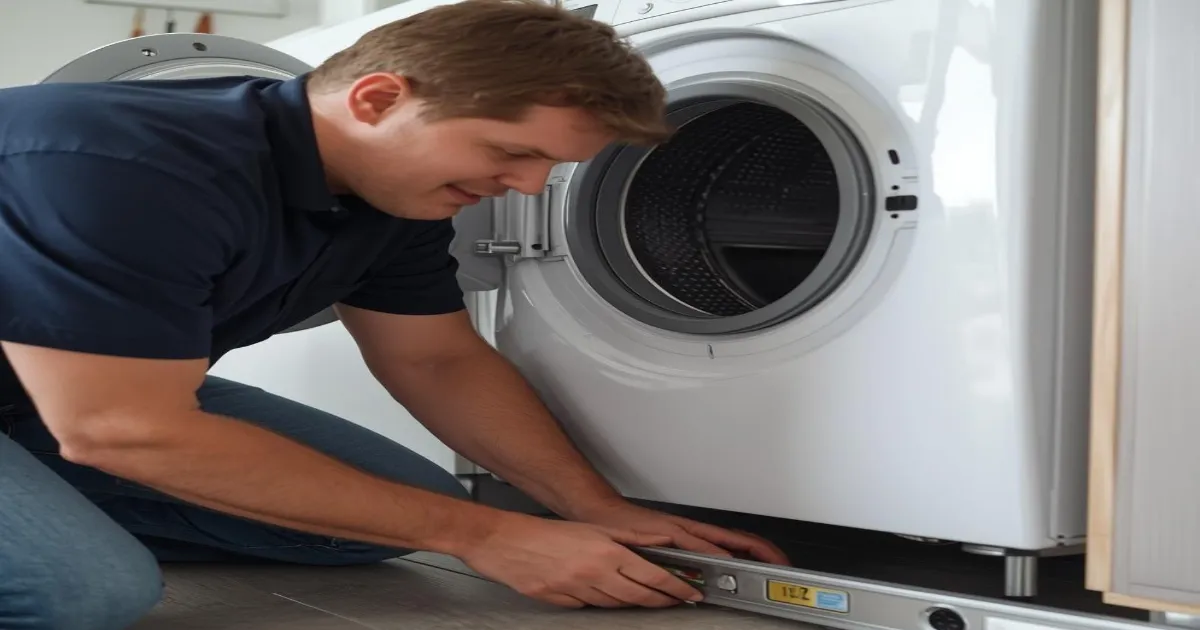
Issue: The door doesn't sit evenly in the frame; there's a visible gap on one side, or it swings open on its own after you close it.
A washer that isn't level can twist the door frame, misaligning the latch and strike, so the door won't close. This often happens on sloped floors or after moving the machine.
Solution: Place a spirit level on top of the washer check it both front-to-back and side-to-side. Most washers have adjustable leveling feet at each bottom corner that you can turn by hand or with a wrench. Turn the foot clockwise to raise that corner and counter-clockwise to lower it.
Adjust until the bubble's centered on the level in both directions. Once the machine's level is checked, check whether the door now aligns properly with the frame before running a cycle.
Pro Tip: After leveling, rock the washer gently from corner to corner. If it still wobbles, one foot's not making firm contact with the floor. Adjust that foot until all four corners are stable.
Issue: The door appears to be closing and latching normally, but the washer still won't start or shows a door lock error code.
Cause: The electronic control board can occasionally glitch and get stuck in a locked state, even when the door's physically closed and the latch is working fine. The board thinks the door's open or that a previous lock cycle didn't complete, so it refuses to start a new cycle. This is more of a software hiccup than a hardware failure, and a power reset usually clears it.
Solution: Unplug the washing machine from the wall outlet completely. Wait a full minute not just 10 seconds. This gives the control board's capacitors enough time to fully discharge and reset. Plug back in, try the door, and cycle again. If your washer's showing an error code, write it down before you reset it. Check your owner's manual or look it up by brand online door lock error codes often tell you exactly which component is at fault, which saves a lot of guesswork.
Issue: The door closes and latches, but water leaks during the cycle, or the gasket is visibly cracked, torn, or hardened.
Cause: The rubber door gasket creates the watertight seal between the door and the drum. Over time especially in front-loaders used daily the gasket dries out, cracks, or develops tears. A damaged gasket can also bunch unevenly, preventing the door from seating flush against the frame. This is one of the more common issues in older front-loaders throughout the Sacramento area.
Solution: Pull back the gasket folds and inspect the full circumference of the seal. Look for cracks, tears, hard spots, or sections that no longer sit flat against the drum opening. Minor debris buildup can be cleaned with a vinegar solution and a toothbrush.
Actual cracks or tears in the rubber can't be repaired the gasket needs to be replaced entirely. Replacement gaskets are available for all major brands, and most are designed for DIY installation, though the process takes about 30 to 45 minutes and varies by model. If you're not comfortable with it, a local technician can handle it quickly.
Issue: The door closes, but the latch hook has nothing to catch on, or you can see that the plastic piece on the door frame is cracked or missing.
Cause: The door strike is the plastic or metal piece mounted on the door frame that the latch hook grabs onto when the door closes. On front-loaders, it's on the machine frame; on top-loaders, it's on the lid or the top panel. With regular use, this piece takes a lot of mechanical stress, and it's one of the first components to crack or break especially on washers that see heavy daily use.
If the strike is damaged or missing, replace it using your washer’s model number to order the correct part. Swapping it out usually takes under 10 minutes.
Note: Don't try to glue or tape a broken door strike back together. The latch repeatedly applies mechanical force to this part with every cycle. A glued strike will fail quickly and can jam the latch mechanism, creating a bigger repair.
Fix 7: Inspect and Replace the Door Latch Assembly
Issue: The strike plate looks fine, but the latch hook on the door doesn't extend, spring back freely, or click into place.
The latch assembly is on the underside of the door or lid. It hooks into the strike and signals the control board. If the latch spring is worn, the hook is stuck, or the contacts fail, the door won’t stay closed, or the washer won’t receive the closed signal. Many front-loaders display a door latch error codecheck your manual for details.nd.
Solution: Test the latch hook manually by pressing it in with your finger and releasing it. It should spring back smoothly with no sticking. If it sticks, moves sluggishly, or doesn't spring back at all, the assembly needs to be replaced. Use your washer's diagnostic mode if it has one most modern machines'll display a door latch error code that confirms this diagnosis. The door latch assembly is available as a replacement part for all major brands. On front-loaders, it's accessed behind the front panel; on top-loaders, it's on the top of the machine.
Pro Tip: If your washer has a diagnostic mode, run it before ordering parts. The error code it displays can confirm whether the problem is the latch assembly, the lock switch, or the control board saving you from buying the wrong part.
Issue: The door closes, the latch hooks in, but the washer still won't start or immediately unlocks after starting.
Cause: The door lock switch also called the interlock is a separate electrical component from the latch assembly. Its job is to verify that the door is securely locked and to keep it locked throughout the wash cycle.
If the switch's internal contacts fail, the washer gets no confirmation that the door's locked and won't run. This is different from the latch assembly failing the door can physically latch, but the electrical signal still doesn't go through.
Solution: This repair requires a multimeter to test properly. Set the multimeter to the continuity setting and test the switch terminals according to your washer's wiring diagram, which is found in the owner's manual or online using your model number.
A working switch will show continuity when the door's locked and none when it's open. If the switch fails this test, it needs to be replaced. Always disconnect power before testing or replacing any electrical component. Install the replacement following the manufacturer's wiring diagram, reconnect all terminals securely, and reassemble before testing.
Note: If you're not comfortable working with a multimeter or handling electrical components, skip this step and call a technician. The interlock is directly wired into the machine's electrical system, and an incorrect installation can create a safety hazard.
Issue: The door droops, swings unevenly, or visibly doesn't line up with the frame when you try to close it.
Cause: Door hinges take the full weight of the door every time it's opened and closed. Over years of use, the hinge screws can loosen, the hinge pin can wear down, or the hinge itself can bend slightly especially if the door's been opened forcefully or a heavy load's been hung on it.
Even a small amount of hinge wear can cause the door to sit millimeters out of alignment, enough to prevent the latch from engaging the strike plate properly.
Solution: Open the door and inspect both hinges carefully. On front-loaders, the hinges are on the outer edge of the door frame. On top-loaders, there are usually two hinges at the back corners of the lid. Check that all hinge screws are tight use a screwdriver to tighten any that are loose, but don't overtighten or you'll strip the threads. Check the hinge itself for visible bending or cracks. If a hinge is damaged, it needs to be replaced. If the screws are tight, the hinges look straight, but the door's still misaligned, the hinge pins inside may be worn, and the whole hinge assembly needs to be replaced.
Issue: You've checked and tested everything above, all the physical components look fine, but the washer still won't register the door as closed.
Cause: The main control board is the last component to consider and the least likely cause of a door that won't close. The board receives the closed-door signal from the latch assembly and lock switch, then allows the cycle to start. In rare cases, a failed relay or burnt circuit on the control board prevents it from processing this signal correctly even when every other component is working fine.
Solution: Before replacing the control board, run the washer's diagnostic mode one more time to confirm all other components are passing their self-tests. If the board's showing an error that points to itself, or if every other part has been tested and confirmed working, the board needs to be replaced.
On front-loaders, the main control board is typically under the top of the machine or inside the control panel. On top-loaders, it's inside the console. Control boards are model-specific use your exact model number when ordering. If you're not comfortable diagnosing or replacing a control board yourself, this is the point to call a professional.
Here's a quick summary of every problem and its fix:
• If the door pushes back on closing, the drum's overloaded, or there's clothing trapped in the gasket remove items and check the seal.
• If the latch won't engage, debris is likely blocking the mechanism unplug and clean the latch, strike, and gasket.
• If the door sits crooked in the frame, the machine is unlevel, or the hinges are worn, level the machine and tighten or replace the hinges.
• If the door latches but the washer won't start, try a power reset by unplugging for a full minute.
• If the door seal looks cracked or damaged, it can't be repaired replace the gasket.
• If the latch has nothing to catch on, the door strike is broken and needs to be replaced, since it can't be repaired.
• If the latch hook sticks or doesn't spring back freely, run the diagnostic mode and replace the latch assembly.
• If the door locks but the washer unlocks immediately, test the interlock switch with a multimeter and replace it if it fails.
• If all parts check out and the door's still not recognized as closed, the main control board may have failed, and you'll need professional diagnosis.
Several of these fixes don't require any tools or parts at all checking for trapped clothing, cleaning the latch, leveling the machine, and performing a power reset all take under 10 minutes and are free.
These are always worth doing first before spending money on parts. You can also confidently handle replacing a door strike, door gasket, door latch assembly, or hinges if you're comfortable following a step-by-step guide and using basic hand tools.
Call a professional when you're dealing with the interlock switch or main control board. Both involve electrical testing and wiring connections that, if done incorrectly, can create safety hazards or damage additional components.
The same applies if you've already replaced parts and the problem keeps coming back recurring lock failures after DIY repairs usually point to a deeper issue that needs proper diagnostic equipment to identify.
A technician from Fair Appliance Repair Service can diagnose and resolve these problems in a single visit, with parts carried for all major brands.
Most washing machine door problems are quick fixes once you know what you're looking for and many of them cost nothing at all. But if you've worked through these steps and the door's still not closing or locking properly, or if you'd rather have a certified technician handle it from the start of repairing washing machine, Fair Appliance Repair Service is ready to help.
We serve homeowners throughout Roseville, Sacramento, and the surrounding area with same-day and next-day appointments. Our technicians carry parts for all major brands and can diagnose and resolve most washing machine door problems in a single visit with transparent pricing and a service warranty on every repair.
Call us at 916-333-8388 or book your appointment online today.
If there's no visible obstruction, the most likely causes are a broken door strike, a sticky or failed latch assembly, or a misaligned door due to a loose hinge or an unlevel machine. Work through Fixes 5 through 9 in order. If the door physically closes and latches but the washer won't run, try a power reset first that solves a lot of electronic lock errors without any parts needed.
This is usually the door lock switch or a control board glitch rather than a physical closing problem. Start with the power reset in Fix 4 it'll resolve electronic glitches in about a minute. If the problem comes back, the interlock switch needs to be tested with a multimeter. Check the display for an error code first, as most modern washers will tell you exactly which component is at fault.
Yes replacing a door strike is one of the easier washer repairs. The old one comes out with one or two screws, and the new one goes back in the same way. The key is finding the right part for your specific model. Use the model number on the label inside your door frame to find a compatible replacement.
Check the latch assembly on the door itself press the hook in with your finger and release it. If it doesn't spring back smoothly, it's worn out and needs to be replaced. Also, check whether the machine's level and whether the hinges are tight. A door that's even slightly out of alignment won't latch reliably.
The latch assembly is mechanical you can test it by hand. If the hook sticks or doesn't return freely, it's failed. The lock switch is electrical and needs a multimeter to test. If your washer shows a door error code, look it up by brand most manufacturers use separate codes for latch failures versus switch failures, which'll point you to the right part.
Yes. Unplug the machine for a full minute to reset the control board. On some Whirlpool models, you can also press and hold the Start button for 5 seconds to cancel a lock cycle. Samsung washers have a Child Lock feature check whether it's been accidentally activated by looking for a lock icon on the display. If it's on, hold the Child Lock button for three seconds to deactivate it.


