
Our Articles


Blog

Published on March 25, 2025
Your washing machine works hard every week. But there is a silent problem quietly shortening its life and inflating your monthly bills. Hard water. Tap water in many areas measures around 100 to 150 mg/L of dissolved minerals, placing it firmly in the moderately hard to hard category. According to local water quality reports, this mineral concentration remains fairly consistent year-round, with slight seasonal variation depending on whether water is sourced from surface water or groundwater wells.
That might not sound serious, but the mineral composition of hard water shows how calcium and magnesium build up over time. Over months and years, those minerals accumulate inside your machine and cause real, measurable damage to the heating element, the pump, the door seal, the inlet valve, and the drum itself.
This guide covers everything you need to know. The science behind hard water effects on washing machine in Sacramento, how it destroys specific components, real repair costs, a step-by-step prevention plan, and how front-load and top-load machines compare when it comes to hard water vulnerability.
• City water measures 100-150 mg/L, classified as moderately hard to hard.
• Hard water can cut your machine's lifespan from 10 to 14 years down to just 6 to 8 years.
• Limescale buildup on the heating element adds 25 to 30 percent to your energy bill.
• Scale buildup can void LG, Samsung, and Whirlpool warranties.
• Front-load washers are more prone to hard-water damage than top-load models.
• Monthly descaling with citric acid or vinegar prevents most calcium deposits from causing damage.
• Professional repair is almost always more affordable than full replacement.
Hard water isn't dangerous, but it's hard on your appliances. Here's how to identify complicated water problems:
• White, chalky deposits on faucets and shower heads.
• Spots on dishes after washing.
• Clothes feel stiff and scratchy after laundering.
• Soap that doesn't lather well.
• Blocked pipes lead to reduced water supply.
Hard water is found in almost 85% of homes in the US, with Sacramento being one of the hardest-hit areas. These minerals disrupt cleaning products, meaning they are not as effective and require more detergent to deliver the same cleaning power.
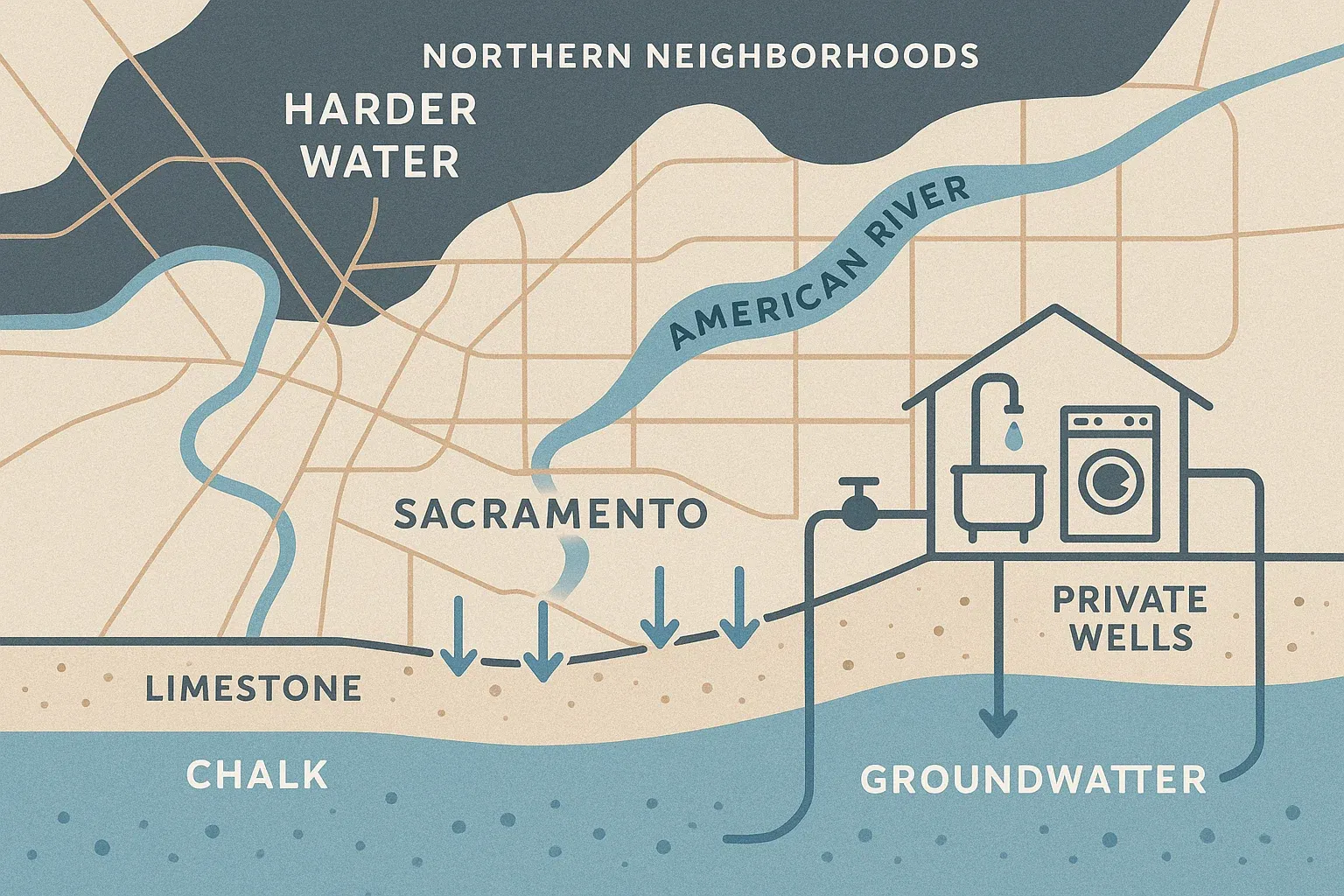
Sacramento's hard water is primarily sourced from our groundwater. As rain drains and travels through limestone and chalk deposits in our soil, it dissolves minerals that wash into our water supply.
The city's municipal water treatment does not strip these minerals because they are not deemed dangerous to health. Which means the hard water comes into our homes through:
• City water supplies
• Private wells
• Groundwater sources
The US Geological Survey places Sacramento in a moderate to hard water zone, with the northern parts of the city having harder water than neighborhoods in the south.
Hard water can do more than make your washing machine work harder – it affects your whole home and the environment:
• More energy is being consumed since appliances work more to heat mineral-rich water.
• It requires more detergent for cleaning, thus increasing the use of chemicals.
• Increased water usage as you might have to rinse clothes that do not come clean
• Shorter lifespans lead to more appliance replacements, which increases waste.
• Minerals found in deposits of mineral deposits inside pipes
• For homeowners in Sacramento, these environmental costs mean higher utility bills and a bigger carbon footprint.
Hard water does not cause one dramatic failure. It causes several smaller ones that quietly compound over time. Here is what is actually happening inside your machine with every wash cycle.
When hard water is heated during a wash cycle, dissolved calcium and magnesium precipitate, forming a rock-like limescale crust on the surface of the heating element. That crust acts as an insulating shell. The element then has to generate significantly more heat to push heat through it and into the water, which is why homes with hard water see a 20 to 30 percent increase in energy consumption, as explained in the section on how scale buildup increases energy use.
Left untreated, the element burns out entirely. Heating element replacement typically costs between $150 and $250, depending on your machine brand. That is a repair bill that a consistent descaling habit could have prevented entirely.
Front-load washers are especially vulnerable here because they use an internal heating element to bring water to the correct temperature. Top-load machines that rely on your home's hot water supply are less directly affected by this particular failure, though they still suffer limescale buildup in other components.
The chalky white film you might notice on the inside of your washing machine drum is calcium carbonate. It forms whenever hard water evaporates during and after a wash cycle, leaving dissolved minerals behind on every surface they touch.
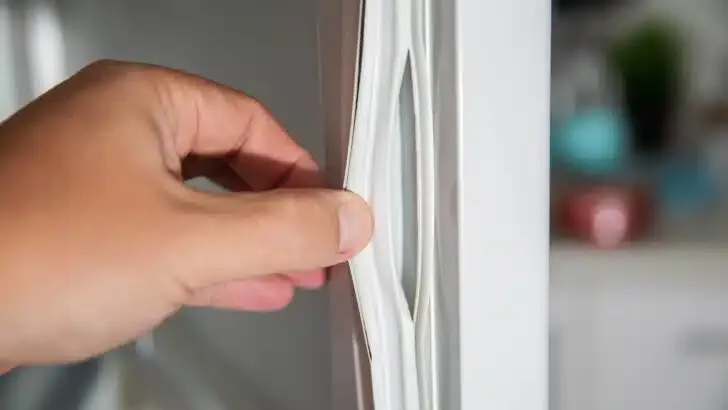
The rubber door gasket on front-load washers is particularly vulnerable. Over time, this buildup can also lead to sealing issues similar to washing machine door won’t close problems if not addressed early. Limescale collects in the folds of the gasket and gradually stiffens the rubber, causing it to crack and leak. A door seal replacement runs between $80 and $150. Catching scale buildup early, before it damages the rubber, can delay that cost by years.
Top-load washers develop drum scale, too, but because they don’t have the same door gasket design, they tend to avoid this specific failure point.
Your washing machine fills through an inlet valve connected to your home's water supply lines. Calcium deposits gradually narrow the valve's internal opening, which means the machine takes longer to fill, runs longer cycles, and uses more water. You will see this reflected in a slowly rising water bill.
In advanced cases, the valve clogs completely, and the machine will not fill. A common early warning sign is a hissing or straining sound during the fill cycle. Inlet valve replacement typically costs between $75 and $125.
As limescale builds up on interior surfaces and eventually flakes off, those loose mineral particles travel through the machine's pump. The abrasive grit wears down the pump impeller and motor bearings far faster than normal mechanical use would, often contributing to stability issues similar to washing machine imbalance over time.
Pump replacements run from $150 to $300. Full motor replacement can reach $250 to $400. These are among the most expensive hard-water repairs and are almost entirely preventable with regular calcium-deposit removal.
Hard water reacts chemically with standard laundry detergent to form calcium stearate, an insoluble, waxy compound that resembles soap scum. This residue coats the detergent drawer and the dispenser jets, preventing your detergent from being fully released into the drum during the wash.
The result is poor cleaning performance even when you use the correct amount of detergent. Many homeowners respond by using more detergent, which actually makes the buildup worse. The real fix is to clean the dispenser monthly and switch to a detergent specifically formulated for hard water.
Research from the Water Quality Research Foundation (2009) documented the measurable impact of water hardness on appliance longevity. Appliances running on softened water maintain efficiency and function significantly longer than those operating on hard water without any treatment.
For washing machines specifically, the difference is significant. A machine properly maintained with soft or treated water can last 10 to 14 years. In a hard-water household with no preventive measures, that lifespan drops to 6 to 8 years, sometimes less if the machine runs heavy loads regularly. That gap represents several years of appliance life and potentially hundreds of dollars in early replacement costs.
This is the detail that surprises most homeowners. Major appliance manufacturers, including Samsung, LG, Whirlpool, and GE, include water hardness thresholds in their warranty documentation. Several brands explicitly state that scale damage resulting from operating the machine in hard water conditions is not covered under warranty.
If your machine breaks down and a technician opens it up to find significant limescale deposits, the manufacturer may deny the claim entirely. Checking your appliance's manual for water hardness recommendations costs nothing and could save you from a denied warranty claim later.
This question matters when you’re buying a new machine or deciding which type to prioritize for maintenance.
Front-load washers are more vulnerable to hard water damage overall. They use an internal heating element that is directly exposed to calcium deposits. Their rubber door gaskets collect scale in every fold. Their drum seals and bearing systems are exposed to the same mineral-laden water with every cycle. Because front-loaders use less water per cycle, the concentration of minerals relative to the wash load is also higher.
Top-load washers draw water from your home's hot water supply rather than heating it internally, which removes one major limescale failure point. Their open-top design also allows the drum to dry out more quickly between washes, which slightly slows scale accumulation. They’re not immune — the inlet valve, pump, and drum all still face mineral buildup — but they tend to last longer in hard water conditions without intervention.
If you own a front-loader, your maintenance schedule needs to be more consistent and frequent than for a top-loader.
Prevention costs far less than repair. These seven steps are practical and based on what actually works for homeowners dealing with consistent mineral-rich water.
The most effective long-term solution is a whole-home water softener. These systems work through ion exchange — calcium and magnesium ions in the incoming water are replaced with sodium ions before the water ever reaches your appliances. Every tap, appliance, and fixture in your home benefits.
Installation typically costs between $400 and $1,500, depending on the system capacity and your home's size. If you're setting up a new laundry system, understanding the full washer and dryer installation process can help ensure everything runs efficiently from the start.
This single habit prevents the majority of limescale damage. Make sure the drum is completely empty. Add 100 grams of citric acid directly into the drum, or substitute two cups of white vinegar if citric acid is not available. Run the machine on its hottest cycle with no laundry and no detergent. Once that cycle finishes, run one additional plain hot water cycle to flush out any loosened mineral deposits. If you're not sure about the full process, follow this guide to clean your washing machine properly.
Citric acid is slightly more aggressive than vinegar and is the better choice if you can already see white buildup inside the drum. Vinegar works well as a monthly preventive measure. Never mix either with bleach.
Standard laundry detergents are formulated for average water conditions. In hard water, the minerals interfere with the detergent's cleaning chemistry, leading to the calcium stearate buildup described earlier.
Detergents formulated for hard water contain chelating agents, such as EDTA or NTA, that bind calcium and magnesium ions, preventing them from reacting with the soap. Look for Tide HE, Persil ProClean, or Ariel. Always use the dosage quantity listed specifically for hard water on the packaging, not the standard amount.
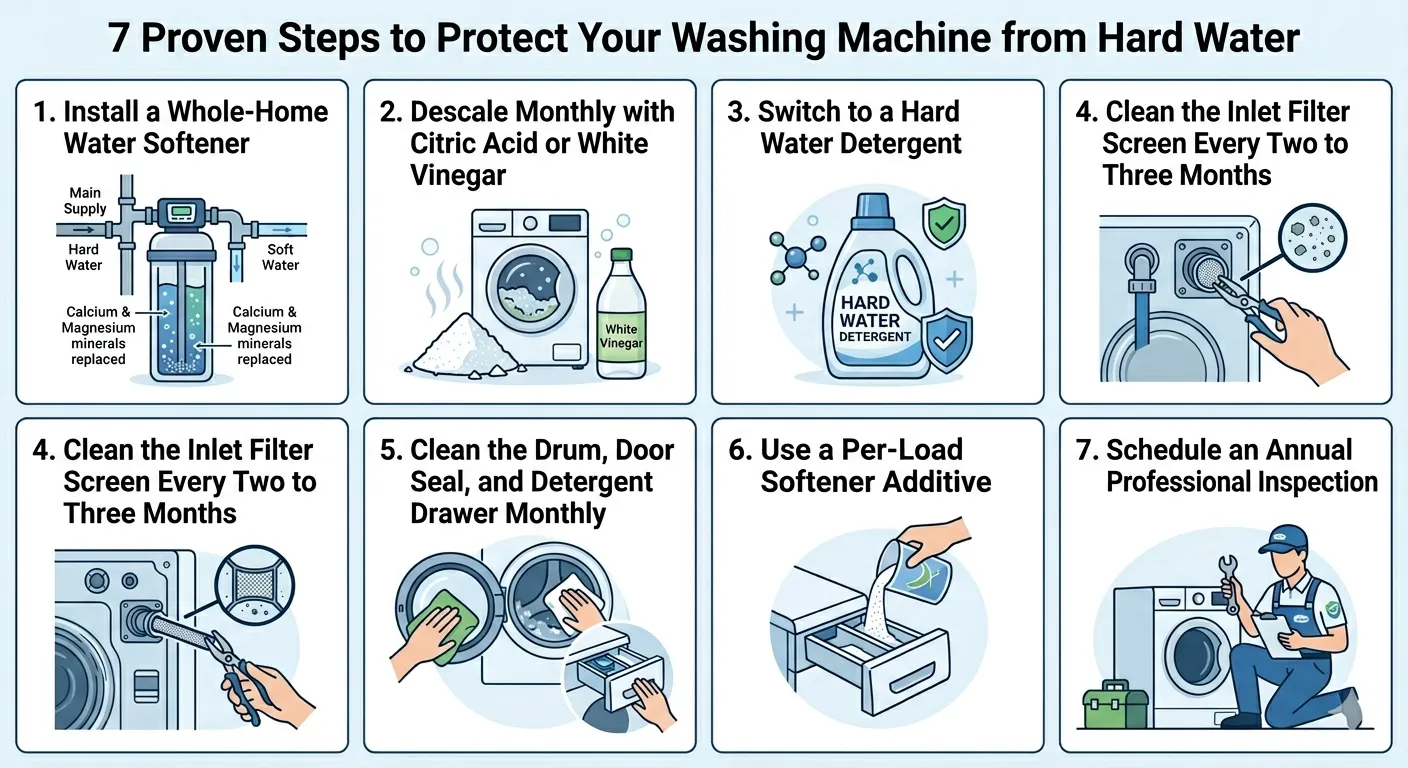
Behind the hot- and cold-water hose connections at the back of your machine are small mesh filter screens. Their job is to catch mineral particles before they enter the machine's internal components.
To clean them, first turn off the water supply valves behind the machine. Unscrew the inlet hoses and use pliers to pull out the small screens. Rinse them under running water, then use a soft brush to remove any scale or debris. Reattach the hoses and turn the water back on. This takes about fifteen minutes and makes a measurable difference in how long the inlet valve lasts.
After your monthly descaling cycle, use a cloth dampened with white vinegar to wipe down the rubber door gasket thoroughly, paying close attention to the folds where scale and mold tend to collect. Remove the detergent drawer completely and soak it in warm water with a splash of vinegar for twenty minutes. Use a small brush to clean the dispenser jets.
Leave the machine door slightly open after every wash cycle. This allows the drum interior to dry out between uses, significantly slowing both limescale accumulation and mold growth.
If a whole-home water softener is not currently in your budget, or if you rent and cannot install one, a per-load softener additive is the most practical alternative. Products like Calgon Water Softener added to the detergent drawer each wash help prevent mineral deposits from forming inside the drum and on internal components.
This is not as comprehensive as a whole-home system, but it produces a real improvement over no treatment at all and costs only a few cents per load.
Even with a consistent maintenance routine, the internal components of a washing machine benefit from a professional review once a year. A certified technician can identify early-stage scale buildup on the heating element, check the pump and motor bearings for grit wear, and inspect the inlet valve before it clogs completely.
Catching a problem at the early stage is almost always significantly cheaper than addressing it after a component has already failed.
Hard water damage accumulates quietly. By the time most people notice something is clearly wrong, the damage has been building for months. Here are the specific signs to watch for:
• White or chalky residue is visible inside the drum or on freshly washed clothes.
• Clothes feel stiff, rough, or look faded and dull after washing.
• The machine makes hissing or straining sounds when filling with water.
• Fill cycles take noticeably longer than they used to.
• Electricity or water bills have increased without a clear reason.
• A musty or sour smell from the machine or from laundry that was just washed.
• The door seal on a front-loader has visible cracks, stiffness, or discoloration.
• The machine has needed repairs more than once in the past twelve months.
If two or more of these apply to your machine, hard water is almost certainly a contributing factor. Many of these symptoms overlap with common washing machine problems homeowners face, so identifying the root cause early is important.
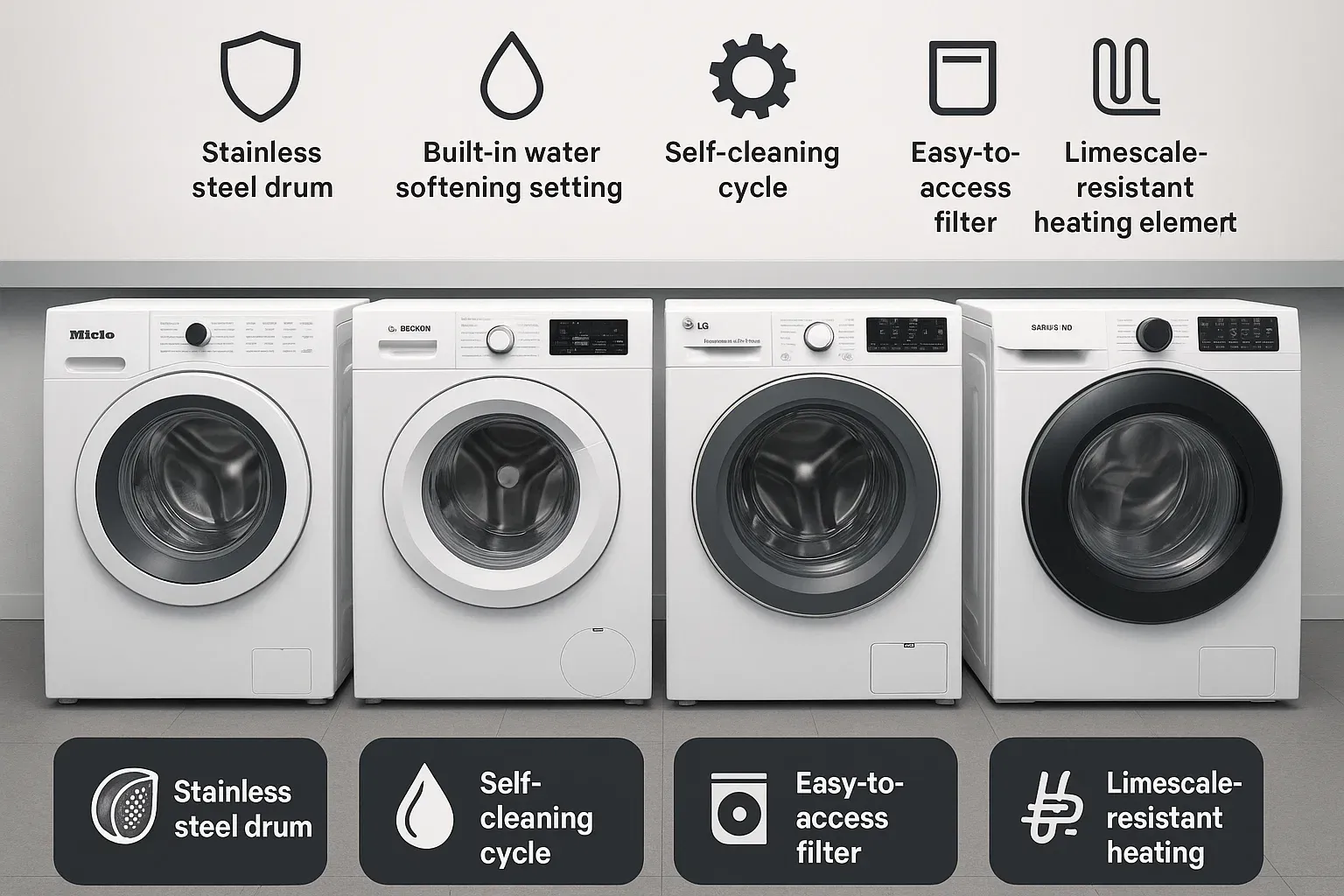
When it's time for residents to replace their washing machines, Sacramento residents should look for models to deal with complex water challenges.
Some washing machines deal better with Sacramento's hard water:
• Self-cleaning cycles to minimize mineral deposits.
•Stainless steel drums (not as prone to mineral buildup as plastic).
• Integrated water softening technology, such as Miele's water hardness settings.
• Heaters with heating elements resistant to limescale.
• Filters are easy to access and clean.
• Maintenance reminders automated.
Miele, Bosch, and some of the finest LG and Samsung models include these abilities to deal with issues with difficult water, so they are some of the best picks for houses in Sacramento.
When dealing with hard water, efficiency becomes even more critical:
• Look for Energy Star-certified models, which use less water and energy.
• Consider front-loading machines, which typically use less water than top-loaders.
• Check for adjustable water level settings to minimize water usage when possible.
• Look for models with higher spin speeds, which extract more water and reduce drying time.
While efficient models may cost more upfront, they'll save Sacramento's homeowners money over time, especially in homes with hard water where appliance efficiency can degrade more quickly.
Hard water damage is not just an inconvenience—it's a significant financial burden for Sacramento homeowners. Consider these costs:
• The average water damage restoration in Sacramento costs between $1,200 and $5,000.
• Specific washing machine-related water damage repairs average $2,643 or about $13.22 per square foot.
• Premature replacement of a washing machine can cost $700-$1,500 every 5-7 years instead of 10-12 years.
• Energy costs increase by 25-30% for appliances affected by hard water.
• Detergent usage nearly doubles, adding $100-$150 annually to household expenses.
• Investing in preventative measures like water softeners or regular maintenance becomes much more economical in the long run when you factor in these costs.
Sometimes, hard water damage has progressed past what home maintenance can address. If any of the following apply, it’s time to call a professional:
• The machine will not fill, or fills very slowly, even after cleaning the inlet filter.
• You hear grinding or scraping sounds during the wash or spin cycle.
• Water is not heating up, even on the hot wash setting.
• You can see visible heavy scale or corrosion inside the drum.
• The machine has broken down more than once in the last six months.
• The door seal is cracked, and the machine is leaking.
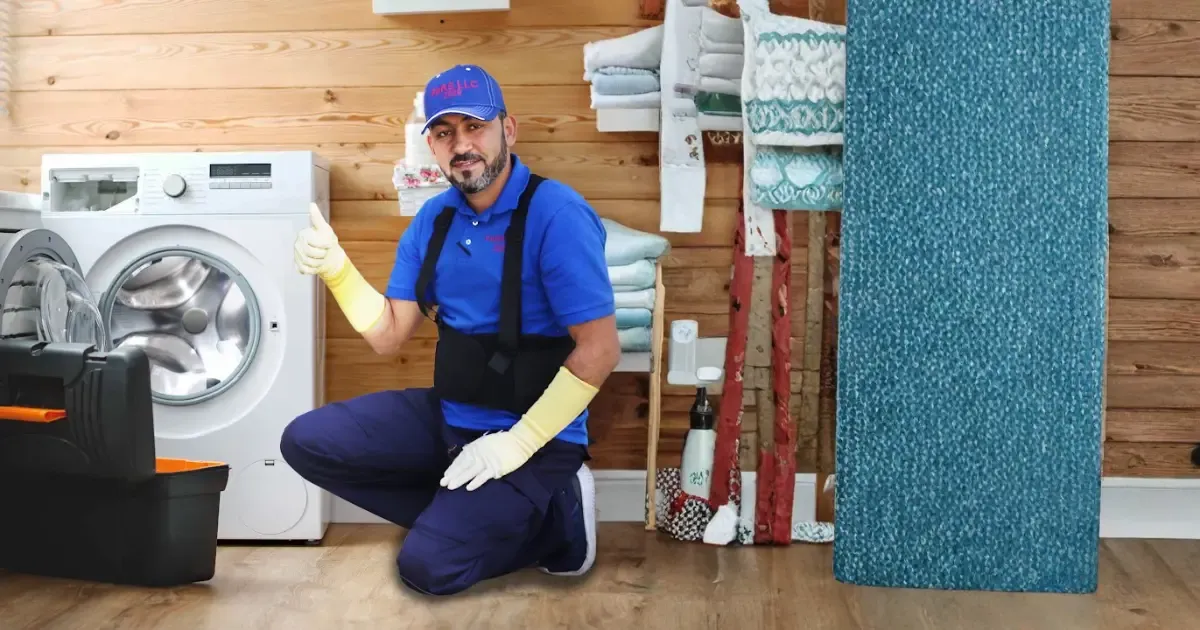
If you suspect hard water has already affected your machine, have a certified technician take a look before the damage worsens.
We at Fair Appliance Repair Service have assisted many users in Sacramento in preserving the lifespan of their washing machines despite our region's complex water challenges. By understanding the impact of hard water on appliances and taking the necessary steps, you can enjoy clean laundry and protect your appliances from hard water damage.
Contact our team of Sacramento appliance experts today for personalized advice about your washing machine or help to address hard water damage in washing machine.
Yes, it can. Samsung, LG, Whirlpool, and GE all include water hardness thresholds in their warranty terms. Scale damage caused by operating the machine outside those thresholds is typically not covered. Check your manual for the specific hardness rating your machine is rated for, and use a softener additive if you’re above that threshold.
Municipal water here typically ranges from 100 to 150 mg/L of dissolved minerals, according to the Sacramento County Water Agency's water quality data. Hardness can vary slightly by neighborhood and by season, depending on the water source mix. A home test kit from any hardware store gives you an accurate reading for your specific address.
Yes. White vinegar is acidic enough to dissolve calcium carbonate scale but gentle enough not to damage internal rubber components or seals when used in the correct quantity. Use two cups in an empty hot cycle. Never mix vinegar with bleach, as that combination produces harmful fumes.
Rough or stiff clothing after washing is one of the most common visible signs of hard water. Mineral deposits cling to fabric fibers during the wash cycle and are not fully rinsed out. The fix is typically switching to a hard water detergent, reducing the amount of detergent per load, and adding a per-load softener additive. If the problem persists after a few weeks of those changes, a professional inspection can determine whether a machine malfunction is also contributing to it.
Repair costs depend on which component has been damaged. Based on Fair Appliance Repair Service's service data, inlet valve replacement costs $75 to $125, heating element replacement costs $150 to $250, pump replacement costs $150 to $300, and motor work can cost $250 to $400. Catching damage early consistently means a lower repair bill.
Yes, and the difference is documented. Research from the Water Quality Research Foundation found that appliances operating on softened water maintained their original energy efficiency far longer than those running on untreated hard water. For washing machines specifically, softened water can extend lifespan by several years and noticeably reduce energy consumption per cycle.
Top-load washers generally fare better in hard water conditions because they lack the internal heating element and door gasket that make front-loaders particularly vulnerable to limescale damage. Both types benefit from regular descaling and maintenance, but if you own a front-loader, monthly descaling is especially important.


