
Our Articles


Blog

Published on April 29, 2025
An off-balance washing machine is one of those problems that start small and get worse fast. One day, it shakes a little. The next, it sounds like something is about to come through the wall. If your washer is banging, stopping mid-cycle, or sliding across the floor, you’re not alone. This is one of the most common washer problems homeowners deal with, and in most cases, it’s completely fixable.
This washing machine off balance causes and solutions guide walks you through every cause, every fix, and every warning sign so you can make a smart decision about what to do next.
• Uneven loads, worn suspension rods, and an unlevel machine are the top three causes.
• Most imbalance issues can be fixed at home without any tools.
• Error codes like UB, UE, and UL all point to the same core problem.
• A persistent imbalance usually indicates a worn internal part that needs to be replaced.
• If the tub feels loose or bounces freely, it’s time to call a technician.
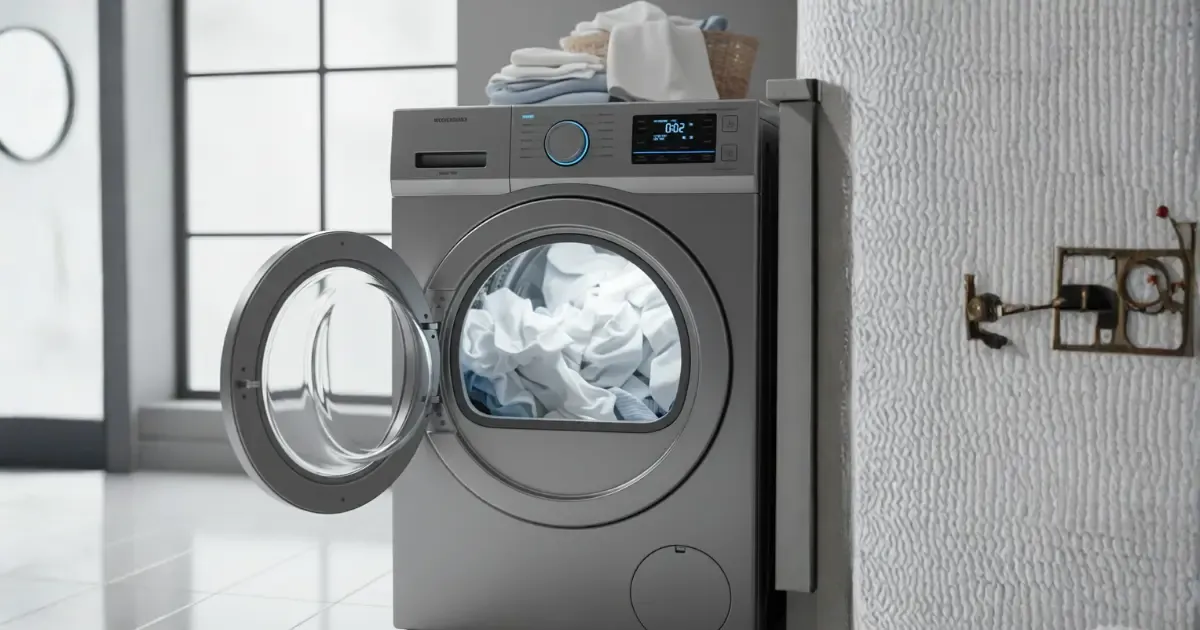
Before diagnosing anything, know when to stop the machine entirely. An off-balance washer that shakes hard does more than make noise. It can pull water supply hoses from the wall, crack drain connections, damage flooring, and, in severe cases, pose an electrical hazard if the machine walks far enough to stress the power cord.
Stop the cycle and unplug the machine immediately if:
• The washer is moving across the floor or hitting a wall.
• You hear grinding, burning, or loud metallic scraping during the spin.
• You smell burning at any point during the cycle.
• Water is spraying or leaking from a hose connection.
• The drum is visibly wobbling or shaking violently even with a small load.
• Once unplugged, it’s safe to open the door, remove the load, and begin diagnosing. Don’t restart the machine until you’ve identified and addressed the cause.
A washing machine off-balance problem has no single cause. It can be something as simple as one heavy blanket sitting wrong in the drum, or something more serious like a worn shock absorber that has been quietly failing for months. Understanding the real cause saves you time and prevents you from replacing parts that don’t need replacing.
Here are the main causes, starting with the most common.
This is the most common reason and requires no repair. When clothes bunch up on one side of the drum during the spin cycle, the machine loses balance. Heavy items like rugs, comforters, and towels are the biggest culprits. A single heavy item spinning alone creates a lopsided rotation that the machine cannot compensate for.
Overloading causes the same problem from the opposite direction. When clothes are packed too tightly, they cannot distribute evenly, so the whole drum spins off-center.
Open the lid or door, redistribute the clothes evenly around the drum in a loose ring, and make sure the impeller or agitator is visible at the center. Restart the cycle. Going forward, always wash heavy items in pairs. Two towels together, two rugs together.
The suspension system inside your washer absorbs movement during the spin cycle. When those rods or shock absorbers wear out, the drum has nothing to control its motion. The result is banging, shaking, and sometimes the machine starts moving across the floor.
Whirlpool and Samsung top-load washers are particularly prone to this after five or more years of regular use.
To test this yourself, open the lid and press down firmly on one side of the tub with two fingers. If it bounces back freely instead of resisting with firm dampening, your shock absorbers are likely worn and need replacing.
What you will need: Suspension rod kit for your model ($20 to $50), work gloves, a flashlight, and a Phillips screwdriver. Difficulty: Moderate. Time: 45 to 90 minutes.
A washer that sits unevenly on the floor vibrates more than normal, and that vibration gets worse during the spin cycle. Even a slight tilt is enough to throw the drum off during high-speed spinning.
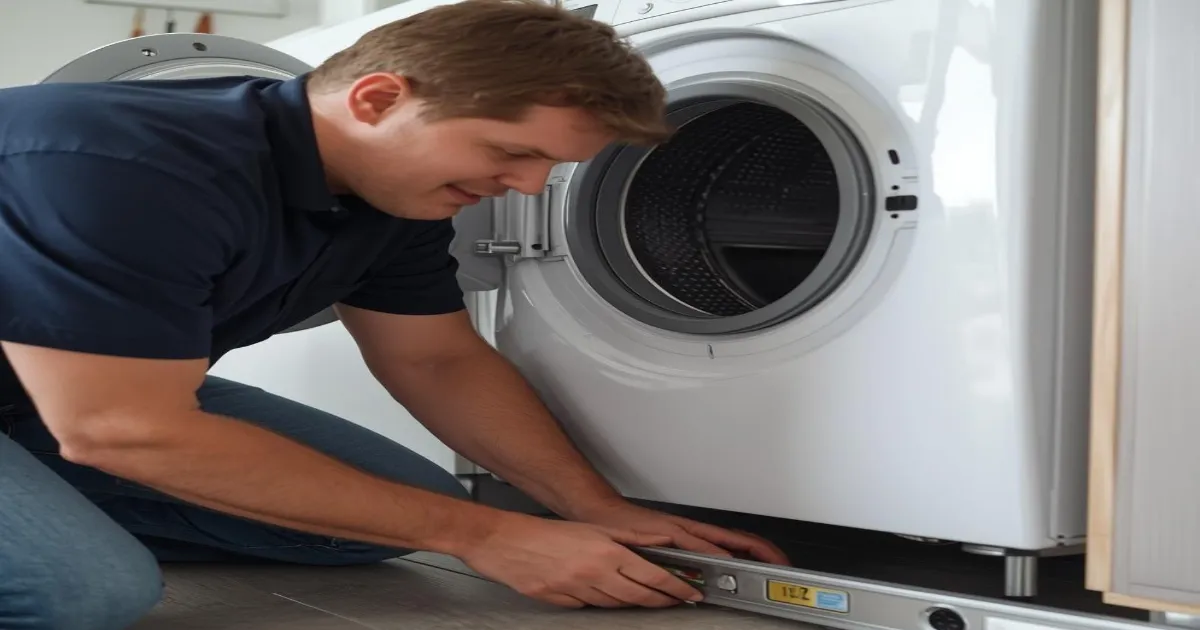
To check, place a spirit level on top of the machine front-to-back and side-to-side. Also, rock the washer diagonally from corner to corner. If it rocks at all, the feet need adjustment.
What you will need: A spirit level and an adjustable wrench. Difficulty: Easy. Time: 10 to 15 minutes.
Use the wrench to raise or lower the leveling feet until all four are making firm contact with the floor. Tighten the lock nuts and recheck with the level. If your machine was recently moved or set up by someone else, it is worth reviewing our complete washer and dryer installation guide to make sure everything was done correctly from the start.
Snubber pads are small rubber or plastic pads that sit between the tub and the base frame. Their job is to absorb vibration and prevent metal-on-metal contact during the spin. When these pads wear down, a grinding or scraping noise starts up along with the shaking. This problem most often occurs in older top-load washers.
What you will need: Replacement snubber pad set ($10 to $25), a nut driver set, work gloves, and a flashlight. Difficulty: Moderate. Time: 60 to 90 minutes. The repair requires partially disassembling the machine. If you’re not comfortable doing that, a technician can take care of it quickly.
This only applies to machines that were recently installed or moved. Most washers ship with metal bolts that secure the drum during transport. If those bolts are not removed before the first use, the machine vibrates violently from the very first cycle.
What you will need: A wrench or socket set. Difficulty: Easy. Time: 5 minutes.
Check the back of the machine. If you see bolts with plastic spacers still in place, remove them before running another cycle. Your owner's manual shows exactly where they’re located.
This is one of the most overlooked causes. When water does not fully drain before the spin cycle begins, it sits at the bottom of the outer tub. That leftover water adds significant weight, making an imbalance almost unavoidable. The drum tries to spin up to speed, but the water weighs it down unevenly.
Signs include standing water inside the drum after a cycle, clothes that feel unusually heavy coming out, or a machine that struggles to build spin speed. The most likely culprits are a clogged drain hose, a partially blocked pump filter, or a failing drain pump.
What you will need: Towels, a shallow drain pan, and a flashlight. Difficulty: Easy for filter cleaning. Advanced for pump replacement. Time: 15 to 30 minutes for the filter.
Cleaning the pump filter is a simple DIY fix. The filter is typically behind a small access panel at the front or bottom of the machine. If drainage keeps being a problem even after the balance is fixed, read our full guide on washing machine not draining to work through the drain issue separately. A failing pump usually needs professional replacement.
If every other cause has been ruled out and the machine still shakes, the problem may be deep inside. A damaged tub bearing or drive hub affects how the drum rotates at its core. A grinding or rumbling noise that gets louder as the spin cycle speeds up is the clearest sign.
Difficulty: Advanced. Time: 2 to 4 hours or more. This is not a DIY repair for most people. Replacing a tub bearing requires significant disassembly, and doing it incorrectly can cause further damage. If this is the issue, calling a technician is the right move.
A damaged bearing is rarely the only sign that something is wrong, so it is worth checking our guide on top washing machine problems Sacramento homeowners face to see if anything else matches what you are experiencing.
If you’ve checked all the main causes and the machine still shakes, consider these before assuming internal damage.
• Loose or broken counterweights: Many front-load washers use concrete or cast-iron counterweights bolted to the outer tub frame.
Over time, these bolts can loosen, or the counterweight itself can crack. When that happens, the machine shakes violently even with a perfectly balanced load. Tightening the mounting bolts may solve it. A cracked counterweight needs full replacement and is best handled by a technician.
• Soft or weak flooring: A washer on a bouncy wooden subfloor or a sloped surface will vibrate far more than the same machine on concrete, even if it’s perfectly level. This is especially common in upstairs laundry rooms. The machine may pass a level test, but it still shakes badly because the floor beneath it’s moving.
• Anti-vibration pads and mats: If the machine is mechanically sound but still vibrates more than you would like, particularly on hard floors or upper levels, aftermarket rubber anti-vibration pads ($15 to $40) placed under each foot can noticeably reduce noise and movement. These don’t fix mechanical problems, but they make a real difference when the floor surface itself is amplifying vibration.
When your washer stops mid-cycle or shows an error code, follow these steps in order before calling for service.
• Stop the machine. Press Pause or Power to end the cycle. Don’t force the door open on a front-loader while water is inside.
• Check for standing water. If there is visible water in the drum, run a Drain or Spin-Only cycle first. If it will not drain, address the pump filter or hose before continuing.
• Open and assess the load. Pull clothes apart manually. Look for a single heavy item that has clumped or shifted to one side.
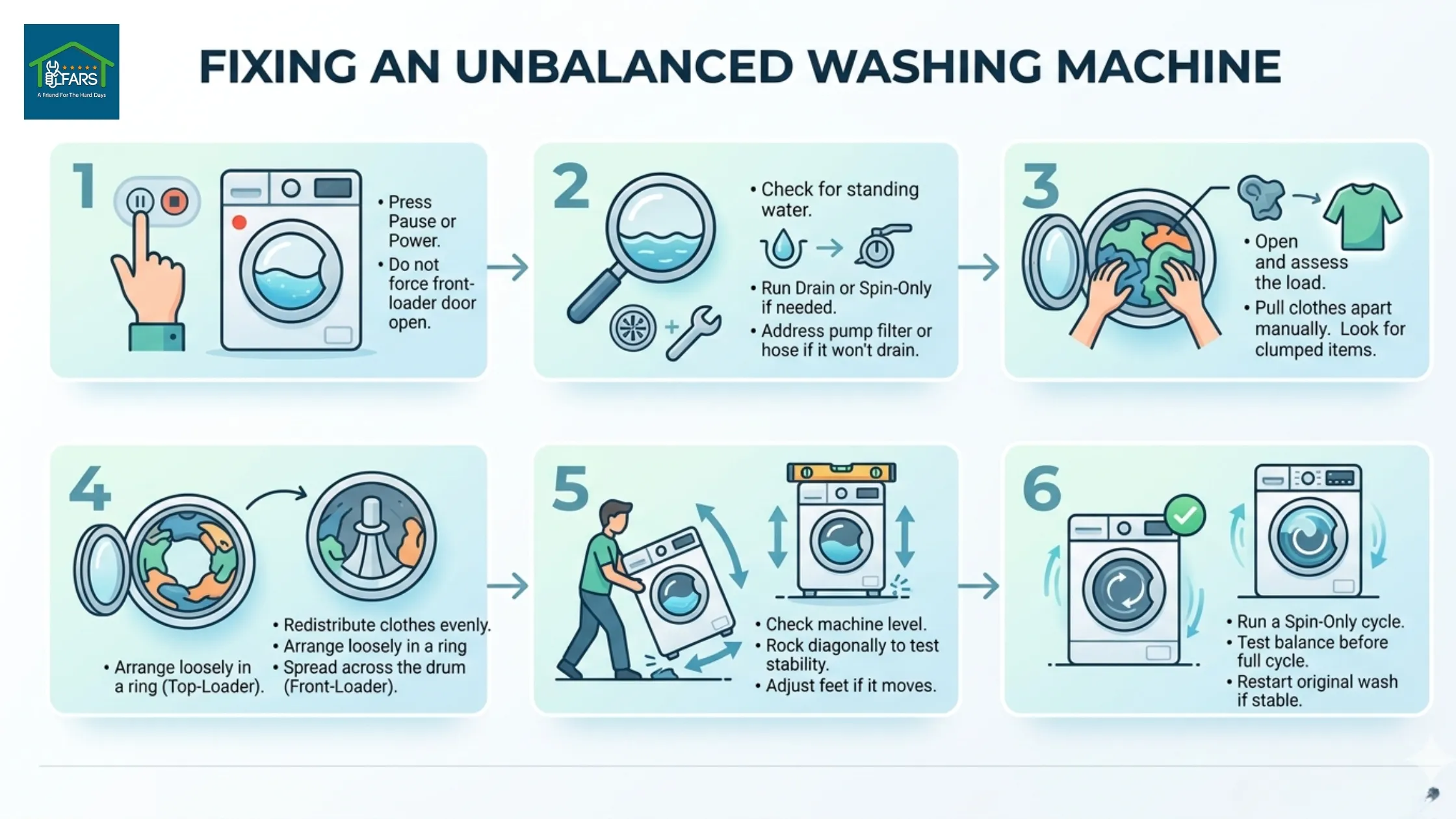
• Redistribute evenly. Arrange clothes loosely in an even ring around the drum. For top-loaders, the agitator or impeller should be fully visible at the center of the drum. For front-loaders, spread items across the full width of the drum.
• Check the machine level. Rock the machine diagonally. If it moves at all, adjust the feet before restarting.
• Run a Spin-Only cycle. Use the Spin Only or Rinse and Spin option to test the balance before running a full cycle. If it completes without shaking, restart the original wash cycle.
If it fails again, reduce the load by half and run a smaller load separately. If the balance holds with a smaller load, the original load was too large or heavy for the drum capacity.
Modern washers automatically detect imbalance and display an error code. Knowing what your specific code means helps you determine whether you’re dealing with a simple load issue or a mechanical one.
Samsung shows UB or UE when it detects an unbalanced load. LG uses UE or uE for the same situation. Whirlpool displays UL, F0E5, or SUD when the load is unbalanced or overloaded. Maytag uses UL, OFB, or F0E5. GE shows UE or UB. Bosch uses E32, E20, or UE for spin and imbalance errors. Frigidaire displays E4 for a load imbalance or lid lock issue. Miele shows F56 or UE. Speed Queen uses Er ub or Er U6. Electrolux displays E4, EF5, or FO AL.
When any of these codes appear, the machine is usually trying to self-correct by refilling slightly and rotating gently to redistribute the load. If it cannot fix itself after a few attempts, it stops and shows the code. Open the door, redistribute the laundry, and restart. If the same code returns consistently across multiple loads, the problem is mechanical, not a loading issue.
• Samsung UB / UE: Pause and redistribute. Samsung machines are sensitive to both underloaded and overloaded drums. Add similar-weight items or confirm the machine is level, then restart.
• LG UE / uE: Pause, redistribute, and confirm you’ve selected the correct cycle for the load type. Using a Delicates cycle for heavy towels can trigger UE because the machine limits spin speed for that setting.
• Whirlpool UL / F0E5: Open the lid, manually break up clumped items, redistribute, and close the lid. Don’t add water manually. The machine will do that automatically on restart if needed.
• Maytag OFB: Redistribute manually and restart. If it recurs consistently despite correct loading, test the suspension rods using the two-finger press method.
• Bosch E32 / E20: E32 is a spin or balance issue. E20 often indicates a drainage problem before the spin. If you get E20, check the pump filter first before assuming the load is the cause.
• Frigidaire E4: Check the load first, then verify the lid closes and locks fully. A lid that does not lock properly prevents the machine from reaching full spin speed.
Fixing the current problem is step one. Keeping it from coming back is step two.
• Mix item sizes in every load. Washing all heavy items together is a reliable recipe for imbalance. Mix a couple of towels with lighter clothes so the weight distributes naturally. Leave enough room so clothes sit loosely in the drum. A good rule is that you should be able to fit your hand flat on top of the laundry when the drum is loaded.
• Wash heavy single items in pairs. One big rug on its own almost always causes imbalance. Add a second rug or a few heavy towels to balance the load. Check the leveling feet every few months because feet shift over time, especially on tile or hardwood floors. Use mesh bags for small items like socks and delicates to keep them from clumping together during the spin.
• Make Sure the Washer's Location Is Not the Problem.The machine's physical location matters as much as its mechanical condition. Before spending money on repairs, confirm that the installation environment is not the root cause.
• A washer on concrete is nearly always stable. A washer on a wood subfloor over joists can vibrate significantly during the spin cycle. If the floor visibly moves when the machine runs, anti-vibration pads or a dedicated laundry pedestal with vibration dampening can help.
• The machine needs at least 1 inch of clearance on all sides to prevent vibration contact with walls or cabinets. A machine wedged tightly into a closet will transmit vibration directly into the surrounding structure, making the problem sound far worse than it is.
• Stacked washer-dryer units naturally vibrate more than side-by-side setups. Some shaking is expected. If it’s severe enough to affect the dryer above, check that the stacking kit is properly installed and add anti-vibration pads under the bottom unit.
• If the washer sits on a bouncy second-floor joist span and vibration persists despite correct loading and level feet, moving the machine to a lower floor or an area with more structural support may be the most effective long-term solution.
Many imbalance problems develop gradually from skipped maintenance. A simple routine catches most issues before they cause mid-cycle stops. For broader guidance on reducing energy and water use while extending the life of your washer, the U.S. Department of Energy's laundry efficiency guide is a reliable reference worth bookmarking.
• Clean the pump filter. A clogged filter slows drainage, causing the drum to spin with residual water weight. The filter is typically behind a small access panel at the front or bottom of the machine.
• Run a drum cleaning cycle using a washing machine cleaner or a cup of white vinegar on a hot cycle. Residue and buildup on the drum and gasket can affect drainage and spin balance over time.
• For a more detailed cleaning walkthrough, our guide on how to clean your washing machine covers every step from the drum to the gasket to the detergent drawer.
• Wipe down the door gasket on front-loaders. Debris caught in the gasket can cause uneven sealing and drainage issues.
• Inspect the water supply hoses and drain hose for kinks, cracks, or loosening connections. A kinked drain hose is one of the most common causes of poor drainage before the spin cycle.
• Check the leveling feet. A quick diagonal rock test and a spirit level check take less than 2 minutes.
• Check the floor under and around the washer for signs of water, rust, or vibration damage.
If the machine is five or more years old, press down firmly on the tub to test the suspension rods. Catching worn shock absorbers before they fail completely prevents the secondary damage caused by months of uncontrolled drum movement.
This is the question most guides skip, but it’s often the most important one.
Repair makes sense when the machine is less than seven years old, the issue involves a suspension rod, snubber pad, or drain pump, and the repair cost is less than half the price of a new machine. Replacement makes more sense when the machine is over ten years old and needs a major repair.
According to the U.S. Department of Energy, the average lifespan of a clothes washer is about 11 years, which is a useful benchmark when weighing repair costs against buying a new one.
A good technician always gives you an honest assessment. If the repair does not make financial sense, they will tell you.
Some problems are safe to fix yourself. Others are not worth the risk. Fair Appliance Repair Service gets calls every week from homeowners who pushed through one of these situations and ended up with a bigger repair bill than they started with.
Stop and call a professional when the machine shakes hard, even with small, balanced loads. The same goes if the drum feels loose or wobbles when you push on it, if the two-finger test shows the tub bouncing freely, if there is a grinding or rumbling sound during spin that keeps getting worse, if standing water stays in the drum after every cycle, or if the machine has been going off balance consistently for more than two weeks despite correct loading.
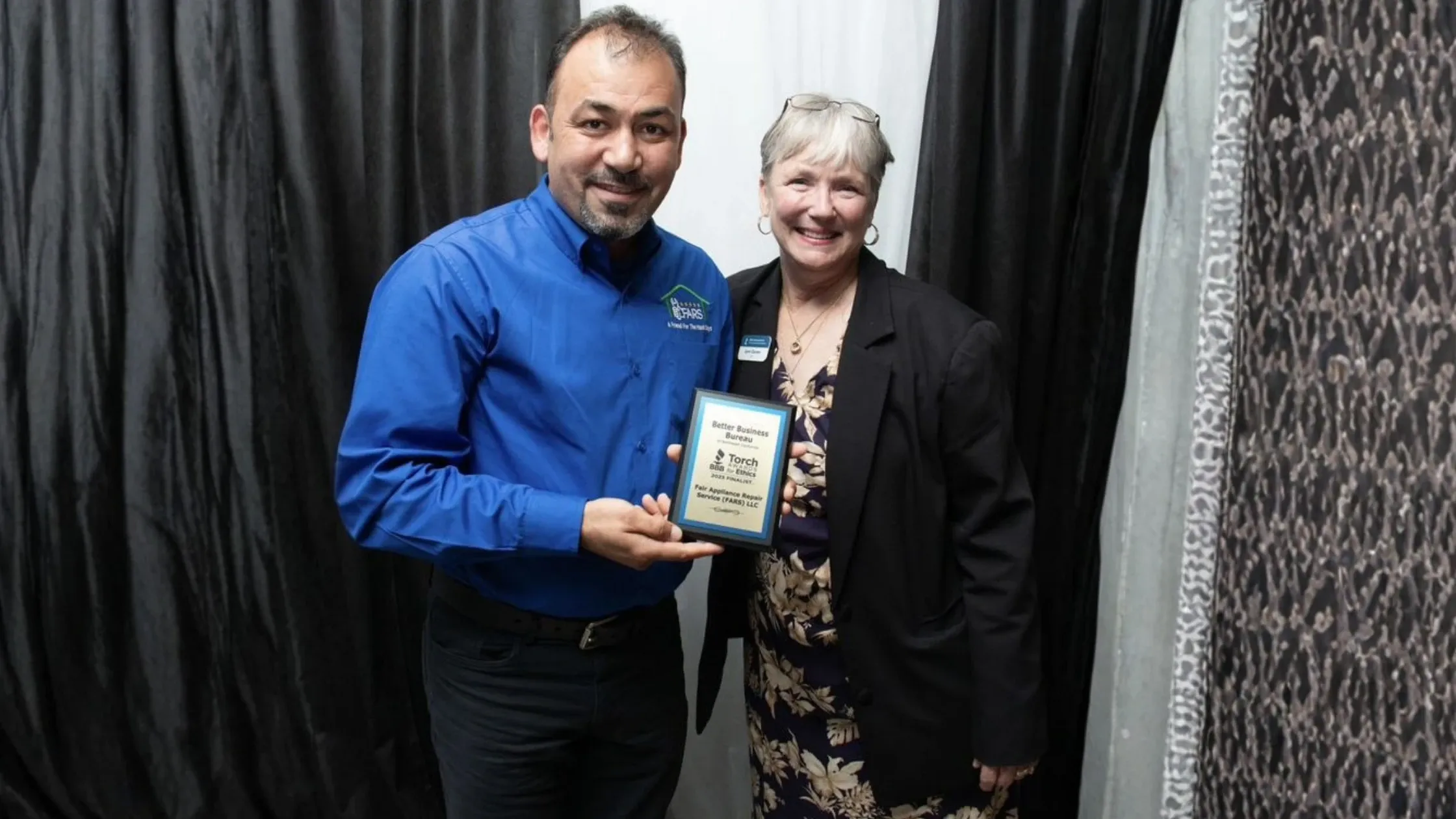
If you’ve worked through these steps and the problem keeps coming back, it’s time to bring in a professional. Fair Appliance Repair Service provides same-day washing machine repair across Sacramento and surrounding areas, including Elk Grove, Roseville, Carmichael, Citrus Heights, and more.
Every repair includes a free diagnostic, transparent pricing, and a 90 to 365-day warranty on parts and labor. The team at Fair Appliance Repair Service is licensed, insured, and has completed over 4,000 repairs across the greater Sacramento area. No guesswork, no surprise charges.
Call 916-333-8388 or schedule online now.
Yes. Repeated imbalance puts stress on the suspension rods, drum bearings, and motor. A one-time incident is not a big deal, but an ongoing imbalance causes components to wear out far ahead of schedule.
If it happens regardless of what is inside, the problem is mechanical. Worn suspension rods or shock absorbers are the most likely cause. The two-finger press test tells you quickly.
High-spin cycles amplify any existing imbalance because the drum is spinning at its highest speed. A slightly uneven load or mildly worn suspension component that is manageable at low speed becomes a real problem at 1,000 RPM or more. Try lowering the spin speed first. If shaking continues at medium speeds, check the suspension rods.
Leveling the feet or redistributing a load costs nothing. Suspension rod replacement runs $100 to $175. A drain pump replacement is $150 to $250. Tub bearing replacement is the most expensive at $250 to $400 or more, depending on the brand.
For a short time, yes. But ongoing imbalance risks floor damage, hose stress, and accelerated wear on internal parts. Address it sooner rather than later.
This points to a drain issue. A clogged pump filter, kinked drain hose, or failing drain pump are the most common causes. Start by cleaning the pump filter, accessible from the front or bottom panel. A failing pump needs professional replacement.
The machine detected an imbalance and attempted to self-correct by refilling slightly and rotating slowly. When it couldn't fix the balance after a few attempts, it stopped and displayed an error code. Open the door, redistribute the load, and restart.


