
Our Articles


Blog

Published on May 22, 2025
A dryer door that won't close brings your laundry routine to a halt. While it may seem daunting, most dryer door problems have a clear cause and straightforward fix. This guide outlines the reasons your dryer door won't close, how to check each one, and when it's wiser to call a technician instead of dismantling your machine.
• The dryer won’t start if the door doesn’t close properly.
• Common causes: worn latch, broken strike, lint, misaligned hinges.
• Some fixes are quick; others need a pro.
• Don’t tape or prop the door; it’s a safety risk.
• Same-day repairs are available for issues requiring a technician.
A dryer door that won't fully close is more than an inconvenience. It can disrupt your laundry routine and raise safety concerns.
Your dryer has a door switch, which is a small component near the door frame. When you close the door, it physically presses that switch. The switch tells the dryer it’s safe to run. If the door does not close completely and activate that switch, the dryer won’t start at all, no matter what buttons you press.
That's why a broken latch or a slightly misaligned door is not just annoying. It makes your dryer completely unusable.
There is also a safety side to this. Some homeowners try to work around a door that won't close by taping it shut or holding it closed during a cycle. Please don’t do this. A dryer that runs with a door that's not properly latched can overheat, restrict airflow, and in the worst cases, become a fire hazard. Lint is extremely flammable, and heat buildup from restricted airflow is one of the leading causes of homedryer fires in the U.S.
If the door won't close, identify the cause, perform the proper fix, or contact a qualified technician.
Dryer door problems come in many forms. Here are seven of the most common causes, from frequent to rare.
The door latch (sometimes called the door catch) is the plastic piece attached to the dryer door that grabs the door strike (the small metal or plastic prong on the dryer frame) and holds the door shut. On most dryers, the latch is built into the door itself. Over time, this plastic part can wear down, chip, or break off entirely.
If your door closes but then bounces back open, or if it feels like there is no catching when you push it shut, the latch is usually the first thing to check. Look at it closely. A healthy latch has a clear notch or hook shape. If it looks chipped, cracked, or rounded off, it needs to be replaced.
Latch replacement kits are widely available for most brands. Part number 279570 is a common replacement kit that fits several major dryer models. However, getting the right part for your specific model matters, and installing it incorrectly can damage the door assembly.
The door strike, which is the small metal prong on the dryer frame, is another frequent culprit. If the metal prong is bent, broken, or missing, the latch will have nothing to grab onto.
To check it, open the door and look at the area where the door meets the dryer body. The strike should sit straight and firm. If it’s bent sideways or snapped off, that's your problem.
A bent strike can sometimes be carefully straightened. A broken one needs to be replaced. This repair looks simple, but it requires proper alignment to work correctly long term.
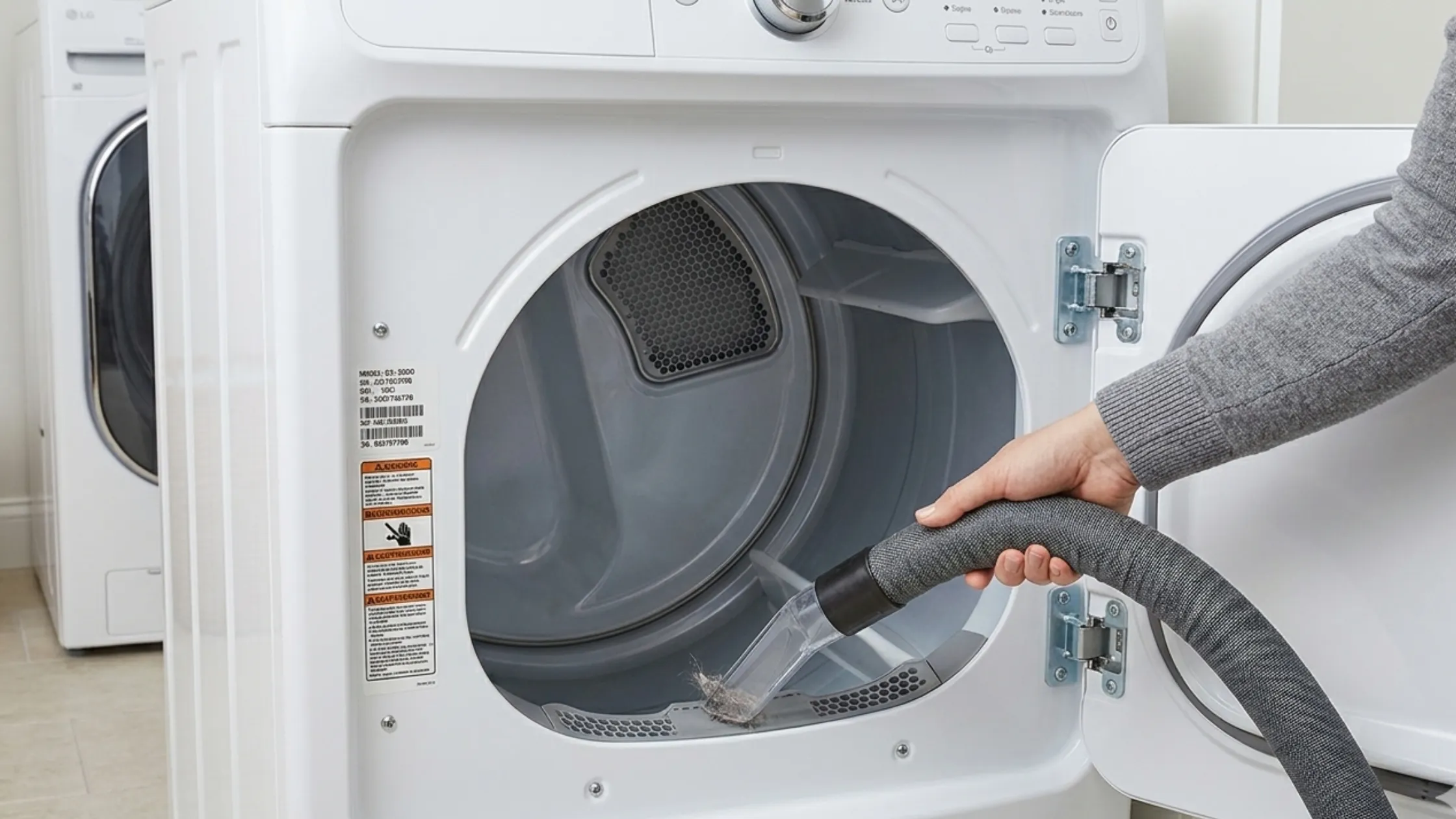
This is the easiest fix and one that a lot of people overlook. Lint does not just collect in the filter. It builds up in the latch slot, around the door frame edges, and even in the lint screen housing slot on certain dryer models.
When enough lint packs into the latch area, it physically blocks the latch from seating properly. The door feels like it's closing, but it doesn't click shut, or it closes and then pops back.
Take a soft brush or a vacuum crevice tool and clean out the latch opening, the door frame edge, and the area around the lint screen housing. This takes about five minutes and sometimes completely solves the problem.
Do this every few months as part of regular maintenance, even if you're not having issues right now.
Over time, door hinges—the metal pieces that attach the dryer door to the main body—can become misaligned or bent, especially after heavy use. If you notice an uneven gap between the door and frame, this could be the cause. Tightening the hinge screws or replacing a damaged hinge might solve the issue. You can usually spot this by opening the door and looking at the gap between the door and the dryer frame. If the gap is uneven, thicker on one side than the other, the hinges are likely the cause.
First, try tightening the hinge screws with a Phillips screwdriver. Sometimes that's all it takes. If the hinge itself is bent or cracked, it needs to be replaced. A bent hinge that's left in place will keep pulling the door out of alignment, no matter how many times you adjust the latch.
This one is simple but easy to miss. If you pack the drum too full, clothes press against the door from the inside. When you try to close it, the load pushes back, preventing the door from latching.
If the door was working fine and suddenly won't close after a large load, open it, pull a few items out, redistribute the load, and try again. Dryers are designed so clothes can tumble freely. When the drum is stuffed tight, you create problems beyond just the door, including poor drying, extra wear on the belt and motor, and overheating.
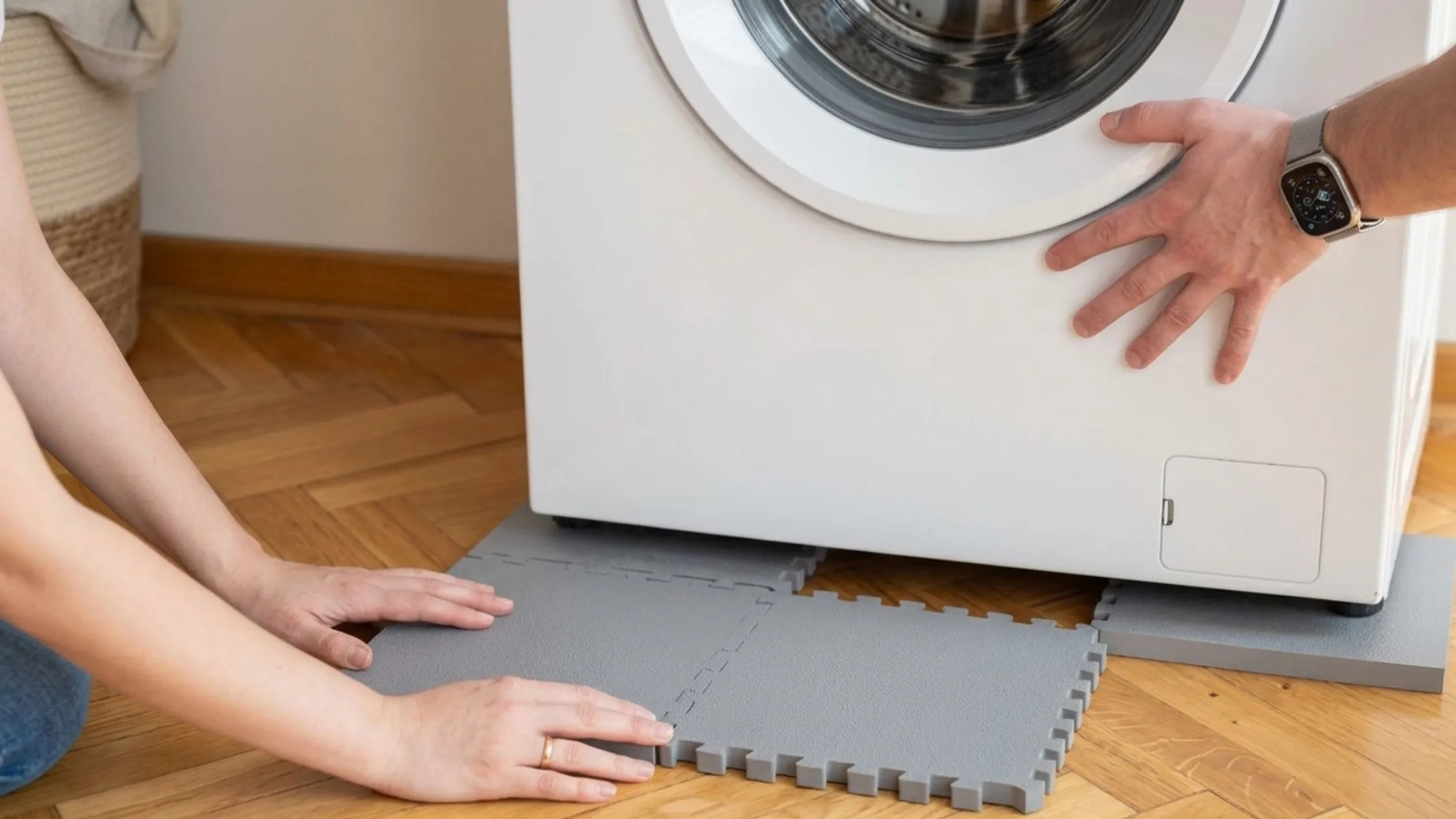
An unlevel dryer can shift the door frame enough to prevent the latch from aligning with the strike. If you find that your dryer is not level, simply adjust the leveling feet. For more tips on dryer installation and ensuring everything is set up properly, check out our washer and dryer install complete guide.
Check this by placing a level on top of the dryer, checking both side-to-side and front-to-back. You can also use the Level app on your phone. If the dryer is not level, adjust the leveling feet at the bottom corners until all four are making firm contact with the floor and the dryer sits flat.
This is a five-minute fix that also improves drying performance, since an unlevel dryer affects how clothes tumble during sensor cycles.
The door seal—also called a gasket—is the soft, flexible material (often rubber or foam) that runs around the inside edge of the door. Its job is to create a tight fit when the door is closed. If the gasket is warped, cracked, or pulling away from the door, it can create outward pressure that prevents the door from staying shut.
This is the least common cause, but one that most troubleshooting guides miss entirely. The sign is usually that the door closes and clicks, but then springs back open on its own a moment later.
The latch and strike look fine, but something keeps pushing the door open. That something is often a warped gasket creating pressure from the inside.
Run your finger around the door seal with the door open. It should sit flat and even all the way around. Any section that's bubbled, torn, pulled away, or stiff instead of flexible is a problem.
Work through these in order. Many door problems are solved by step three or four.
Step 1. Open the door fully. Look at the latch and the strike. Check for cracks, chips, or anything that looks broken or missing.
Step 2. Clean the latch slot, door frame edge, and lint screen housing area with a soft brush or vacuum. Remove all visible lint and debris.
Step 3. Tighten the hinge screws on both hinges. Try closing the door again.
Step 4. Look at the door strike. Is it straight? Does it align with the latch opening when you close the door slowly?
Step 5. Press the latch mechanism with your finger. (The latch is the plastic piece that hooks onto the strike to hold the door closed.) It should move and spring back. If it’s stiff, stuck, or does not return, it needs to be replaced.
Step 6. Place a level on top of the dryer. Adjust the leveling feet if needed until the dryer sits flat on all four corners.
Step 7. If you were drying a large load, reduce it and try closing the door with less in the drum.
Step 8. Run your finger around the door seal. Check for warping, cracks, or any section that's no longer lying flat against the door frame.
If you work through all eight steps and the door still won't close or latch, the problem is most likely a broken latch, a damaged strike, or a bent hinge that requires professional repair.
Being honest here helps more than pushing you in one direction or another.
You can handle these yourself:
• Cleaning lint from the latch area.
• Tightening loose hinge screws.
• Leveling the dryer.
• Reducing an overloaded drum.
These require no parts, minimal tools, and carry no real risk of making things worse.
Call a technician for these:
• Replace the door latch or catch.
• Replacing or realigning the door strike.
• Replace bent or cracked hinges.
• Replace a warped door seal or gasket.
• Any repair where the door assembly needs to come apart.
Here is why this matters. Dryer door repairs look simple, but the latch, strike, and hinges all need to align precisely. If one is slightly off, the fix does not hold, and you end up with the same problem a week later, or a new one on top of the original. A technician can also check whether the door switch itself is damaged, which you cannot easily do without a multimeter.
If you're wondering about cost, here's what typical dryer door repairs run:
Most dryer door latch replacements run between $75 and $200 for parts and labor, depending on your dryer brand and model. Hinge replacements are in a similar range. Door seal or gasket repairs are generally on the lower end.
At Fair Appliance Repair Service, the diagnostic is free with any completed repair. You know what the problem is and what it costs before anything is taken apart. There are no surprise fees.
Different brands have slightly different door designs, and some models have known weak points worth knowing about.
Samsung dryers commonly develop latch wear on front-load models after a few years of regular use. The plastic catch wears faster on some Samsung models than on comparable Whirlpool or Maytag units.
LG dryers use a slightly different latch design on front-load versus compact models. The door hinge on some LG compact units is also a common failure point when the dryer is stacked.
Whirlpool and Maytag dryers share a platform and many parts. The door latch assembly on these models is one of the more commonly replaced components. Part number WP3392519 is the door switch replacement that often gets swapped out alongside a latch repair on these brands.
GE dryers have a door hinge at the bottom of the door, rather than on the side, as on some older models. The alignment of these can shift over time and cause the top of the door to sag slightly.
Kenmore, Frigidaire, Electrolux, and Bosch dryers all use brand-specific latch hardware. Getting the correct part number for your model year matters more than it might seem.
Fair Appliance Repair Service repairs all of these brand's dryer. If you're not sure what is going on with your specific dryer, a quick call is usually all it takes to get a clear answer.
A few habits make a real difference in how long your dryer door lasts:-
• Clean the lint filter after every load. Most people know this, but fewer people clean the latch slot and door frame edge regularly. Add this to your routine every few weeks.
• The U.S. Department of Energy also recommends periodically vacuuming the lint slot below the filter screen as part of proper dryer maintenance — something most homeowners skip entirely.
• Don’t slam the door. This is the single biggest cause of hinge damage and premature latch wear. The door does not need force. A firm, even push is all it takes.
• Don’t overload the drum. A packed-tight dryer puts extra stress on the door every single cycle.
• Check the dryer level once or twice a year, especially if your laundry room has a wood subfloor that shifts seasonally.
• If you notice the door feels slightly different when closing, a little harder to push, a soft click instead of a firm one, address it early. Small alignment or latch issues are much cheaper and faster to fix before they turn into a broken component.
If your dryer door is not closing or latching after completing these steps,Fair Appliance Repair Service offers same-day repair in Sacramento, Roseville, Elk Grove, Carmichael, Citrus Heights, and surrounding areas.
Free diagnostic with any completed repair. 90 to 365-day warranty on parts and labor. Certified, licensed, and insured technicians.
Call us at 916-333-8388 or schedule online at Fair Appliance Repair Service.
If the door closes but the dryer does not respond, the door switch may be faulty even though the door appears shut. The switch is a separate component from the latch, and it can fail independently. A technician can test it quickly with a multimeter.
Most door latch, hinge, and strike repairs take between 30 and 60 minutes on-site. Same-day appointments are available in most service areas.
No. Don’t hold the door shut or tape it closed. Running a dryer with an improperly secured door restricts airflow, causes heat buildup, and increases the risk of a lint fire. Use the dryer only when the door latches and holds on its own.
A bad latch means the door physically won't stay closed. A bad door switch means the door closes fine, but the dryer still won't start. Both are repairable, but they’re different parts and require different fixes.
Yes, in some cases. Extreme temperature changes can cause the door frame or seal to expand and contract, temporarily throwing off alignment. If the problem comes and goes with the seasons, the leveling and seal condition are worth checking first.
Yes, sooner rather than later. A cracked door frame or door panel changes the stress distribution on the latch and hinges, and small cracks tend to grow with daily use. Addressing it early is less expensive than waiting for the door to fail completely.


