
Our Articles


Blog

Published on April 19, 2025
A refrigerator can look like a simple appliance, but inside it is a complex system of components working together to remove heat and maintain safe food temperatures. When one part fails whether it’s the compressor, evaporator fan, thermostat, or defrost system the entire cooling cycle can break down.
Many homeowners experience problems like a refrigerator not cooling, strange noises, frost buildup in the freezer, or water leaking onto the kitchen floor. In many cases, these issues come from a single malfunctioning component.
Understanding how the key parts of a refrigerator work makes troubleshooting much easier and helps you know when a repair is simple and when it’s time to call a professional.
In this article, we'll break down the key components of a refrigerator and explain how they work. Whether you're a DIY enthusiast looking to fix your refrigerator or want to learn more about its operation, this guide will give you the necessary knowledge.
Knowing the different parts of your refrigerator helps you figure out any issues and ensure it runs like a champ. So, let's dive into the key components of your fridge:
The compressor is the heart of your refrigerator's cooling system. Think of it as a motor that compresses refrigerant gas and circulates it through the coils at the back of the appliance. The compressor increases the pressure and temperature of the refrigerant gas, which then travels through the system to start the cooling process.
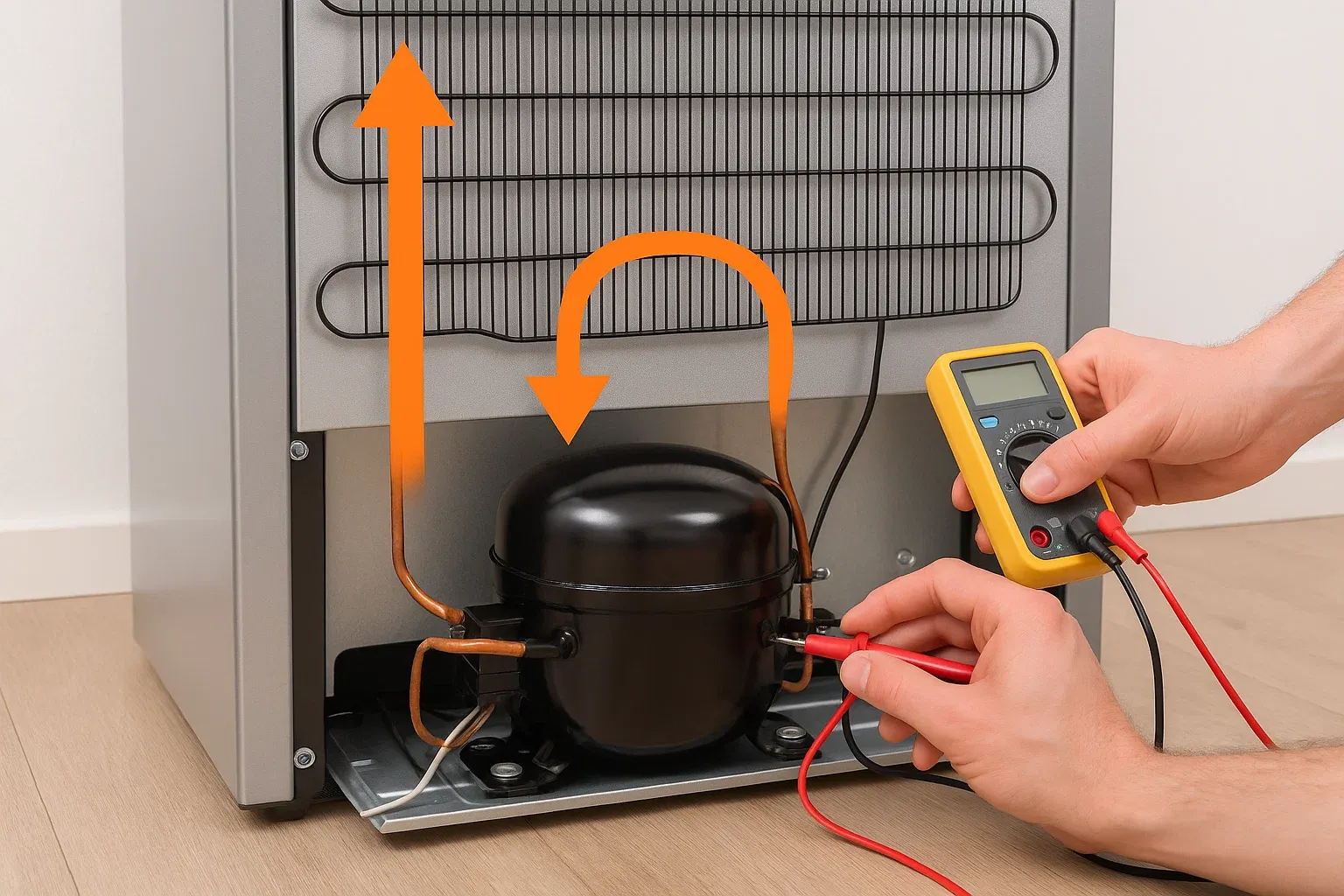
The condenser coils, which are found on the back or underneath your refrigerator, release heat from the refrigerant gas. As the gas cools, it turns into a high-pressure liquid essential for the next cooling stage.
These coils are tucked away inside the refrigerator and freezer sections. Once the refrigerant reaches the evaporator coils, it evaporates into a gas, absorbing heat inside the fridge. This cooling process keeps your food at the desired temperature.
The thermostat controls the temperature inside the refrigerator. It monitors the internal temperature and tells the compressor when to kick in or shut down, ensuring your fridge stays at the right temperature. If you notice your fridge is either too warm or too chilly, it might mean the thermostat isn't working properly.
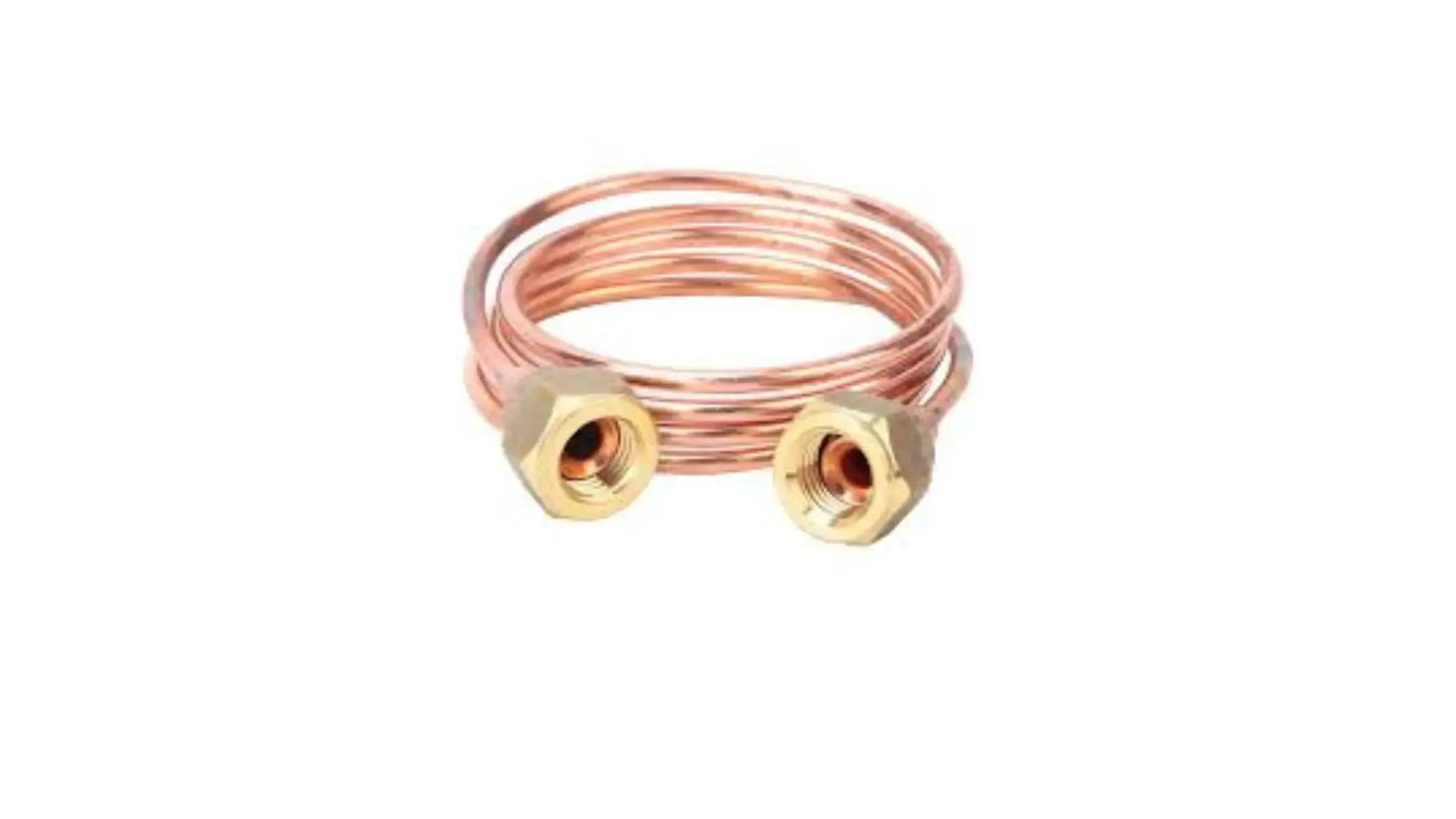
After passing through the condenser coils, the refrigerant travels through the expansion valve or capillary tube. This component reduces the pressure of the refrigerant, which causes it to cool further. The cooled refrigerant is then ready to enter the evaporator coils and start the cooling cycle.
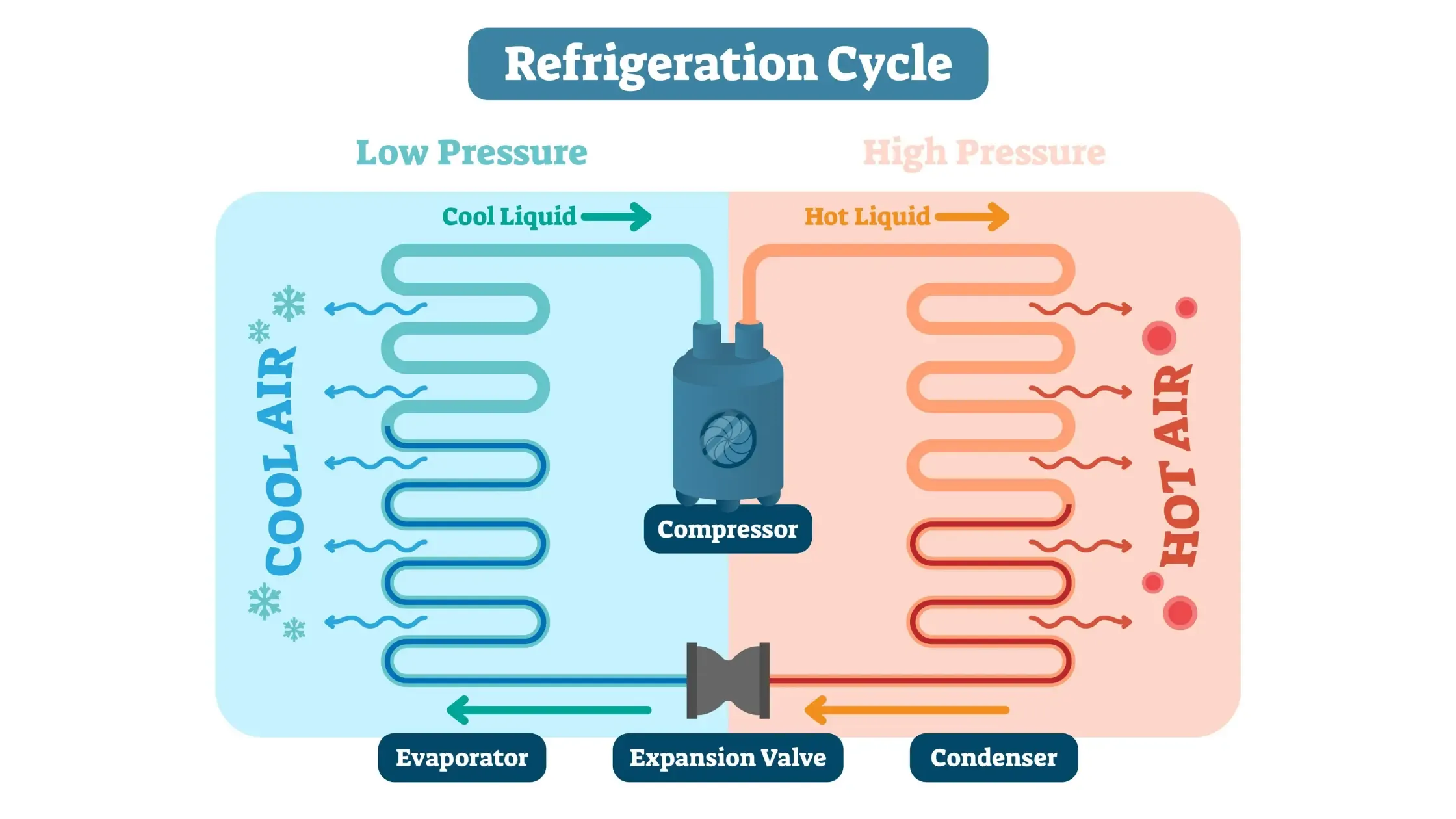
Refrigerant is the key player that moves heat from the inside of your refrigerator to the outside. It goes through a continuous cycle of compression, condensation, expansion, and evaporation. This process helps your fridge stay cool and keeps your food fresh and tasty!
Refrigerators have several fans that help circulate the cold air inside the appliance. The evaporator fan circulates the cold air throughout the fridge and freezer while the condenser fan blows air over the condenser coils to help release heat.
Frost build-up can be a problem in freezers. The defrost heater prevents frost from building up on the evaporator coils. It melts any ice buildup and ensures the cooling process runs smoothly without blockages.
Now that we know the key components, let's walk through how your refrigerator works. This cycle happens continuously to keep your food at the perfect temperature.
The cycle begins when the compressor receives low-pressure refrigerant gas from the evaporator coils. The compressor compresses the gas, increasing its pressure and temperature. The gas is then sent to the condenser coils.
The refrigerant gas in the condenser coils releases heat to the surrounding environment. As it cools, it changes into a liquid under high pressure.
This liquid refrigerant then makes its way to the expansion valve.
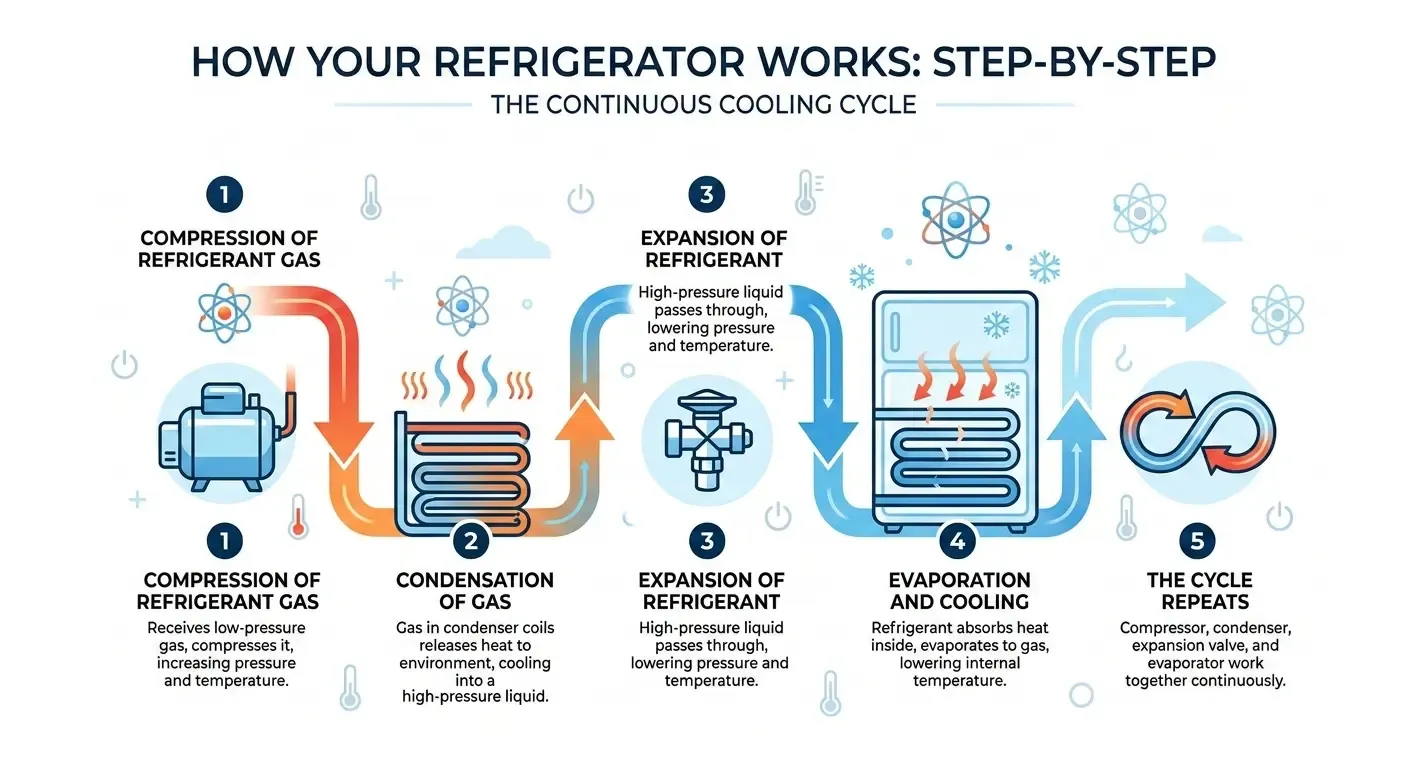
The high-pressure liquid refrigerant passes through the expansion valve, which lowers the pressure and temperature of the liquid. It then moves into the evaporator coils inside the fridge and freezer.
As the refrigerant flows through the evaporator coils, it absorbs heat inside the refrigerator. This causes the refrigerant to evaporate, turning it into a gas again. The cooling effect lowers the temperature inside the fridge and freezer compartments, keeping your food fresh.
The cycle repeats continuously, with the compressor, condenser, expansion valve, and evaporator working together to keep your refrigerator at the right temperature.
A refrigerator's cooling system is a closed, pressurized loop. Every component inside it depends on the others to function correctly. When one part begins to fail, the strain does not stay contained; it spreads through the system, accelerating wear on components that would otherwise last for years.
Understanding this chain reaction helps you take warning signs seriously before a small problem becomes an expensive one.
This is the most common and most preventable domino effect in residential refrigerators. When condenser coils become clogged with dust and pet hair, the refrigerant vapor can't release heat efficiently. Pressure inside the system builds up.
To keep refrigerant moving against that elevated pressure, the compressor runs longer and works harder than it was designed to. Over weeks and months, this sustained overload generates excess heat inside the compressor motor. The motor windings degrade, insulation breaks down, and eventually the compressor seizes or burns out entirely. A 15-minute cleaning job — done every six months — would have prevented a $400 to $700 repair.
When the defrost cycle fails or warm air repeatedly enters the cabinet through a worn door seal, ice accumulates on the evaporator coils. As that ice layer thickens, it blocks airflow and insulates the coils from absorbing heat. The refrigerant returning to the compressor becomes warmer than it should be, reducing the compressor's efficiency.
In severe cases, liquid refrigerant which hasn't fully evaporated can be pulled back into the compressor. Compressors are designed to handle vapor, not liquid. Liquid refrigerant inside a running compressor causes valve damage and mechanical failure, a condition known as liquid slugging.
The expansion valve controls exactly how much refrigerant enters the evaporator. If it sticks open, too much cold liquid floods the evaporator at once. The excess liquid can't evaporate completely before it reaches the compressor again creating the liquid slugging problem. If the valve sticks closed, the evaporator is starved of refrigerant, the interior warms up, and the compressor runs continuously trying to compensate. Non-stop compressor operation dramatically shortens its lifespan and significantly increases your electricity bill in the days before a complete breakdown.
A worn or cracked door gasket allows warm, humid air to enter the cabinet constantly. The thermostat detects rising temperatures and signals the compressor to run more frequently. That extra compressor cycling accelerates wear. The humid air also causes frost to accumulate on evaporator coils faster than the defrost cycle can handle, eventually leading to evaporator icing. All of this starts with a $20 to $40 door seal that takes under an hour to replace.
Knowing the different parts of your refrigerator can help you spot any issues that pop up. Here are a few typical problems you might encounter, along with some handy solutions:
If your refrigerator isn't cooling properly, it could be due to a faulty thermostat, compressor, or refrigerant leak. First, check the thermostat settings. If the thermostat is working correctly, it may be time to call a professional to inspect the compressor or look for leaks.
Malfunctioning fans, a dirty condenser coil, or a worn-out compressor can cause a noisy refrigerator. Clean the condenser coils regularly to prevent dirt buildup.
If you notice a buildup of ice in the freezer, it may be due to a malfunctioning defrost heater or defrost timer. A skilled technician can help identify the problem and stop any more ice from accumulating.
A leaking refrigerator could indicate a clogged defrost drain, a damaged door seal, or a broken water line (if your fridge has an ice maker). Inspect the drain for clogs and check the door seals for any gaps, you need to turn off water supply at first. If you're still having trouble, it might be a good idea to contact a professional technician for help.
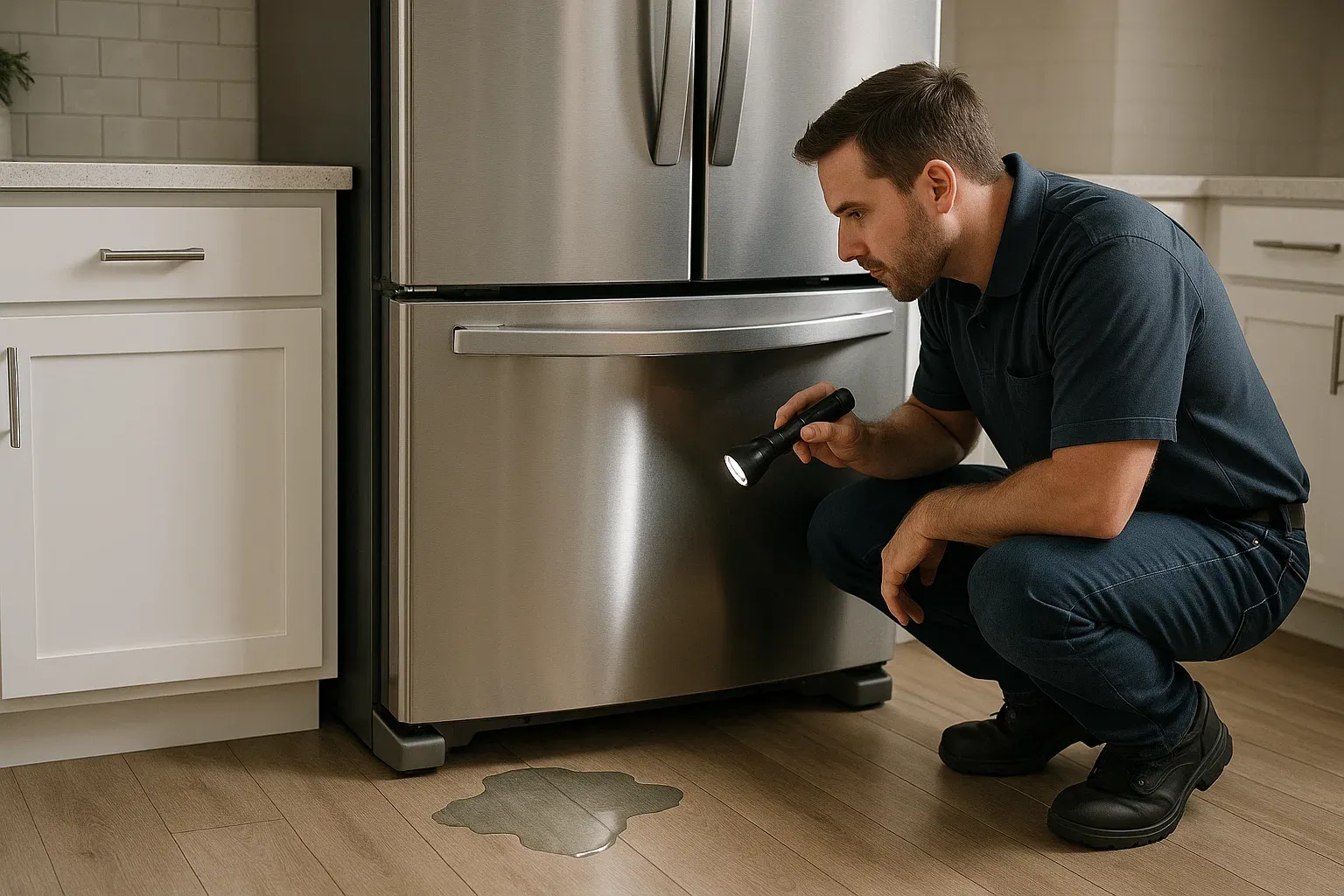
Not all refrigerators are built the same way, and the design of your unit directly affects how repairs are done, how much they cost, and whether parts can even be found. Knowing how your refrigerator type differs from others helps you have a more informed conversation with your repair technician and set realistic expectations about cost and timeline.
Traditional top-freezer refrigerators remain the easiest and least expensive units to fix. Their straightforward layout places the freezer compartment on top and the fridge below, utilizing accessible components and standardized parts across many brands and model years.
Labor Costs: Most technicians can diagnose and fix these units quickly, which keeps your labor costs low.
Parts Availability: Replacement parts are widely stocked, meaning you'll experience much shorter wait times between the initial diagnosis and the completed repair.
French door and side-by-side refrigerators introduce significantly more complexity. Many use variable-speed compressors, electronic expansion valves, dual evaporator systems, and sophisticated control boards.
The Catch: Every added feature is a potential point of failure. Parts are pricier and sometimes require ordering directly from the manufacturer, which can add days to your repair timeline.
When to Replace: If your French door fridge is over eight years old and needs a new control board or compressor, the repair cost can quickly approach or exceed the price of a brand-new unit.
While compact refrigerators seem simple, finding parts can be a major hurdle. Manufacturers frequently discontinue support for these units within five to seven years of production.
The Risk: If your mini fridge breaks down outside of that window, the replacement part may no longer exist—or it might cost nearly as much as replacing the whole unit.
Before You Fix: Before authorizing a repair on a compact fridge that is more than five years old, ask your technician if the necessary part is still being manufactured.
Pro Tip: Always have your refrigerator's model and serial numbers ready when calling for service. These are usually found on a sticker inside the door frame. This single step allows a tech to look up your unit's parts availability and common failure patterns before they even arrive, which can cut your appointment time in half.
Refrigerators are complex appliances, and diagnosing and fixing issues requires experience and expertise. If your refrigerator keeps acting up, contact a professional repair service. Fair Appliance Repair Service has been a trusted name in the Sacramento area for years, providing dependable refrigerator repair services to homes in Elverta, Citrus Heights, Roseville, and other nearby spots. Our experienced technicians quickly pinpoint and resolve any issues with your fridge, getting it back in working order in no time.
Here's why Fair Appliance Repair Service is your trusted choice for refrigerator repair in Sacramento and surrounding areas:
Expert Technicians: Our team of technicians is highly trained and has a wealth of experience repairing all kinds of refrigerators.
Quick and Efficient: We offer same-day service to get your refrigerator working properly again as soon as possible.
Affordable Pricing: We believe in transparency, so you can expect straightforward pricing with no sneaky fees hidden in the background.
Local Service You Can Trust: As a locally owned business, we pride ourselves on serving our community with high-quality service.
For reliable and professional refrigerator repair, call us today at 916-333-8388. For more information, visit us on Google My Business.
A refrigerator is a complex machine with many components working together to keep your food cold and fresh. By understanding how each part functions, you can troubleshoot issues and ensure your refrigerator runs smoothly. If you encounter problems you can't fix alone, don't hesitate to contact Fair Appliance Repair Service. We provide expert refrigerator repair in Sacramento and surrounding areas, offering fast and affordable solutions.
For refrigerator repairs, call us at 916-333-8388 or visit our Google My Business page today .
The compressor pumps refrigerant, condenser coils dump heat, expansion device drops pressure, evaporator coils absorb heat, thermostat/sensors command cooling, fans move air, and the defrost system clears ice.
Common causes: dirty condenser coils, a stalled evaporator fan, a weak start relay/capacitor, blocked vents, or in rare cases a refrigerant leak (pro-only). Clean coils and check airflow.
Aim for 37–40°F (3–4°C) in the fridge and 0°F (-18°C) in the freezer. Place a thermometer on a middle shelf, avoid overstuffing, and give vents space.
Frost forms from warm, moist air leaks or defrost system failures (heater, timer/board, or defrost sensor). Also check door gaskets and make sure food isn’t blocking vents. For recurring ice sheets or noisy fan ice-ups, Fair Appliance Repair Service can pinpoint which defrost part failed and clear the drain.
Likely a clogged defrost drain, cracked/disconnected water line (ice maker), a tilted cabinet, or an overflowing drain pan from heavy condensation. Clear the drain and inspect tubing; if leaks persist, Fair Appliance Repair Service will replace lines, level the unit, and prevent future water damage.
Every 6–12 months (pets = every 3–6). Unplug, pull the kick plate or move the fridge, and vacuum/brush dust from back or bottom coils; finish with a gentle wipe.


