
Our Articles


Blog

Published on October 21, 2025
You wake up, reach for milk, and it feels warm. Open the fridge door and nothing's cold. Your heart sinks. You're thinking: broken refrigerator, expensive repair, spoiled food. Before you panic or search for emergency refrigerator repair, try a few simple checks. About 40% of refrigerator cooling problems can be fixed with basic troubleshooting. The other 60% need professional help, and we'll show you how to tell the difference.
This guide walks you through why your refrigerator stopped cooling, how to diagnose the problem, and when to call Sacramento appliance repair professionals. Whether you're dealing with a Samsung, GE, Whirlpool, LG, or Frigidaire refrigerator not cooling, these troubleshooting steps apply to all brands.
Understanding the basics helps you troubleshoot smarter. Your refrigerator doesn't actually make cold. It removes heat through a continuous cycle involving four main parts:
• Compressor: Pumps refrigerant through the system. Acts like the heart of your fridge.
• Condenser coils: Release heat from inside your fridge to the outside air. Usually located on the back or bottom.
• Evaporator coils: Absorb heat from inside your fridge and freezer compartments.
• Fans: Circulate cold air and cool the compressor. Most refrigerators have two fans, one for the evaporator and one for the condenser.
When any of these parts fail, cooling stops or becomes inefficient. The good news: you can identify which component failed through simple observation.
If the quick fixes didn't work, one of these components has likely failed. Each has specific symptoms that help you identify the problem.
Your freezer is perfectly cold, but the refrigerator section feels warm. This specific symptom points to either the evaporator fan motor or a blocked air damper.
The evaporator fan circulates cold air from the freezer into the refrigerator compartment. When it fails, your freezer continues producing cold air, but nothing reaches the fridge section.
How to diagnose: Open your freezer door and listen carefully. You should hear a fan running behind the back panel. Hear nothing? Your evaporator fan motor has failed.
Some Samsung and LG models have an additional issue. Frost buildup blocks air vents between freezer and fridge sections. Even with a working fan, blocked vents prevent cold air circulation.
Empty your freezer enough to see the back wall. Look for thick frost or ice covering the vents. Heavy frost indicates defrost system failure.
The solution:
If frost blocks vents, unplug your fridge for 24 hours to defrost naturally. Speed it up with a hair dryer on low setting for 10 to 15 minutes. Once defrosted, your fridge should cool normally.
The air damper is a small door that regulates cold air flow from the freezer to the fridge. It opens and closes automatically based on temperature needs. When it sticks in the closed position or breaks, cold air never reaches your refrigerator compartment.
In most side-by-side models, the damper sits in the upper corner of the refrigerator section where it meets the freezer. In top-freezer models, it's usually on the back wall of the fridge section near the top.
Listen for airflow when opening the fridge door. If you hear no air movement from the top back vent, your damper control is likely stuck or broken. GE and Whirlpool refrigerators commonly develop damper control problems.
Interior light turns on when you open the refrigerator's door, confirming the fridge has power. But everything inside feels warm. This confuses many people.
The explanation is simple: your door seal has failed. The light uses minimal power and works fine, but cold air leaks out continuously through the damaged seal. Use the dollar bill test described earlier to verify.
The condenser fan cools the compressor and helps, heat escape from the condenser coils. It's separate from the evaporator fan. When the condenser fan fails, your compressor overheats and shuts down on thermal protection.
How to diagnose:
• Pull your fridge from the wall and remove the back panel or bottom grille to access the compressor area.
• Look for a small fan near the compressor. This is the condenser fan.
• Plug in the fridge and watch if the fan spins. No spinning means the motor is dead.
• The compressor will feel extremely hot to touch if the condenser fan isn't working.
Condenser fan replacement costs 150 to 250 dollars professionally.
The compressor is your refrigerator's heart, pumping refrigerant through the system to create cold air. When the compressor fails, cooling stops completely. Unfortunately, compressor replacement is the costliest refrigerator repair.
• Clicking sounds every few minutes. You hear click, wait 2 to 3 minutes, then click again. That's your compressor attempting to start but failing immediately. The overload relay keeps shutting it down.
• Compressor runs constantly without cooling. The motor hums nonstop but temperature doesn't drop. Either the compressor has weakened or the refrigerant has leaked out.
• Burning smell from back. Your compressor motor is severely overheating. This is urgent. Unplug the refrigerator immediately and call a technician. This presents a fire risk.
• Refrigerator sides too hot. Some warmth on exterior sides is normal during operation. But if it's so hot you can't keep your hand there for more than a few seconds, your compressor is struggling and failing.
If refrigerant leaked out, the compressor runs but can't create cold air. You cannot fix refrigerant issues yourself. Refrigerant work requires EPA certification, special recovery equipment, and proper disposal methods. Sacramento has strict environmental regulations about refrigerant handling. Refrigerator compressor replacement cost in Sacramento: Expect 400 to 650 dollars total including parts, labor, and refrigerant recharge. This repair takes 3 to 4 hours.
Repair or replace decision:
• Refrigerator under 7 years old? Repair makes sense.
• 10 plus years old? Replace the whole unit instead. New mid-range models cost 900 to 1,400 dollars.
• 8 to 9 years old? Consider total repair history. If this is your second major repair in 2 years, replacement probably makes better financial sense long-term.
Different refrigerator brands have specific known issues. If you're searching for Samsung refrigerator not cooling, LG fridge not cooling, GE refrigerator not cooling, Whirlpool refrigerator not cooling, or Frigidaire refrigerator not cooling, here's what you need to know.
Samsung French door models, especially the RF28HMEDBSR, have documented cooling problems affecting thousands of owners. The ice maker compartment develops frost buildup blocking airflow to the rest of the refrigerator.
Try Samsung's force defrost mode. Press and hold Energy Saver and Fridge buttons simultaneously for 8 to 10 seconds. The unit enters defrost mode for about 20 minutes. Many Samsung cooling issues resolve after this forced defrost cycle.
GE side-by-side models from 2010 to 2015 sometimes develop damper control problems. The damper regulates cold air flow from freezer to fridge. When it sticks closed, the fridge section doesn't get cold air. Listen for airflow when opening the fridge door. If you hear no air movement from the top back vent, your damper control is likely stuck or broken. GE refrigerator repair for damper replacement costs 150 to 230 dollars in Sacramento.
Frigidaire models often have defrost timer failures. Look for excessive frost on the back wall inside your freezer. Repair typically involves replacing the defrost timer for 130 to 200 dollars or defrost heater for 150 to 220 dollars.
Whirlpool side-by-side models sometimes have adaptive defrost control board issues. Try a simple reset first. Unplug for 30 seconds. This resets the adaptive defrost system. If problems continue, the control board needs replacement at 200 to 350 dollars.
LG refrigerators commonly develop compressor failures, particularly in models manufactured between 2014 and 2017. Many of these compressors are covered under an extended warranty. Check your model number and manufacturing date. LG extended the compressor warranty to 10 years on affected models. If your LG refrigerator is not cooling or freezing and you hear clicking sounds, contact LG directly about warranty coverage before paying for repairs.
Strange sounds often signal specific problems. Learning what each noise means helps you diagnose issues faster.
Clicking every few minutes usually means the compressor is trying to start but failing. The start relay or overload protector triggers, shuts down the compressor, waits, then tries again. This creates the repetitive click-wait-click pattern.
Occasional clicking during normal operation is fine. That's the defrost timer or temperature controls switching on and off. But constant clicking with no cooling means the compressor can't start properly.
A low hum is completely normal. That's your compressor running. But loud buzzing that wasn't there before points to either a failing compressor motor or a stuck condenser fan.
Check the condenser fan first since it's easier and cheaper to fix. Pull your fridge from the wall and listen near the compressor area while it's running. If buzzing comes from the fan and it's not spinning freely, the fan motor needs replacement at 150 to 250 dollars.
If buzzing comes from the compressor itself and it feels extremely hot, your compressor is struggling. This eventually leads to complete failure.
Grinding sounds from inside the freezer compartment usually mean the evaporator fan motor is dying. The fan blade might be hitting ice buildup or the motor bearings are failing. Squealing indicates a fan motor that needs lubrication or replacement.
Check if your refrigerator is level first. An unlevel fridge vibrates more than it should. Also verify nothing is touching the back of the fridge that could rattle. If the refrigerator is level and clear but still rattles, the compressor mounting springs might be worn out. This is common in refrigerators over 10 years old.
This is normal. You're hearing refrigerant flowing through the cooling system. It sounds like water gurgling through pipes. No action needed unless it's extremely loud or constant.
Gentle hissing during the defrost cycle is normal. But loud, constant hissing suggests a refrigerant leak. You might also notice oily residue on the coils. Call a professional immediately. Refrigerant leaks require EPA-certified technicians.
During Sacramento summers, your refrigerator's compressor works overtime, running longer and humming more frequently to combat extreme heat. Fan motors strain harder too, accelerating wear. If noises grow louder over weeks, it signals potential failure.
Garages here hit 120°F+, exceeding standard fridges' 110°F limit. Compressors run nonstop, overheat, and trigger thermal shutdown.
Solutions:
•Get a garage-ready fridge (0-130°F range).
•Add garage fans for ventilation.
•Move indoors July-August.
•Open garage door evenings.
•Regular maintenance prevents breakdowns.
The thermostat tells your compressor when to run based on internal temperature. When it fails, your fridge might run too much, not enough, or cycle on and off erratically.
Symptoms of thermostat failure:
• Temperature fluctuates wildly. Food freezes one day, spoils the next.
• Refrigerator not cold enough even at maximum setting.
• Compressor never shuts off, running 24 hours straight.
Buy an appliance thermometer for about 5 dollars. Place it in a glass of water in the center of your fridge. Wait 4 hours, then check the reading. If it shows 45 degrees or higher when your dial is set to maximum cold, your thermostat isn't reading temperature correctly. Thermostat replacement costs 150 to 220 dollars professionally.
The start relay helps the compressor motor turn on. When it fails, you hear clicking sounds but the compressor never starts running. The start relay is inexpensive.
DIY Rattle test:
Unplug your fridge and locate the start relay on the side of the compressor. It's a small black box about the size of a matchbox. Remove it and shake it gently. If you hear rattling inside, the relay has failed and needs replacement.
Modern refrigerators have electronic control boards that manage all functions. Power surges from Sacramento's stressed summer grid frequently damage these sensitive electronics.
Signs of control board failure:
• Digital display is blank or shows error codes.
• Refrigerator doesn't respond to any button presses.
• Some features work but others don't. For example, lights work but compressor won't run.
• Random beeping or alarm sounds with no clear cause.
Control board replacement costs 200 to 400 dollars depending on the model. Always try a manual reset first before replacing the board. Many board issues resolve after unplugging for 10 minutes.
Sometimes the refrigerator itself is fine, but placement prevents proper operation.
Refrigerators need air circulation to release heat. Without proper spacing, the compressor overheats and shuts down.
• Minimum 1 inch of space behind the refrigerator.
• Minimum half inch on each side.
• Nothing blocking the bottom front grille where air enters.
If your fridge tilts backward or to one side, the cooling system can't work efficiently. Use a level tool to check. Adjust the front leveling legs until the fridge sits perfectly level or tilts slightly backward. This helps doors close properly and ensures proper refrigerant flow.
Refrigerators placed next to ovens, dishwashers, or in direct sunlight struggle to stay cold. The constant external heat forces the compressor to work overtime. If possible, move the fridge away from heat sources or add insulation between appliances.
Packing your refrigerator too full blocks internal air vents and prevents proper circulation. Cold air can't flow around food items.
• Check the back wall inside your fridge for air vents. Make sure nothing sits directly against these vents.
• Leave space between items for air circulation. Cold air needs to flow freely.
• Don't store hot food immediately. Let leftovers cool to room temperature first, then refrigerate.
Before diving into complex repairs, rule out simple power issues. These take 2 minutes and solve about 15% of cooling problems.
Verify Your Refrigerator Has Power
✓ Check the plug. Look behind your fridge and confirm the power cord is fully pushed into the wall outlet. Someone cleaning or moving items might have loosened it.
✓ Inspect the cord for damage. Run your hand along the entire length. Feel for kinks, cuts, or exposed wires. Damaged cords need immediate replacement by a professional.
✓ Test the outlet. Plug in a lamp or phone charger to verify the outlet works. If nothing powers on, your outlet is dead.
✓ Check your circuit breaker. Walk to your electrical panel and find the refrigerator circuit. If the switch is halfway between on and off, it has tripped. Flip it fully off, then back on.
If you recently experienced a power outage or noticed lights flickering, your refrigerator might need a reset:
• Unplug the refrigerator completely from the wall.
• Wait exactly 10 minutes. Set a phone timer. This lets internal capacitors discharge and the compressor pressure equalize.
• Plug it back in and wait 6 hours before checking temperature.
Temperature drops gradually, not instantly. Give your fridge at least 6 hours to reach proper cooling after any power interruption.
Try these three fixes before calling for professional refrigerator repair. They cost nothing but 20 minutes of your time.
This is the number one cause of refrigerators not cooling that you can fix yourself for free. Condenser coils release heat from your refrigerator to outside air. Over months, dust, pet hair, and kitchen grease coat these coils. When airflow gets blocked, your compressor overheats and can't maintain cold temperatures.
Finding your coils:
• Older refrigerators: Coils on the back, visible when you pull the fridge from the wall.
• Newer models: Coils underneath, behind the bottom front grille.
Pull your fridge away from the wall and inspect. If you see black wire coils covered in gray dust and hair, that's your problem.
Proper Cleaning Method
You need a vacuum with hose attachment, a coil cleaning brush from any hardware store for about 8 dollars, and 15 minutes helps to clean coil properly.
• Unplug your refrigerator for safety.
• Pull it away from the wall. You need 2 to 3 feet of working space.
• Use the brush to gently loosen all dust and debris.
• Vacuum everything thoroughly. Don't just blow debris around the room.
• Use a flashlight to verify coils look clean. You should see black metal clearly.
• Push the fridge back and plug it in.
• Wait 6 hours for temperature to drop.
Someone might have accidentally bumped the temperature dial while reaching for food. It happens more often than you think.
Proper temperatures for food safety:
• Refrigerator compartment: 37 to 40 degrees Fahrenheit
• Freezer compartment: 0 to 5 degrees Fahrenheit
Find the temperature control inside your fridge or freezer. Some are dials numbered 1 through 5 or 1 through 7. Others are digital displays. Set it to the middle or recommended setting.
Wait 6 to 8 hours after adjusting before checking results. Temperature changes take time.
A failing door gasket lets cold air leak out continuously. Your compressor runs constantly trying to maintain temperature but can't keep up.
Close your refrigerator door on a dollar bill so half extends outside. Try pulling the bill out slowly. A good seal creates significant resistance. A failed seal lets the bill slide right out with almost no effort. Test this at 5 to 6 different spots around the entire door. Seals often fail in just one corner initially.
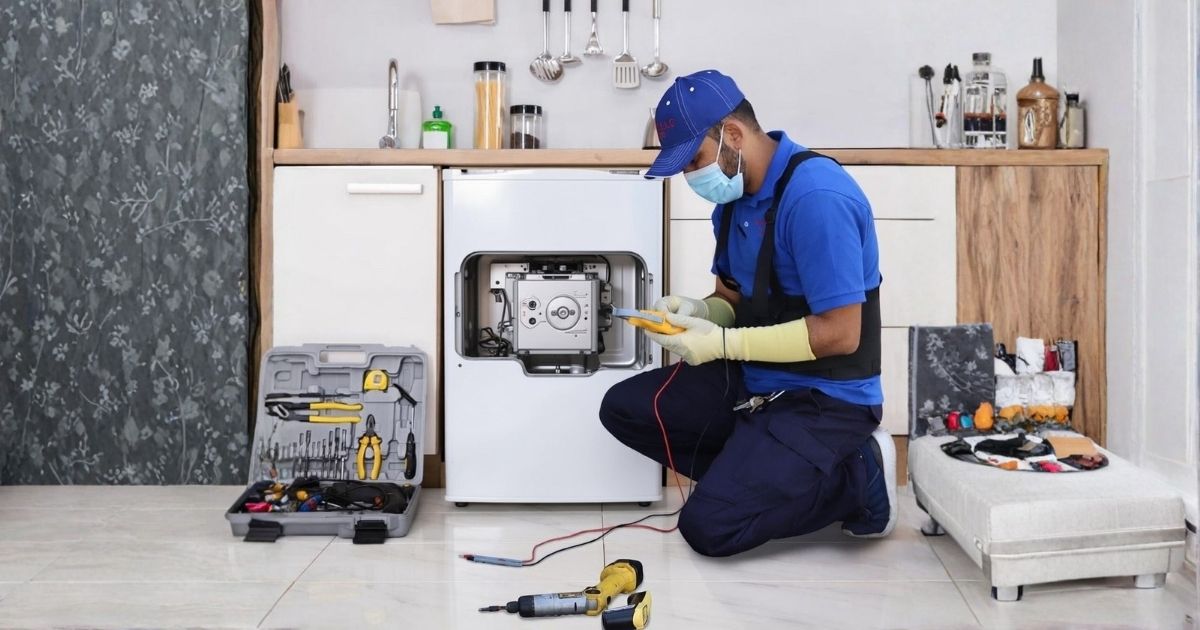
You've tried cleaning coils, testing door seals, and resetting your fridge. It's still not cold enough. Time to call the experts.
Call for professional appliance repair service if:
• Compressor making loud grinding or clicking sounds.
• You smell burning or see smoke.
• Refrigerant leak suspected. Look for oily residue on coils or hissing sounds.
• Water leaking inside refrigerator compartment.
• Multiple components seem to be failing.
• You don't have time for continued troubleshooting.
How long before food spoils when your refrigerator stops cooling? Here's what you need to know to protect your family's health.
• 2 hours above 40 degrees: Dairy, meat, and eggs enter the danger zone for bacterial growth.
• 4 plus hours: Discard all perishables unless they still have ice crystals.
• Full freezer stays frozen: 48 hours if you don't open the door.
• Half-full freezer: 24 hours.
Raw meat and poultry, cut fruit and vegetables, leftovers with meat or dairy, deli meat. All within 2 hours maximum.
Hard cheeses at 4 to 6 hours, condiments at 8 plus hours, butter at 6 to 8 hours, whole fruits and vegetables at 4 to 6 hours. Sacramento's extreme heat makes these timelines even shorter. A fridge off for 4 hours in 105-degree weather has less safe food than the same fridge in 70-degree weather.
Regular maintenance prevents about 80% of refrigerator cooling failures. Here's your maintenance schedule.
Monthly tasks, 5 minutes:
• Do dollar bill test on all door seals.
• Verify temperatures with appliance thermometer.
• Listen for abnormal sounds.
• Check that nothing blocks air vents inside.
Every 3 to 4 months:
• Clean condenser coils thoroughly, more often than typical 6-month recommendation.
• Replace water filter. Our hard water clogs filters faster.
• Pour one-quarter cup hot water down defrost drain to prevent mineral buildup.
Twice yearly:
• Deep clean interior with baking soda solution.
• Inspect water line for kinks, leaks, or mineral deposits.
• Verify refrigerator is level.
• Vacuum compressor area.
Before Summer:
• Clean coils extra thoroughly.
• Replace water filter with fresh one.
• Check door seals carefully and replace if showing wear.
• Verify thermostat accuracy with external thermometer.
• Consider adding surge protector to protect control boards.
A refrigerator not cooling feels like an emergency, especially in Sacramento's summer heat. But most cooling problems have straightforward solutions. Start with the free fixes: clean the coils, check the seals, and set the right temperature. These steps fix about 40% of problems and only take 20 minutes. Know when to call a professional. Compressor trouble, refrigerant leaks, and tricky electrical problems need an expert. Act fast. A clicking sound or a fridge that’s just a little warm today can turn into a full breakdown tomorrow. Catching problems early saves money. In Sacramento, our heat, hard water, and power surges make fridges work overtime. Clean your coils every 3 to 4 months (not just every 6) to avoid most breakdowns.
Fair Appliance Repair Service provides same-day fridge cooling issue fix service across Sacramento, Elk Grove, Roseville, Citrus Heights, and surrounding areas.
Professional appliance repair Sacramento services:
✓ All major refrigerator brands serviced.
✓ Same-day and emergency appointments available.
✓ Upfront pricing with no hidden fees.
✓ 90-day warranty on all repairs.
✓ Licensed, insured, certified technicians.
✓ Most repairs completed in one visit.
Call now for fast dryer repair at (916) 333-8388 or schedule online to get same-day service from licensed and certified technicians.
Modern fridges share cooling from the freezer to the fridge via airflow. If the freezer is cold but the fridge is warm, check for frost/ice buildup, a faulty evaporator fan, defrost issues, or stuck damper—common in side-by-sides. Call a pro if basic defrosting fails.
Issues like tripped breakers, wrong thermostat settings, dirty coils, blocked vents, damaged seals, or refrigerant leaks often halt cooling. Start with power checks and cleaning; refrigerant needs certified repair.
Begin with location (level, clearances), settings, breakers, coil cleaning, vent clearing, and seals. If no luck, suspect fans, compressor, or leaks—contact Sacramento repair for safe diagnosis.
Seek help if no power/lights, compressor won't run, heavy frost in frost-free models, leak signs (hiss/oil), odd noises, or basics fail. Don't risk DIY on sealed systems.
Constant running signals dirty coils, bad condenser fan, poor seals, low refrigerant, or weak compressor. Clean first; if persistent, pro service prevents overload in hot Sacramento summers.


