
Our Articles


Blog

Published on April 26, 2025
If your milk goes bad before the expiry date or your lettuce freezes solid overnight, your refrigerator is probably not running at the right temperature. Most people set their fridge once and never check it again, but being off by just a few degrees puts your food in the bacterial danger zone or ruins it by freezing. This refrigerator temperature guide covers the ideal fridge and freezer temperature settings, how to accurately check your temperature using two different methods, a complete zone-by-zone storage breakdown, USDA food safety storage times, maintenance tips, warning signs, and a full troubleshooting guide for when your fridge stops holding the right temperature.
•What Is the Ideal Refrigerator Temperature?
•What Temperature Should a Freezer Be Set To?
•Refrigerator Temperature by Zone: Complete Guide
•How to Check Your Refrigerator Temperature Accurately
•Ideal Fridge Temperature for Food Safety
•Key Tips for Maintaining the Right Fridge Temperature
•Warning Signs Your Refrigerator Isn’t Holding Temperature
•Common Causes and Fixes When Your Fridge Won't Hold Temperature
•When to Call Professionals
•Frequently Asked Questions
The ideal refrigerator temperature is between 35°F and 38°F (1.7°C to 3.3°C), with 37°F (2.8°C) being the single best setting for most households. This range keeps food cold enough to slow bacterial growth while staying warm enough to prevent delicate produce from freezing.
The FDA recommends keeping your fridge at or below 40°F (4°C). The USDA suggests a narrower range of 35°F to 38°F for optimal freshness. Both agencies agree that 40°F is the upper safe limit. The difference is that the USDA range is aimed at maximizing food quality rather than just preventing illness. For most households, setting your fridge to 37°F meets both standards.
Setting your refrigerator below 35°F can cause the water content in delicate produce like lettuce, berries, and cucumbers to freeze. Once frozen, the cell walls of these foods break down, leaving them mushy and flavorless when thawed. Beverages stored near the back of the fridge can also freeze and crack their containers at these lower temperatures.
Above 40°F, your fridge enters the FDA temperature danger zone. Bacteria such as Salmonella, E. coli, and Listeria grow rapidly in this range. At 50°F, bacterial populations can double in under 20 minutes. A fridge running even 3 to 5 degrees too warm dramatically shortens how long your food stays safe and significantly increases the risk of foodborne illness.
Set your freezer to 0°F (-18°C). At this temperature, bacterial growth stops almost entirely and frozen food maintains its quality over time. The FDA and USDA both list 0°F as the standard for home freezer storage.
At 0°F, enzyme activity in food slows to a near standstill. Food does not spoil in the traditional sense, though quality gradually declines over months due to moisture loss and oxidation. Keeping your freezer at exactly 0°F gives you the longest possible storage window for every type of frozen food.
To keep ice cream scoopable and creamy, set your freezer between -10°F and -20°F (-23°C to -29°C). At 0°F, ice cream becomes very hard. Dropping the temperature slightly keeps frozen desserts at the right consistency without affecting the safety of other frozen items stored alongside them.
Freezer burn occurs when moisture escapes from food, and ice crystals form on its surface, leaving dry, discolored patches. It most often occurs when freezer temperatures fluctuate, food is not sealed properly, or the freezer is opened frequently. Keeping your freezer at a stable 0°F and storing food in airtight containers prevents most freezer burn before it starts.
Temperature is not uniform throughout your refrigerator. Different shelves and compartments run at different temperatures depending on their position and proximity to the cooling vents. Understanding each zone helps you store food in the right place and get the most out of every item you buy.
The top shelf is best for leftovers, ready-to-eat foods, and drinks. Warm air enters here every time you open the door, so this zone sees more temperature fluctuation than the middle or bottom shelves. Never store raw meat or fish on the top shelf, as the temperature here is the least stable in the main fridge compartment.
The middle shelf offers the most consistent temperature in the entire fridge. This makes it the right spot for dairy products, eggs, and cooked food. It is also the correct location for your appliance thermometer when checking your fridge's actual temperature, since the middle shelf gives the most representative reading of the overall interior.
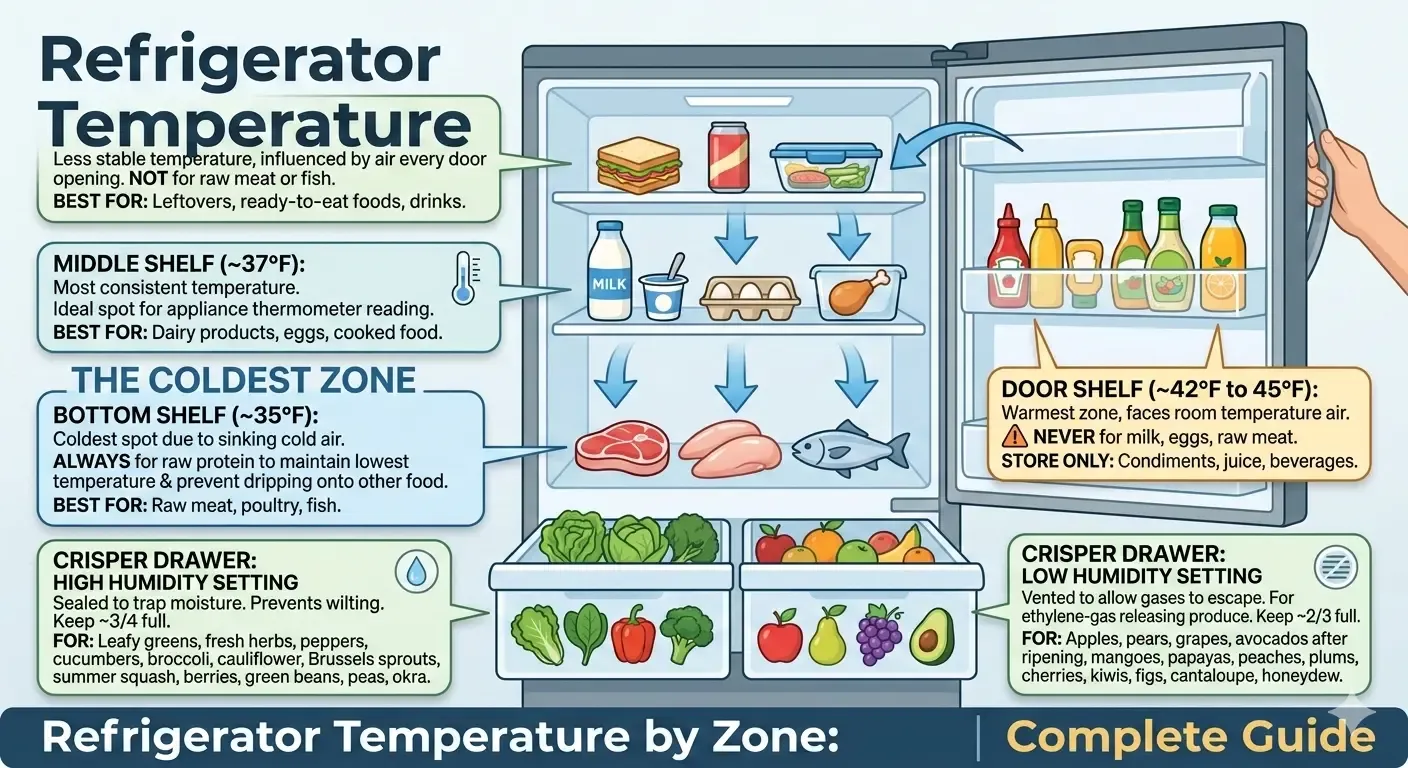
Cold air sinks, making the bottom shelf the coldest spot in the refrigerator. Always store raw meat, poultry, and fish here. Keeping raw protein on the bottom shelf serves two purposes: it keeps these foods at the lowest possible temperature and prevents raw juices from dripping onto other food stored below.
The door shelf is the warmest area of the fridge because it faces room-temperature air whenever you open the door. Store only condiments, juice, and beverages on door shelves. Never store milk, eggs, or raw meat here, even if your fridge has a built-in egg tray in the door. Move eggs to the middle shelf instead, where the temperature is stable.
The high-humidity crisper drawer is sealed to trap moisture, preventing leafy greens and vegetables from wilting prematurely. Keep this drawer about three-quarters full for the best results. The produce that belongs in the high-humidity drawer includes leafy greens, fresh herbs, peppers, cucumbers, broccoli, cauliflower, Brussels sprouts, summer squash, berries, green beans, peas, and okra.
The low-humidity crisper is vented to allow gases to escape. It is designed specifically for produce that releases ethylene gas as it ripens. Keep this drawer about two-thirds full. The items that belong in the low-humidity drawer include apples, pears, grapes, avocados after ripening, mangoes, papayas, peaches, plums, cherries, kiwis, figs, cantaloupe, and honeydew.
Ethylene is a natural gas that fruits release as they ripen. High-ethylene producers like apples and pears accelerate the ripening of nearby ethylene-sensitive produce, such as leafy greens and broccoli. Keeping them in separate drawers slows premature rotting and extends the freshness of both groups. This is why the two crisper drawers exist in the first place, and why mixing fruits and vegetables in the same drawer shortens the life of both.
Many modern refrigerators include a full-width pantry or deli drawer with its own separate temperature control. For wine and beverages, the recommended setting is around 42°F. Delis meats and cold cuts stay freshest at 37°F. Soft drinks are best kept at 33°F. Fresh fish should always be stored at the coldest available setting in this drawer.
Most refrigerators display the set temperature, not the actual internal temperature, and real-world tests show these readings can be off by several degrees, especially in older dial-based models.
Appliance thermometer (best method): Place it on the middle shelf, leave it undisturbed for 5–8 hours, and aim for 35°F–38°F; adjust settings and wait 24 hours before rechecking.
Glass of water method: Leave a glass of water inside for 24 hours, then measure it with a cooking thermometer; 35°F–38°F is safe, but accuracy is lower.
Numbered dials (1–5 or 1–9) don’t show exact temperatures; higher numbers usually mean colder, but this varies by brand, so verification with a thermometer is essential.
For Older Refrigerators
Units over 7 years old may have uneven cooling; place thermometers in different spots, and if readings vary significantly or exceed 40°F, it signals airflow or thermostat issues that need attention.
The FDA defines the temperature danger zone as 40°F to 140°F (4°C to 60°C). Within this range, bacteria that cause foodborne illness multiply rapidly. At temperatures around 70°F to 80°F, pathogenic bacteria can double every 20 minutes. A piece of cooked chicken left out at room temperature on a warm afternoon can go from safe to dangerous in just a few hours. Keeping your refrigerator consistently below 40°F stops this cycle before it starts.
The FDA states that perishable food left out at room temperature must be refrigerated within 2 hours. However, when the ambient temperature exceeds 90°F, that window shrinks to just 1 hour. During hot weather, this applies to groceries sitting in a warm car, food cooling on the counter after cooking, and dishes set out at outdoor gatherings. Do not rely on the standard 2-hour rule during summer months when temperatures climb above 90°F.
Thawing meat on the counter means the outer surface reaches room temperature, entering the danger zone, while the center remains frozen. The same problem applies to marinating. Always thaw or marinate food inside the refrigerator, sealed in a container or bag with a lid to prevent raw juices from dripping onto other food. For faster thawing, place the food in a sealed bag and submerge it in cold water, changing the water every 30 minutes until fully thawed.
Knowing how long different foods stay safe at the correct temperature helps you reduce waste and catch problems before they become a health risk.
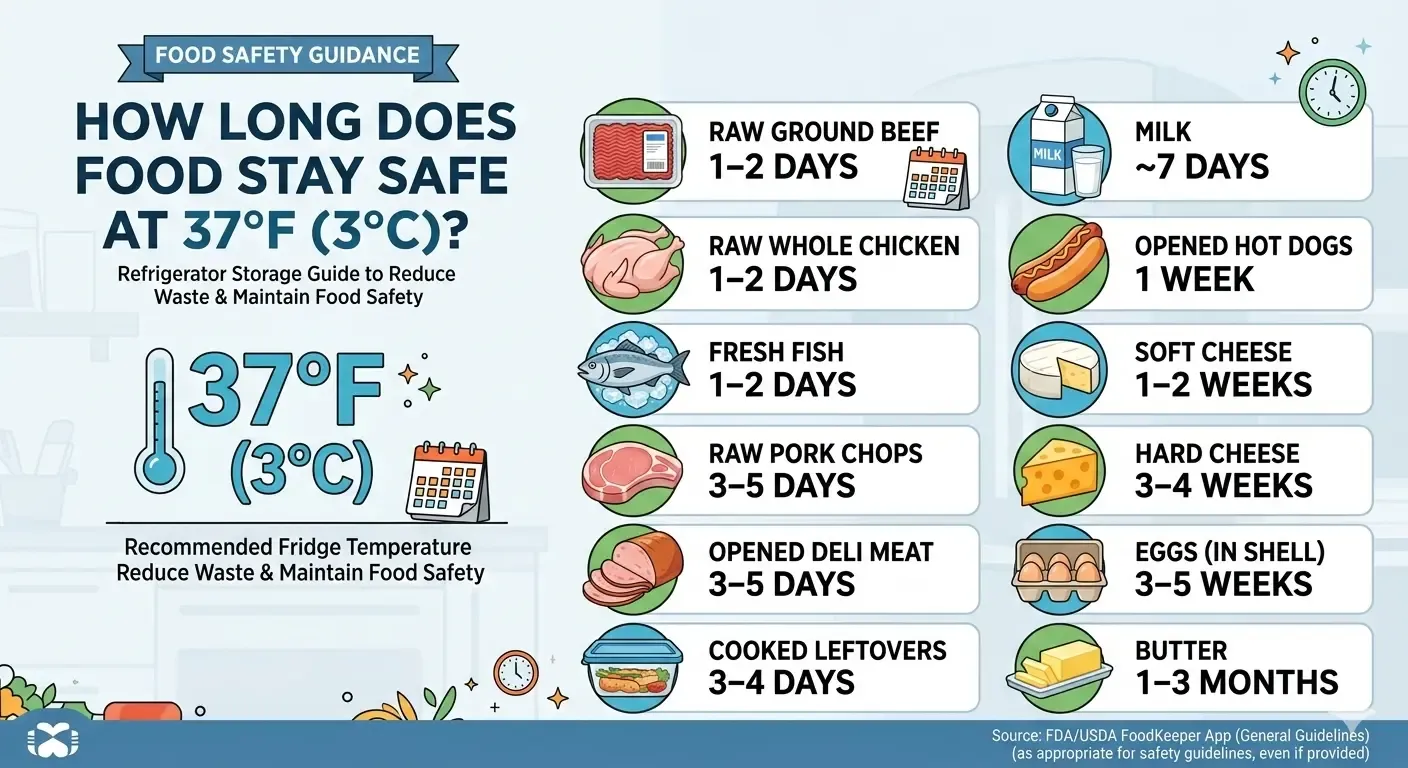
• Raw ground beef: 1–2 days (fridge), 3–4 months (freezer).
• Raw whole chicken: 1–2 days (fridge), up to 1 year (freezer).
• Raw pork chops: 3–5 days (fridge), 4–6 months (freezer).
• Cooked leftovers: 3–4 days (fridge), 2–6 months (freezer).
• Milk: Approximately 7 days (fridge), up to 3 months (freezer).
• Hard cheese: 3–4 weeks (fridge), up to 6 months (freezer).
• Soft cheese: 1–2 weeks (fridge), up to 6 months (freezer).
• Eggs (in shell): 3–5 weeks (fridge), do not freeze.
• Opened deli meat: 3–5 days (fridge), 1–2 months (freezer).
• Fresh fish: 1–2 days (fridge), 3–6 months (freezer).
• Opened hot dogs: 1 week (fridge), 1–2 months (freezer).
• Butter: 1–3 months (fridge), 6–9 months (freezer).
Overfilling blocks the circulation of cold air, creating warm pockets throughout the unit. Keep the fridge about two-thirds to three-quarters full, leaving space between containers so cold air reaches every item.
An empty refrigerator fluctuates in temperature more than a well-stocked one. When cold items sit near large, empty gaps, there is no surrounding thermal mass to retain the cold. Fill the empty space with pitchers of water or sealed containers to stabilize the temperature between grocery runs and reduce the compressor's workload.
Placing hot food directly in the fridge raises its internal temperature, temporarily pushing nearby items into the danger zone. Let food cool to near room temperature within safe time limits first. Use shallow containers rather than deep pots to speed up the cooling process before transferring food to the fridge.
Every time you open the fridge, warm air rushes in, and the unit has to work harder to recover. During hot weather, plan your fridge visits so you grab everything you need in one opening rather than making multiple trips. During a power outage, a closed refrigerator keeps food safe for about 4 hours. A fully packed freezer stays safe for up to 48 hours without power as long as the door stays closed the entire time.
Before an expected power outage or at the start of hot weather season, freeze water in quart-size plastic bags and keep them in both the refrigerator and freezer. When the power goes out, these ice bags help maintain cold temperatures and significantly extend the safe window for your food without requiring any additional action once the outage starts.
Your refrigerator needs at least 2.5 inches of clearance on the sides and back for proper airflow around the condenser coils. Placing the fridge flush against a wall traps heat around the motor, forcing it to work harder to maintain temperature.
Avoid placing the fridge next to an oven, dishwasher, or in any spot that receives direct sunlight during the day. If your unit is more than 10 to 15 years old, the Energy Star refrigerator guide can help you compare efficiency ratings before deciding whether to repair or replace.
Most standard refrigerators are designed to operate at ambient temperatures between 60°F and 90°F. A fridge placed in a hot garage or cold basement may fall outside this range depending on the season. During summer, a garage fridge struggles to maintain safe internal temperatures when the surrounding air gets too hot.
During winter, a basement fridge may not run the compressor enough, and the freezer can actually warm up as a result. If you plan to run a refrigerator in an unconditioned space, look for a model specifically rated for a wider ambient temperature range.
The rubber seal around your fridge door keeps warm air out. To test it, close the door on a sheet of paper. If the paper slides out with no resistance, the gasket is worn, and warm air is constantly leaking in. This forces the compressor to run more frequently, making it much harder to maintain a stable temperature. Replace door gaskets every 5 to 7 years or whenever you notice cracking, stiffness, or visible gaps around the edge of the seal.
Condenser coils release heat from the refrigeration process. When they are coated in dust and debris, they cannot release heat efficiently, and the fridge has to work harder to maintain its set temperature. Coils are usually located on the back or bottom of the unit.
Unplug the fridge and vacuum the coils with a brush attachment twice a year. Keeping the coils clean is one of the single most effective things you can do to extend the life of your refrigerator and keep it running at peak efficiency.
After turning the temperature dial or loading up on a large grocery haul, the internal temperature temporarily shifts. Do not adjust the setting again right away. Wait a full 24 hours and then check with a thermometer before deciding whether any further changes are needed.
Most refrigerator temperature problems come down to a handful of predictable causes. Before assuming you need an expensive repair, work through these common issues one by one. In many cases, you can solve the problem yourself in under an hour, before that you need to understand refrigerator parts.
Indicator: The fridge stays too warm or temperature fluctuates even though settings haven’t changed, and a separate thermometer shows a 3–5°F or more difference from the display.
Fix: Confirm with an appliance thermometer on the middle shelf, and if the mismatch persists, have the thermostat professionally replaced since it’s no longer reading accurately.
Indicator: Uneven cooling or certain sections staying warm while others are cold.
Fix: Rearrange items to keep vents clear so cold air can circulate properly between compartments.
Indicator: Temperature suddenly feels off without any obvious mechanical issue.
Fix: Reset the fridge to around 37°F (3°C) and the freezer to 0°F (-18°C), then allow 24 hours to stabilize.
Indicator: Inconsistent cooling or rapid temperature loss when opening the door.
Fix: Keep the fridge about 75% full to maintain proper airflow and thermal balance.
Indicator: Fridge runs constantly but struggles to stay cold.
Fix: Clean the coils using a vacuum or brush to remove dust and debris from the back or bottom.
Indicator: Condensation around the door or poor sealing.
Fix: Perform the paper test; if it slides out easily, clean or replace the gasket.
Indicator: Freezer stays cold but fridge compartment is warm.
Fix: Listen for unusual noises or lack of airflow; replace the fan if it’s not working.
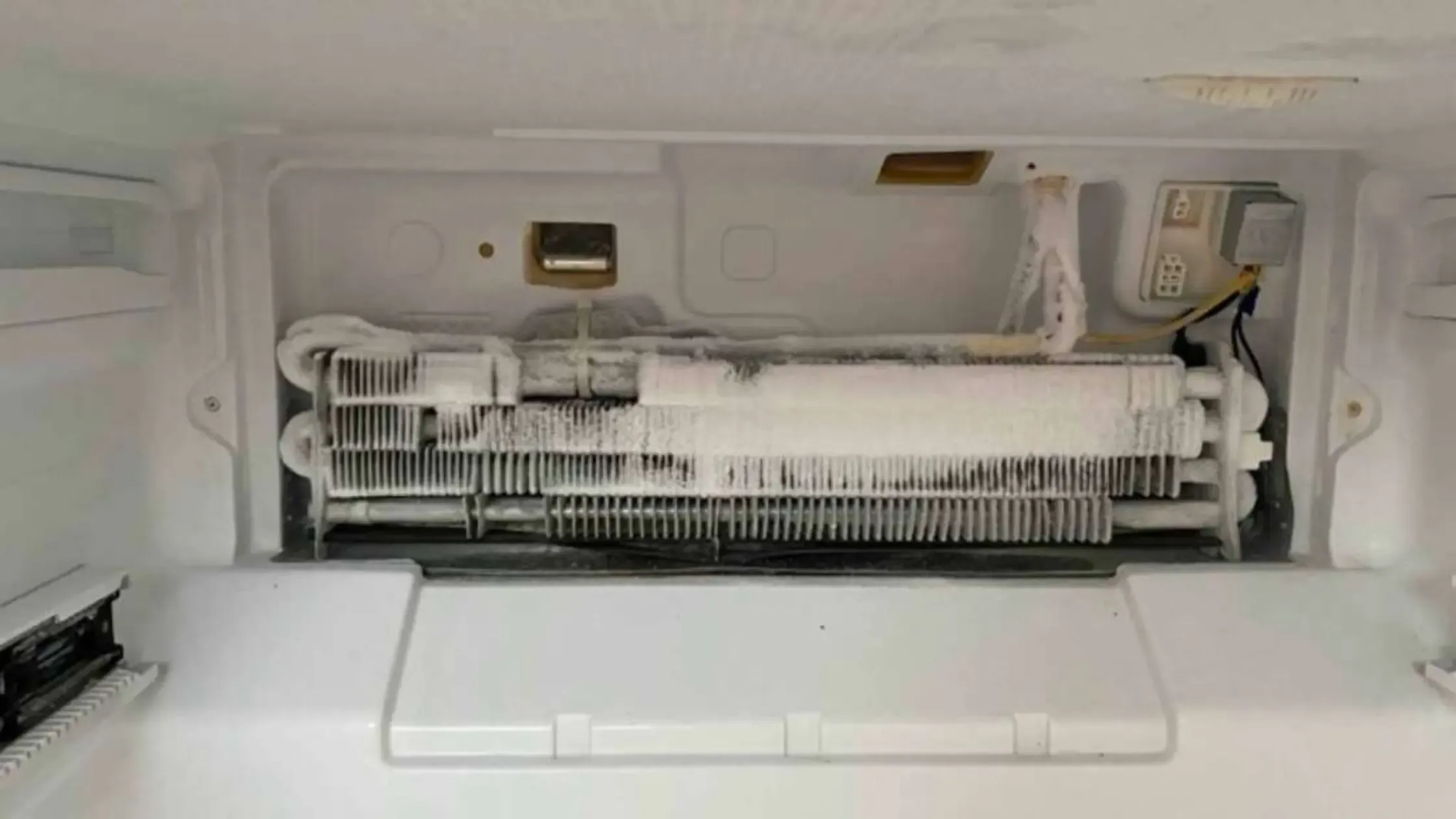
Indicator: Heavy frost buildup on the freezer’s back wall.
Fix: Manually defrost the unit and replace the defrost timer or heater if needed.
Indicator: Clicking sounds followed by silence or no cooling despite power.
Fix: Requires professional repair or replacement of the compressor.
Indicator: Fridge runs continuously but cannot maintain temperature.
Fix: Call a licensed technician to locate and fix the sealed system leak.
Indicator: Flickering display or random error codes.
Fix: The control board likely needs professional diagnosis and replacement.
• Food spoiling before the expiry date usually means the fridge temperature is above 40°F.
• Food or drinks freezing indicates the temperature is too low (below 35°F) or the thermostat is faulty.
• Condensation or water pooling inside suggests temperature fluctuation, a bad door gasket, or a blocked drain.
• A compressor running nonstop means the fridge is struggling to maintain temperature due to coils, thermostat, or refrigerant issues.
• Heavy frost buildup in the freezer points to a defrost system failure affecting overall cooling.
• Uneven cooling or hot spots indicate blocked vents or a failing evaporator fan.
• A fridge over 10 years old running warm signals declining efficiency and worn internal components.
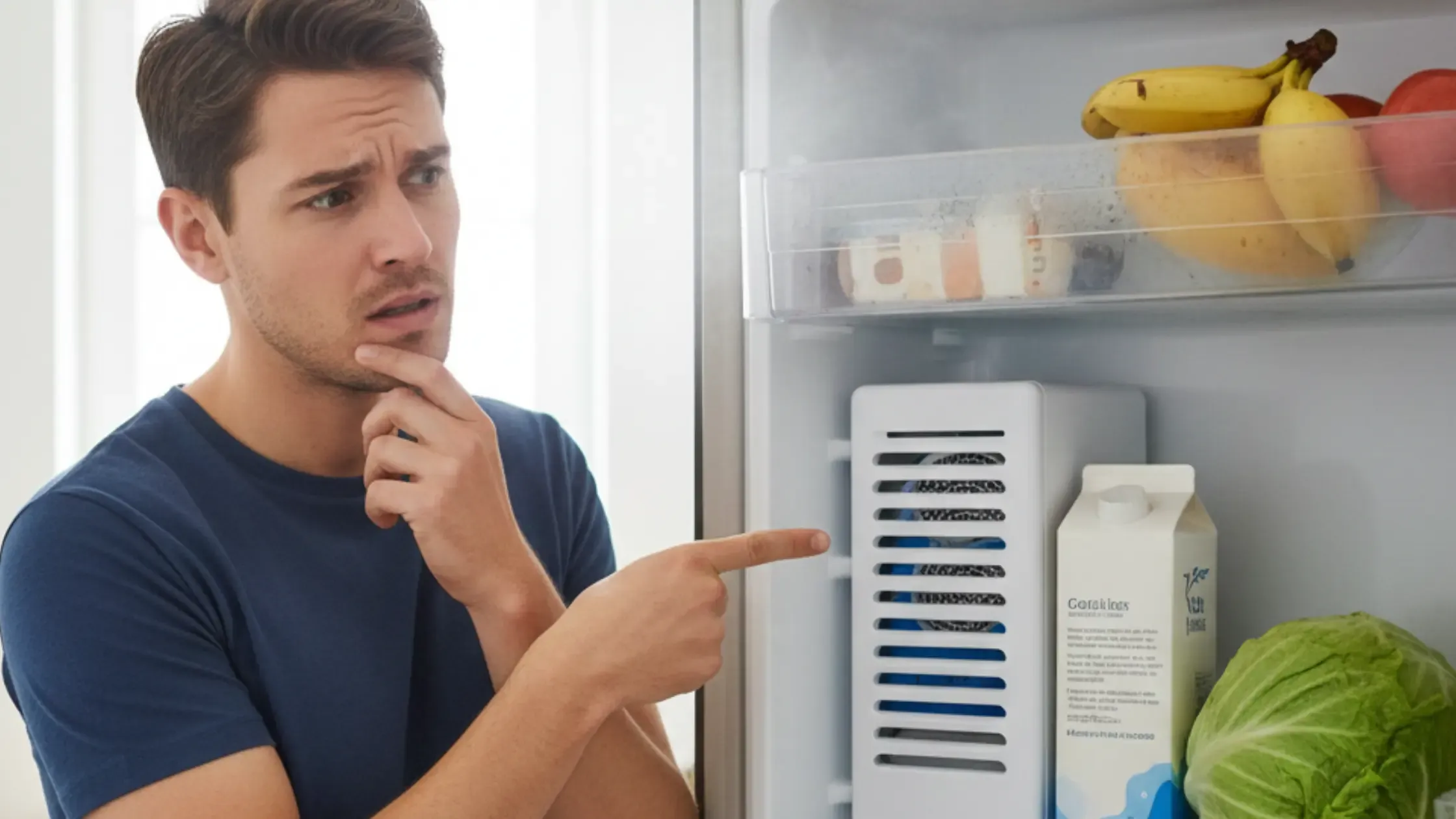
•Start with the basics. Check if the temperature setting was accidentally changed.
•Make sure food isn’t blocking the back vents, since airflow is critical for cooling.
•Test the door seal using a sheet of paper. If it slides out easily, the gasket is worn.
•Clean the condenser coils, as dirt buildup is a common cause of poor cooling.
•Ensure there’s at least 2.5 inches of space around the fridge for proper heat release.
•Check if the ice maker is turned on without a water line. If you recently stocked a lot of food, give it 24 hours to stabilize.
If the fridge isn’t cooling at all, it’s usually a compressor or refrigerant issue, which needs a professional. If the freezer works but the fridge is warm, the evaporator fan motor is likely faulty. If both sections are warm, the thermostat or sealed system may have failed. Heavy frost buildup points to a defrost system issue. Uneven cooling or freezing food can be caused by airflow blockages, gasket issues, or thermostat problems.
Call a technician if the issue isn’t fixed within 24–48 hours after basic checks. Immediate help is needed for refrigerant leaks or major component failures like the compressor or fan motor. If your fridge is under 10 years old, repair is usually more cost-effective than replacement.

From faulty thermostats to dirty condenser coils, Fair Appliance Repair Service fixes the issues that keep your fridge from performing its best. Serving Sacramento with expert refrigerator repairs and transparent pricing. Call Now or Book Online.
Yes. Bluetooth and WiFi appliance thermometers connect to a phone app and send alerts when the temperature rises above a safe level. They cost $20 to $40.
No. For most households, 37°F is safe for everything. Zone or drawer settings handle exceptions like fish and wine without changing the main fridge temperature.
Usually 20 to 45 minutes, depending on room temperature and how full the fridge is. A well-stocked fridge recovers faster than an empty one.
The target stays the same. However, place thermometers in both the top back corner and the bottom front corner to find the warmest spot and set accordingly so no area climbs above 40°F.
Setting it to 38°F instead of 35°F saves a little energy. Never go above 40°F, though; the food safety risk outweighs any savings.
At 40°F or above, most food is still safe for 2 hours or less. Beyond 2 hours, discard raw meat, dairy, and cooked food. When in doubt, throw it out.
You are feeling the shelf surface, not the air temperature. The air around your food is what matters, which is why a thermometer is the only reliable check.


