
Our Articles


Blog

Published on May 7, 2025
For decades, Kenmore refrigerators have earned the trust of homeowners with their dependable performance, smart storage design, and consistent cooling power.
However, even the most reliable refrigerators can develop problems over time. From inconsistent cooling and ice maker malfunctions to frost buildup and control board failures, wear and tear are inevitable. In this article, we are going to cover 25 common Kenmore refrigerator problems and solutions.
· Common Kenmore refrigerator problems.
· Step-by-step troubleshooting solutions.
· Mechanical and electrical faults.
· Preventive maintenance tips.
· When to call a professional.
· Special maintenance tips for Sacramento homeowners.
Let’s get into it.
Before troubleshooting, it helps to understand what makes Kenmore models different.
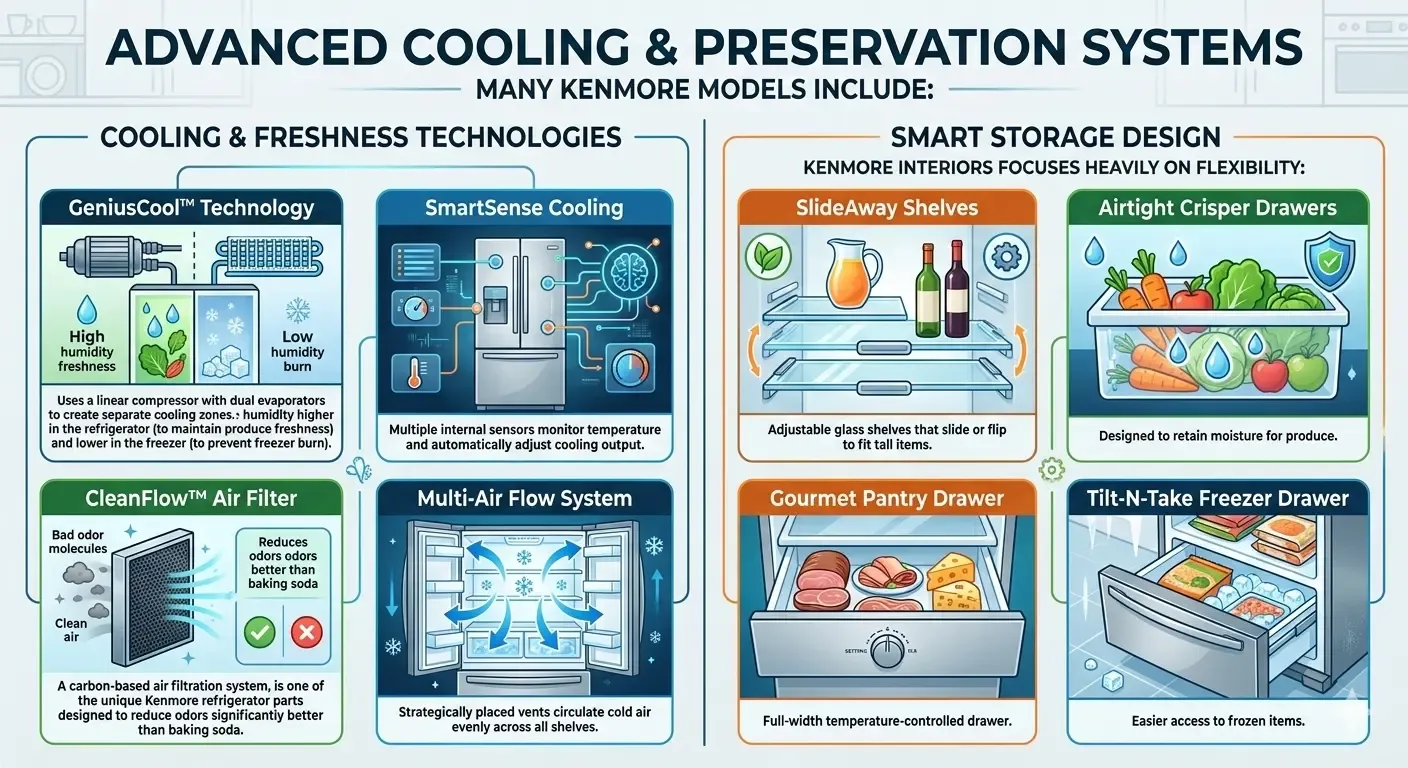
Many Kenmore models include:
Uses a linear compressor with dual evaporators to create separate cooling zones. This keeps humidity higher in the refrigerator (to maintain produce freshness) and lower in the freezer (to prevent freezer burn).
Multiple internal sensors monitor temperature and automatically adjust cooling output.
A carbon-based air filtration system, is one of the unique Kenmore refrigerator parts designed to reduce odors significantly better than baking soda.
Strategically placed vents circulate cold air evenly across all shelves.
Kenmore Interiors focuses heavily on flexibility:
SlideAway Shelves – Adjustable glass shelves that slide or flip to fit tall items.
Airtight Crisper Drawers – Designed to retain moisture for produce.
Gourmet Pantry Drawer – Full-width temperature-controlled drawer.
Tilt-N-Take Freezer Drawer – Easier access to frozen items.
Modern Kenmore refrigerators may include:
· Kenmore Smart App – Remote temperature monitoring and filter alerts.
· Accela Ice™ – Rapid ice production mode.
· Active Finish™ – Fingerprint-resistant stainless steel.
· Slim In-Door Icemaker – Frees shelf space.
· Grab-N-Go™ Door – Door-in-door design for quick access.
Likely cause: Faulty evaporator fan motor or stuck damper door.
Fix:
· Listen for evaporator fan noise.
· Check if air is flowing into the fridge section.
· Replace the faulty fan motor or damper control if needed.
Common causes:
· Dirty condenser coils.
· Faulty compressor.
· Defrost timer stuck.
· Bad thermostat.
Fix:
· Clean condenser coils thoroughly.
· Check thermostat continuity.
· Inspect the start relay.
· If compressor clicks but doesn’t run, professional service may be required.
Causes:
· Blocked air vents.
· Faulty thermostat.
· Door seal leaks.
Fix:
· Clear internal vents.
· Perform Dollar Bill Test on gasket.
· Adjust temperature settings to 37–40°F (3–4°C).
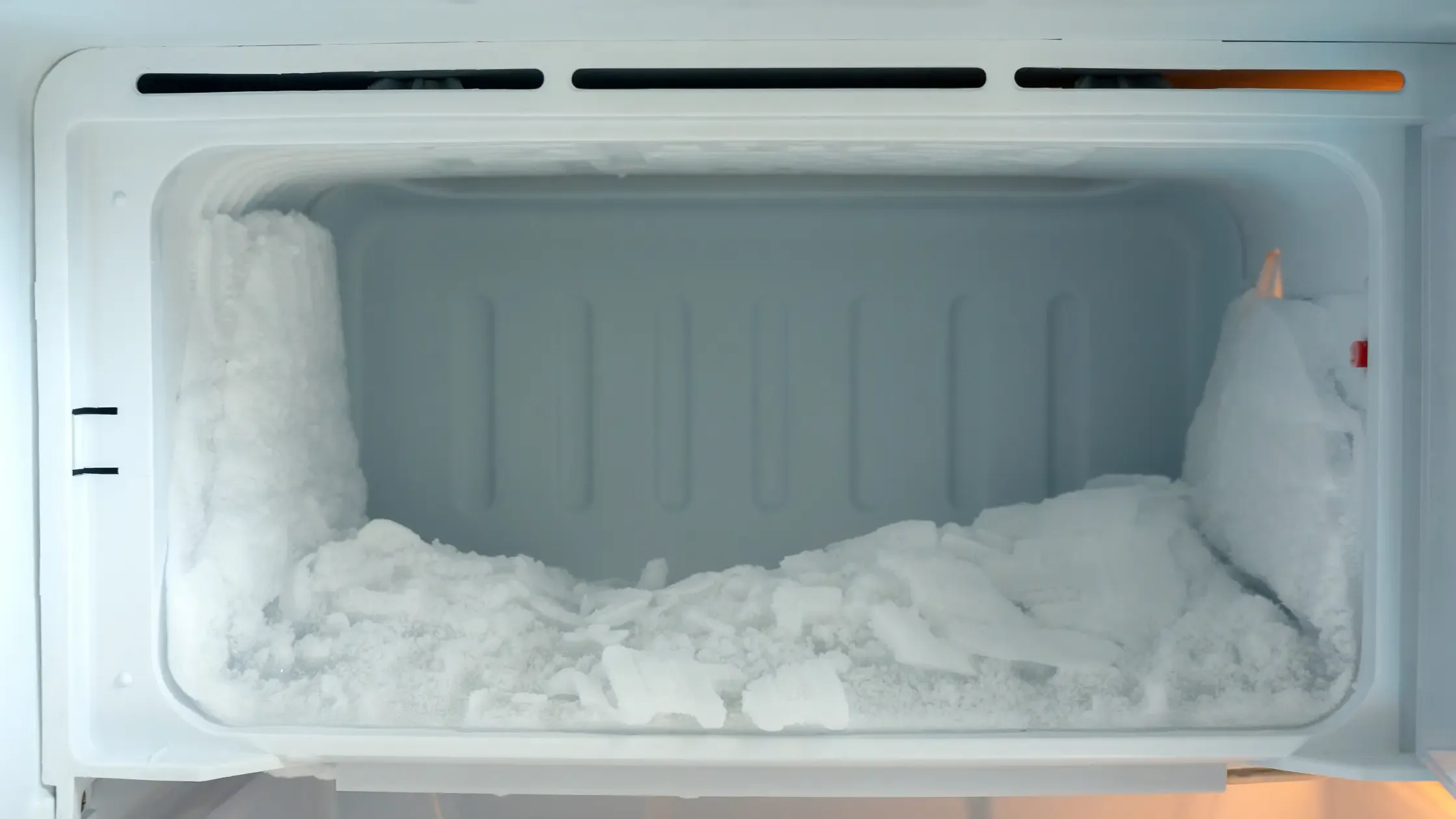
Common reasons:
· Bad door gasket.
· Defrost heater failure.
· Defrost thermostat malfunction.
Fix:
· Replace damaged gasket.
· Test defrost heater with multimeter.
· Inspect defrost timer.
Cause: Poor ventilation or dirty condenser coils.
Fix:
· Maintain at least 1 inch side clearance and 2 inches rear clearance.
· Clean coils every 6–12 months.
Causes:
· Clogged water filter.
· Frozen water line.
· Control arm in OFF position.
Fix:
· Replace filter every 6 months.
· Thaw frozen water line.
· Check control arm position.
Cause: Faulty ice compartment seal or heating element issue.
Fix:
· Inspect door seal.
· Check anti-frost heating element.
Causes:
· Clogged filter.
· Air trapped in line.
· Bad inlet valve.
Fix:
· Replace filter.
· Run several glasses of water to purge air.
· Test inlet valve continuity.
Cause: Mineral buildup or faulty inlet valve.
Fix:
· Clean nozzle with vinegar.
· Replace valve if dripping continues.
Cause: Old filter or bacteria buildup.
Fix:
· Replace water filter.
· Sanitize reservoir and ice bin.
Some Kenmore Elite models manufactured by LG have reported premature failures of the linear compressor.
Symptoms:
· Loud clicking or buzzing.
· Unit runs constantly.
· No cooling.
Fix:
Professional diagnosis required. Compressor replacement is not DIY.
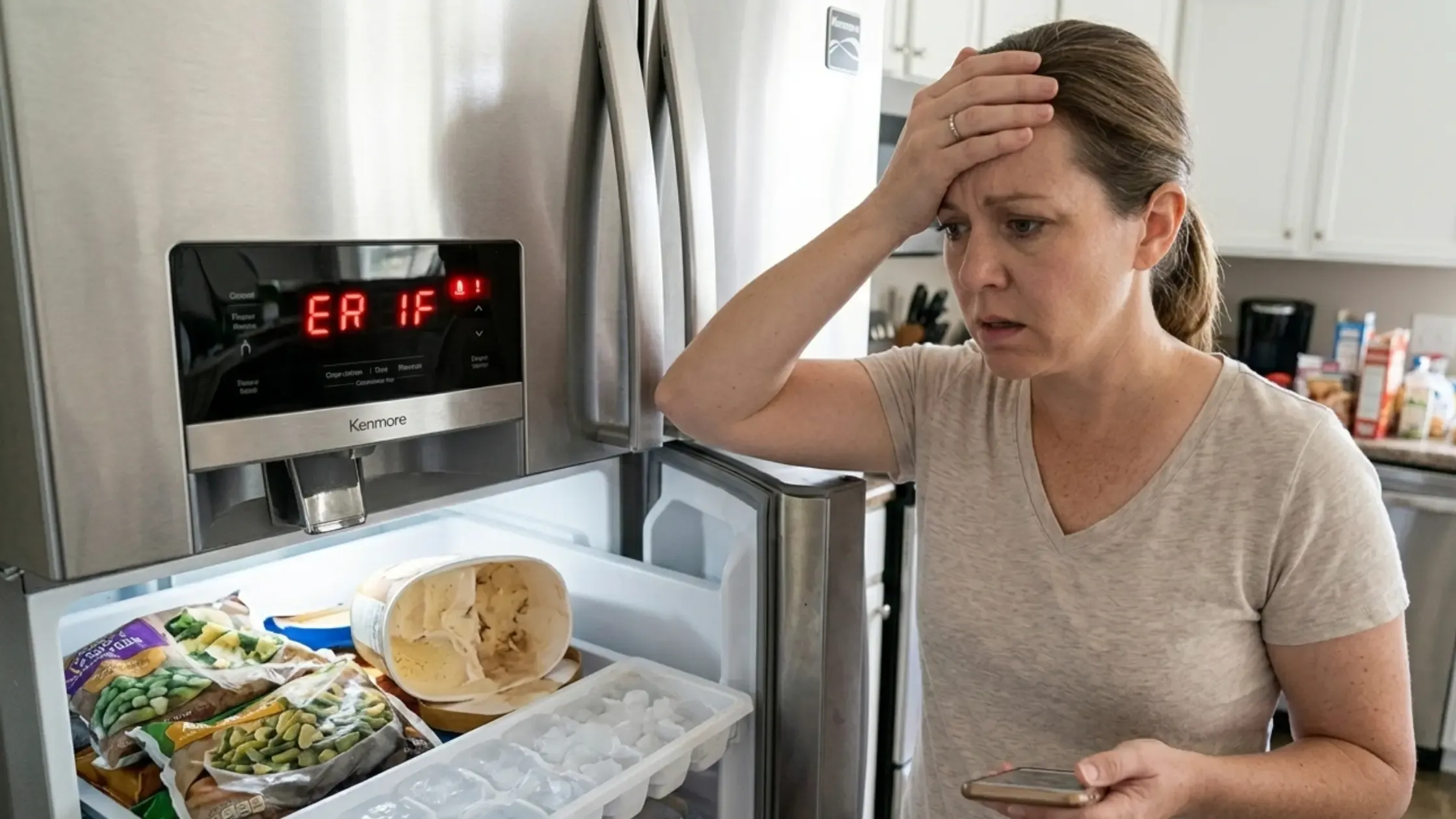
Fix:
· Unplug refrigerator for 5 minutes (hard reset).
· Inspect for power surge damage.
· Replace control board if necessary.
Possible causes:
· Unbalanced unit.
· Failing condenser fan.
· Vibrating shelves.
Fix:
· Level refrigerator.
· Tighten loose components.
· Replace failing fan motor.
Likely cause: Bad start relay.
Fix: Replace start relay.
Fix:
· Check outlet voltage.
· Inspect power cord.
· Reset breaker.
· Use surge protector to prevent future damage.
Components to check:
· Defrost heater
· Defrost thermostat
· Defrost timer
Manual defrost may temporarily restore function.
Fix:
· Clean with warm water and pipe cleaner.
· Prevent mold and water pooling.
Symptom: Freezer cold, fridge warm.
Fix: Replace evaporator fan motor.
Perform the Dollar Bill Test.
Fix: Replace gasket if bill slides out easily.
Replace with manufacturer-approved parts. Learn more about refrigerator parts.
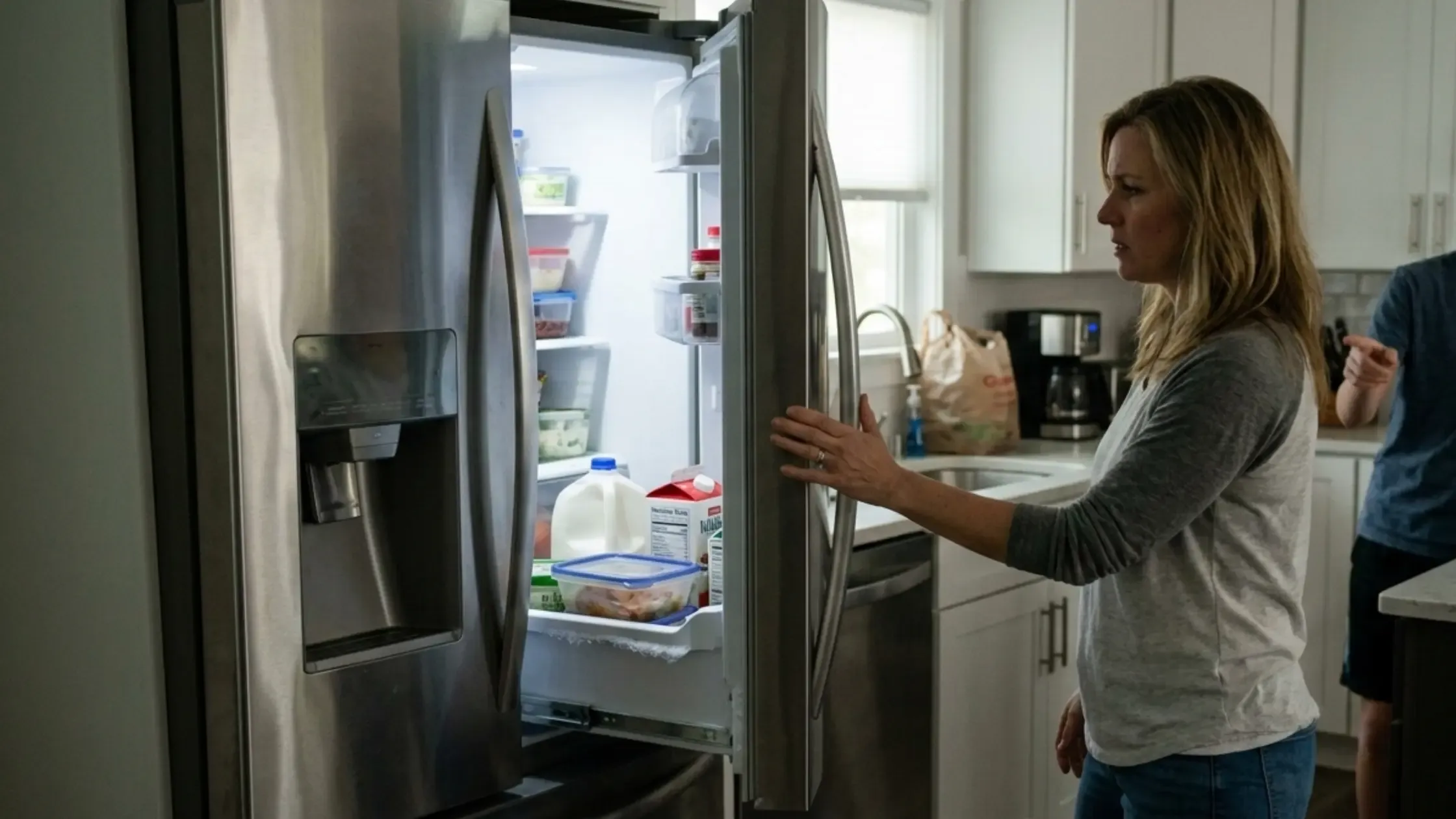
Fix:
· Level refrigerator.
· Adjust hinges.
· Remove obstructing items.
Fix:
Check humidity control slider and clean vents.
Maintain proper clearance to prevent compressor strain.
Use surge protector or voltage stabilizer.
Causes:
· Dirty coils.
· Warm kitchen environment.
· Faulty thermostat.
· Compressor issue.
Clean coils and verify temperature settings first.
1. Clean condenser coils.
2. Check door gaskets.
3. Verify temperature settings.
4. Clear air vents.
5. Ensure proper leveling.
6. Replace water filter.
These simple steps solve a surprising number of issues.
· Clean condenser coils every 6–12 months.
· Keep vents clear.
· Maintain proper clearance around unit.
· Replace water filter every 6 months.
· Sanitize ice bin regularly.
· Clean dispenser nozzle with vinegar.
· Clean door gaskets monthly.
· Perform Dollar Bill Test.
· A slight backward tilt helps doors close properly.
· Fridge: 37–40°F (3–4°C)
· Freezer: 0°F (-18°C)
· Keep fridge about 75% full for thermal stability.
· Ice Maker Failure: Calcium and magnesium deposits (limescale) build up on vital components, such as the evaporator plate and float switches, eventually causing the ice maker to stop producing ice.
· Clogged Water Lines: Scale can restrict water flow through the internal tubing, leading to slow water dispensing or even complete blockages and can damage water filter of your fridge.
Reduced Ice Quality: High mineral levels often result in cloudy, brittle, or foul-tasting ice.
· Shorter Lifespan: Hard water strains the refrigerator's water system, leading to premature mechanical failure and higher repair costs.
· Dispenser Staining: You may notice white, chalky residue or "crust" around the water dispenser nozzle that is difficult to clean. Easy Ice.
1. Frequent Filter Changes:
Due to the high mineral load, standard Kenmore water filters may clog sooner than the typical 6-month recommendation. Monitor your flow rate and replace the filter if it slows down. Check our refrigerator water filter replacement guide, if you need any replacement.
2. Regular Descaling:
Periodically clean the ice maker and dispenser area with a food-safe descaling solution or specialized appliance cleaner to break down mineral buildup.
3. Water Softening:
If you notice scale on other fixtures (faucets, showerheads), a whole-home water softener is the most effective long-term solution to protect your refrigerator's internal valves and lines.
Call a licensed technician if you notice:
· Compressor failure.
· Refrigerant leak.
· Electrical board damage.
· Persistent cooling failure.
· Burnt smell or repeated breaker trips.
Major repairs, such as compressor replacement or refrigerant recharge, should not be attempted without certification.
Kenmore refrigerators combine strong storage design with advanced cooling systems. Most problems are maintenance-related and can be resolved with basic troubleshooting, such as cleaning coils, replacing filters, or checking airflow.
However, issues involving compressors, control boards, or refrigerant require professional attention.
With regular care and quick action when problems arise, your Kenmore refrigerator can deliver reliable performance for many years.
Fair Appliance Repair Service is your trusted local expert for fast, reliable appliance service in Sacramento. We specialize in certified Kenmore repair, with trained technicians who understand both the latest models and older units. Whether it’s your refrigerator, washer, dryer, oven, or dishwasher, our team delivers accurate diagnostics and lasting repairs.
We proudly offer same-day refrigerator repair service throughout Sacramento, so you don’t have to wait days to get your appliance working again. Our transparent pricing means no hidden fees, you’ll receive a clear estimate before any work begins.
To ensure quality and durability, we use genuine replacement parts designed specifically for your appliance. This helps extend the life of your equipment and maintain peak performance.
Call 916-333-8388 today or book your appointment online for fast, dependable refrigerator repair service you can trust.
There are several possible causes, including a faulty compressor, a bad thermostat, blocked air vents, low refrigerant, or a broken condenser fan that can stop cold air circulation.
Improper cooling can happen if the thermostat isn’t working correctly, the condenser coils are dirty, cold air vents are blocked, refrigerant is low, or the compressor is failing.
Start by checking for a clogged water line, ensure the water supply valve is open, clear any ice blockages, and replace any faulty water inlet valves or ice maker modules if needed.
Unplug the fridge, locate the condenser coils (usually at the back or underneath), and use a coil brush or a vacuum attachment to remove dust and debris. Then plug the refrigerator back in.
This often points to a problem with the evaporator fan, blocked vents, or a faulty damper control door that prevents cold air from reaching the fridge section.
Check for a clogged or frozen defrost drain, make sure the refrigerator is level, and inspect the water supply line and door gaskets for leaks or damage. Fixing these issues usually stops the leaking.


